Spinal Decompression Therapy in Naperville, IL
Naperville’s original spinal decompression clinic serving Naperville, IL and surrounding communities since 2002

Spinal Decompression Naperville IL– Learn whether non-surgical spinal decompression may help relieve sciatica, spinal stenosis, herniated or bulging discs, degenerative disc disease, and chronic back pain.
Naperville’s original spinal decompression clinic provides experienced, personalized care for patients in Naperville, Bolingbrook, and Plainfield
📞 Call or text 630-454-1300 to schedule your spinal decompression consultation
| Quick Facts | Spinal Decompression in Naperville |
|---|---|
| Best for | Herniated/bulging discs, sciatica, degenerative disc disease, spinal stenosis, radiculopathy |
| Session length | 15–30 minutes (varies by condition and protocol) |
| Sessions needed | 15–25 typical over 4–8 weeks |
| Comfort level | Gentle, computer-guided — most patients find it relaxing |
| Downtime | None — return to normal activities immediately |
| Approach | Specialized Disc & Nerve Recovery Program |
| Provider | Dr. Jennifer Wise — first spinal decompression provider in Naperville (since 2002) |
| Next step | Call or text (630) 454-1300 for a free evaluation |
Most clinics offer a single decompression table and a standard protocol. At our Naperville Spinal Decompression clinic, your treatment plan is customized based on imaging, symptom patterns, nerve involvement, and how your body responds — because no two disc problems are exactly alike.
Synergy Institute is the original spinal decompression provider in Naperville, led by Dr. Jennifer Wise with 26+ years of clinical experience and hands-on work with 8 different decompression systems since 2002. Our Specialized Disc & Nerve Recovery Program combines computer-guided spinal decompression with regenerative therapies, neuromodulation, and targeted rehabilitation — addressing both disc pressure and nerve healing for more complete, longer-lasting results.
Spinal Decompression in Naperville – Finally, there is a proven, non-surgical treatment option for back, neck, arm, and leg pain — without dangerous medications or invasive surgery. This treatment is known as spinal decompression (also called disc decompression).
At Synergy Institute, our Naperville spinal decompression clinic provides advanced decompression care for patients in Naperville, Bolingbrook, Plainfield, Aurora, and surrounding communities. With 26+ years of experience, we are recognized as a local spinal decompression specialist.
Your Naperville Spinal Decompression Specialist – Dr. Jennifer Wise is the founder and Institute Director of Synergy Institute Acupuncture & Chiropractic in Naperville. She is recognized as a spinal decompression specialist and was the first doctor to introduce spinal decompression therapy to Naperville in 2002.
With 26+ years of clinical experience, Dr. Wise has worked with eight different spinal decompression systems, allowing her to develop a deep understanding of disc mechanics, nerve compression, patient selection, and protocol design. This level of hands-on experience is rare and plays a critical role in achieving safe, effective outcomes.
At Synergy Institute, spinal decompression is part of a Specialized Disc & Nerve Recovery Program — because relieving pressure is only one part of the healing process.
While spinal decompression helps reduce pressure on injured discs and compressed nerve roots, true recovery also requires the nerves themselves to heal and normalize. When nerves remain irritated or inflamed, pain, weakness, or altered sensation can persist even after disc pressure is reduced.
By combining spinal decompression, regenerative therapies, neuromodulation, and targeted rehabilitation, we address both the mechanical and neurological components of disc-related pain — helping patients achieve more complete and longer-lasting relief
Many people are told their only options for disc and nerve pain are medication, injections, or surgery. A structured disc and nerve recovery approach offers a non-surgical, drug-free pathway focused on healing — not just symptom management.
Spinal decompression therapy uses controlled, computer-guided traction to gently stretch the spine. This process creates a negative pressure effect within the disc, which helps reduce pressure on compressed nerves and injured spinal discs.
As pressure is reduced, spinal decompression can help:
Unlike basic traction, modern spinal decompression is designed to minimize muscle guarding and allow for precise, targeted decompression based on the individual patient’s condition.
When combined with nerve-focused and regenerative therapies, spinal decompression becomes an important part of a comprehensive disc and nerve recovery strategy.
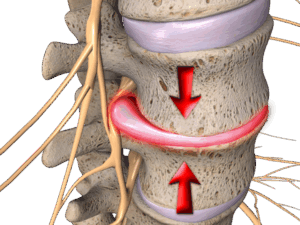
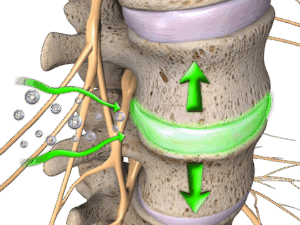
Not every disc or nerve problem responds the same way. At Synergy Institute, we evaluate what’s actually driving your symptoms — and that determines your treatment protocol.
If your pain is caused by a herniated or bulging disc — spinal decompression creates negative pressure within the disc space, helping retract displaced disc material, reduce nerve compression, and promote nutrient flow back into the damaged disc.
If nerve inflammation is persisting even after disc pressure is reduced — our Disc & Nerve Recovery Program adds neuromodulation and nerve-calming therapies to help irritated nerves heal and normalize. Relieving disc pressure alone isn’t always enough when nerve tissue has been inflamed for weeks or months.
If degenerative disc disease is causing chronic stiffness and pain — decompression combined with targeted rehabilitation helps improve disc hydration, restore movement, and slow further degeneration. We also evaluate nutritional factors that may be contributing to poor disc health.
If spinal stenosis is narrowing the space around your nerves — decompression can help open those spaces and reduce pressure on the spinal cord or nerve roots. When stenosis involves both disc and bone-related narrowing, we combine decompression with complementary therapies to address what we can change conservatively.
If you’ve had a prior surgery that didn’t fully resolve your symptoms — decompression may still be an option depending on your surgical history, hardware placement, and spinal stability. We typically recommend waiting at least one year post-surgery and require a thorough evaluation before proceeding.
If your condition involves multiple contributing factors — which is common with disc problems — we build a protocol that may include spinal decompression, chiropractic care, SoftWave therapy, acupuncture, or targeted rehabilitation based on what your evaluation reveals.
That’s the difference between a clinic that puts everyone on the same table with the same settings and a clinic that builds your protocol around your specific disc problem.
📞 Not sure which approach is right for your condition? Call or text (630) 454-1300 for a free evaluation.
You may be a good candidate for spinal decompression if you are experiencing disc-related or nerve-related pain and are looking for a non-surgical, drug-free treatment option.
Spinal decompression is commonly considered for patients with symptoms such as sciatica or radiating pain into the arms or legs, herniated or bulging discs, degenerative disc disease, spinal stenosis caused by disc pressure, or chronic neck or low back pain that has not responded well to other conservative care.
Patients who tend to do best are those whose pain is related to disc injury, disc degeneration, or nerve compression, rather than fractures or severe instability. A thorough examination and review of imaging, when appropriate, helps determine whether spinal decompression is the right option for your specific condition
Spinal decompression may not be recommended for individuals with spinal fractures, significant instability, advanced osteoporosis, certain spinal surgeries with unstable hardware, or medical conditions that make traction unsafe.
This is why a proper evaluation is essential before beginning care. Our goal is to determine whether spinal decompression is appropriate, safe, and likely to be effective — not to apply a one-size-fits-all approach.
Synergy Institute was the first clinic in Naperville to introduce spinal decompression therapy, beginning in 2002. At a time when this technology was still emerging, Dr. Jennifer Wise recognized its potential as a non-surgical option for disc and nerve-related pain and brought it to the community.
Since 2002, Dr. Wise has worked with eight different spinal decompression systems, gaining extensive hands-on experience with how different technologies affect disc pressure, nerve response, patient comfort, and outcomes. This depth of experience allows for more precise patient selection and customized treatment protocols.
While many clinics have added spinal decompression more recently, Synergy Institute has refined and evolved its approach since 2002, integrating decompression into a broader disc and nerve recovery strategy. This long-term clinical experience plays an important role in achieving safe, effective, and appropriate care.
Patients seeking spinal decompression benefit not only from the technology itself, but from the experience behind how and when it is used.
Surgery for disc herniations typically costs $10,000–$15,000 or more out of pocket, requires 3–6 months of recovery, and carries the risks associated with any invasive procedure. Injections may provide temporary relief, but they don’t address the underlying disc problem — and repeated use can weaken surrounding tissue over time.
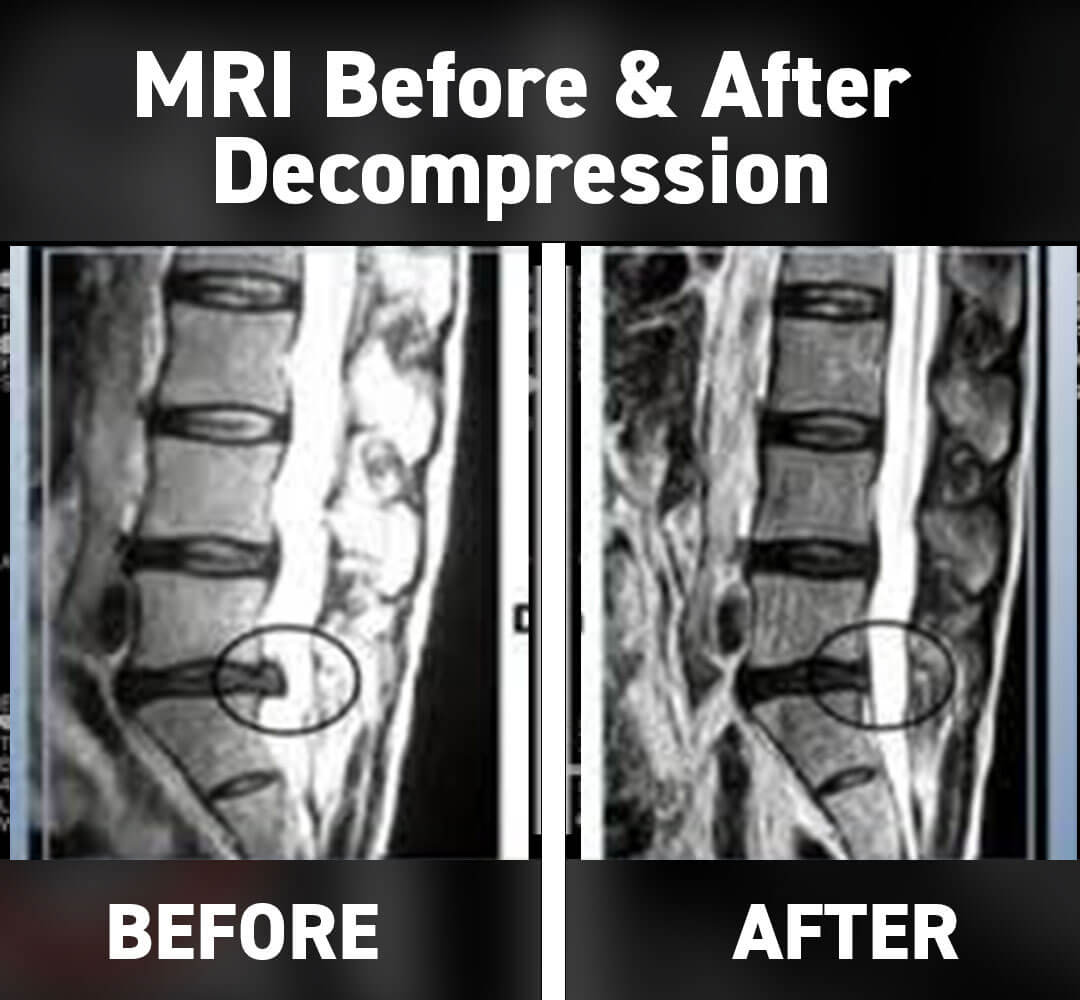
Non-surgical spinal decompression has been shown to help disc herniations. It creates a controlled negative pressure effect within the disc, which helps retract displaced disc material toward its normal position and promotes improved circulation and nutrient flow to support healing. The conditions our Naperville Spinal Decompression Therapy Clinic has had success with:
Non-surgical spinal decompression is supported by a growing body of clinical evidence. While results vary based on patient selection and condition severity, published research consistently shows meaningful improvements in disc-related pain and function.
“Nonsurgical spinal decompression significantly reduced pain intensity and herniated disc volume on follow-up MRI.” — Choi E, et al. International Journal of Clinical Practice. 2022. 🔗 Read the study on PubMed
“Non-surgical decompression therapy added to routine physical therapy significantly improved pain, range of motion, endurance, functional disability, and quality of life in patients with lumbar radiculopathy.” — Amjad F, et al. BMC Musculoskeletal Disorders. 2022;23:255. 🔗 Read the study on PubMed
“267 patient records analyzed — nonsurgical spinal decompression demonstrated improvements in pain intensity, neurological function, and activities of daily living.” — Military Medicine. 2025;190(Supplement 2):134. 🔗 Read the study on Oxford Academic
“Good to excellent relief in 86% of patients with herniated discs. Sciatica and back pain were relieved.” — Shealy CN, Borgmeyer V. American Journal of Pain Management. 1997;7(2).
These findings align with what we see clinically at our Naperville clinic — properly selected patients who complete a structured decompression protocol often experience significant improvement. The key factors that influence outcomes include accurate diagnosis, appropriate patient selection, protocol customization, and combining decompression with nerve recovery therapies when needed.
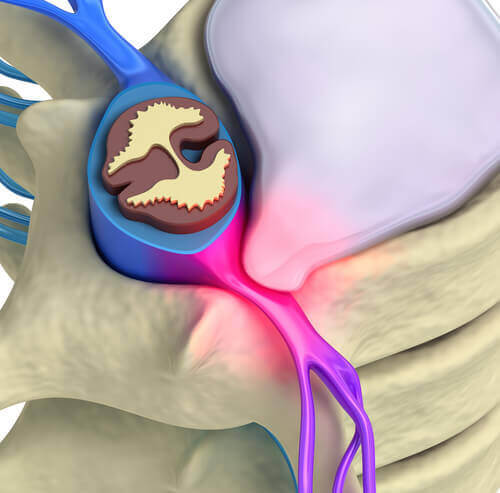
Disc problems are commonly associated with neck or low back pain that may radiate into the arms or legs. The severity of disc bulging or herniation often determines whether a condition responds to conservative care or requires surgical consideration.
Spinal decompression has been shown to be effective in treating many disc-related conditions by reducing pressure on the disc and nearby nerve roots. While disc bulges and herniations do not appear on X-ray, an MRI may be used to determine severity. A comprehensive examination can often identify whether your symptoms are disc-related and whether spinal decompression may be appropriate.
Some patients continue to experience pain even after spinal surgery. In certain cases, non-surgical spinal decompression therapy may still be helpful, even for patients who have undergone surgical decompression or spinal fusion.
As long as the surgically fused spinal segment is stable, spinal decompression may be considered. In most cases, we recommend waiting at least one year post-surgery before beginning decompression therapy. A thorough examination and appropriate imaging help determine whether decompression is safe and appropriate.
Facet joints are the small joints located at the back of the vertebrae that help guide spinal movement. Over time, these joints can become worn or irritated, leading to a condition known as facet syndrome.
Conventional treatment often includes injections or steroid-based therapies. Spinal decompression therapy, when combined with chiropractic care, may help reduce joint pressure, improve mobility, and relieve pain associated with this condition.
Radiculopathy occurs when nerves exiting the spine become irritated, often due to disc degeneration or spinal wear and tear. This irritation can cause symptoms such as pain, numbness, tingling, or weakness that travels down the affected nerve pathway.
Many patients with radiculopathy respond well to conservative care. Treatment may include spinal decompression therapy, chiropractic adjustments, electrical stimulation, and home-based stretches and exercises. As pressure on the nerve is reduced and disc health improves, many patients begin to notice relief within weeks.
Spinal decompression helps increase space between vertebrae, allowing pressure to be taken off the irritated nerve. Side-to-side movement during decompression allows care to be targeted to one side when necessary.
Spinal stenosis involves a narrowing of the spaces within the spine, which can place pressure on the spinal cord or nerve roots. Some patients experience minimal symptoms, while others develop pain, numbness, weakness, or tingling in the arms or legs.
For patients diagnosed with spinal stenosis, maintaining spinal mobility and strength is critical. Chiropractic care combined with spinal decompression therapy may help reduce stiffness, improve movement, and alleviate symptoms.
Left untreated, spinal stenosis may progress and, in some cases, lead to surgical intervention. While stenosis itself does not typically resolve, conservative care may help improve range of motion and reduce symptom severity when addressed early.
It’s time for you to find out if spinal Decompression at Synergy Institute will be your pain relief solution.
What does this offer include? Here’s what you’ll get…
You will find out if this amazing treatment will be your back pain solution, like it has been for so many other patients.
Call our convenient Naperville Spinal Decompression location below today! We can help you get the care you need
📞 Call or text (630) 454-1300 to schedule your free evaluation. Serving Naperville, Bolingbrook, and Plainfield.
1) Naperville’s Original Spinal Decompression Provider Since 2002 We were one of the first clinics in Illinois to offer spinal decompression — and the first in Naperville. With 26+ years in practice, Dr. Wise has treated thousands of patients with disc and nerve-related conditions and has refined protocols that newer clinics simply haven’t had time to develop.
2) Experience With 8 Different Decompression Systems Most clinics have used one decompression table. Dr. Wise has worked with eight — including IDD Therapy (Accu-Spina), the Antalgic Trak, and cervical 3D Active Trac. That depth of experience means better patient selection, better protocol design, and better outcomes.
3) A Specialized Disc & Nerve Recovery Program Decompression alone addresses disc pressure. But nerves that have been compressed or inflamed for weeks or months need their own recovery pathway. Our program combines decompression with neuromodulation, regenerative therapies, and targeted rehabilitation to address both components.
4) Transparent, Affordable Care We make spinal decompression accessible. You’ll know what to expect before you start — including visit frequency, estimated timeline, and cost. No hidden fees, no unnecessary long-term contracts.
5) Honest Assessment Before Treatment Begins If decompression isn’t the right fit for your condition, we’ll tell you directly — and help you find what will actually work. We’d rather point you in the right direction than sell you something that won’t help.
Synergy Institute Acupuncture & Chiropractic is Naperville’s original Spinal Decompression therapy clinic, located at 4931 Illinois Rte 59, Suite 121, Naperville, IL 60564.
📞 Call or text (630) 454-1300 to schedule your free evaluation.