Cervical Decompression for Degenerative Disc Disease in Naperville IL
You’ve been told your neck pain has a name: cervical degenerative disc disease. Maybe it showed up on an MRI after months of stiffness, aching, and that grinding sensation every time you turn your head. Now you’re left wondering what this diagnosis really means—and whether surgery is in your future.
Here’s what I tell my patients at Synergy Institute: a diagnosis of cervical DDD isn’t a sentence to a lifetime of pain or an automatic ticket to the operating room. In fact, most people with degenerative changes in their neck respond remarkably well to conservative treatment—especially cervical decompression therapy.
After 25 years of treating patients with cervical disc problems, I’ve seen firsthand how the right approach can restore motion, reduce pain, and help people get back to the activities they love. At Synergy Institute in Naperville, we were among the first clinics in Illinois to offer spinal decompression therapy—back in 2002—and we’ve continued refining our protocols ever since.
This guide explains what cervical DDD actually is, why your symptoms may not be as dire as they sound, and how cervical decompression therapy can target the decreased disc space that’s causing your problems.
Quick Facts About Cervical Degenerative Disc Disease
| Fact | Details |
|---|---|
| Prevalence | Over 80% of people over 60 show cervical disc degeneration on imaging—most without symptoms¹ |
| Most Affected Levels | C5-C6 is most commonly affected, followed by C6-C7² |
| Key Symptoms | Neck pain, stiffness, radiating arm pain, headaches |
| Who Gets It | Men and women equally; increases with age³ |
| Treatment Success | Non-surgical decompression achieves significant improvement in 71-89% of patients⁴ |
| Timeline | Many patients notice improvement within 4-6 weeks of starting treatment |
| Important Note | Disc degeneration on MRI does NOT always mean you’ll have pain |
What Is Cervical Degenerative Disc Disease?
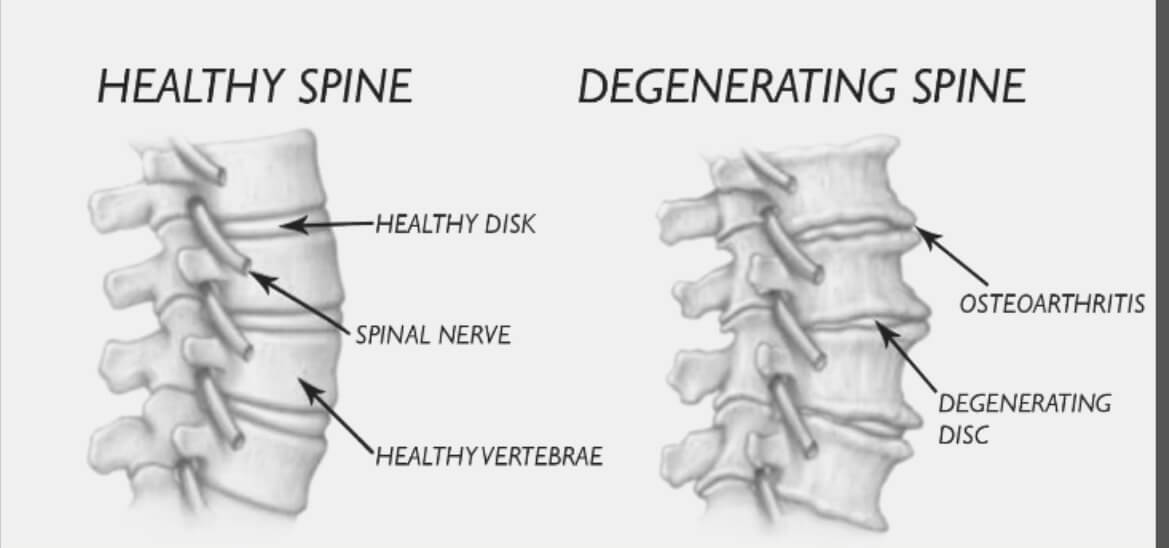
Cervical degenerative disc disease is a condition where the cushioning discs between the vertebrae in your neck gradually break down, potentially causing pain, stiffness, and nerve-related symptoms in the neck, shoulders, and arms.
Despite its alarming name, cervical DDD isn’t actually a “disease” in the traditional sense. It’s the natural result of decades of movement, combined with the gradual loss of water content in your spinal discs. Think of it less like catching an illness and more like the wear patterns on a favorite pair of shoes.
Your cervical spine consists of seven vertebrae (C1 through C7) with soft, gel-filled discs between most of them. These discs act as shock absorbers, allowing you to turn your head, look up at the sky, and bend forward to tie your shoes. At birth, these discs are about 80% water—plump, flexible, and resilient.⁵
Over time, the discs lose hydration. They become thinner and less effective at cushioning the vertebrae. The C5-C6 level typically shows the earliest and most significant degeneration, followed closely by C6-C7.⁶ This isn’t coincidental—these levels bear the greatest mechanical stress from daily movement.
As disc height decreases, several things can happen:
- The space between vertebrae narrows, potentially compressing nerve roots
- Bone spurs (osteophytes) may form as the body tries to stabilize the spine
- The facet joints experience increased stress, leading to arthritis-like changes
- Disc material may bulge or herniate, pressing on nearby nerves
The condition often overlaps with related problems like cervical stenosis (narrowing of the spinal canal), herniated discs, and cervical radiculopathy (pinched nerves causing arm symptoms).
Here’s the encouraging news: research shows that disc degeneration visible on MRI doesn’t always cause symptoms. Many people walk around with significant degenerative changes and feel perfectly fine.⁷ Your symptoms depend on multiple factors—not just what the imaging shows.
Symptoms of Cervical DDD
Cervical degenerative disc disease presents differently from person to person. Some people experience mild, occasional discomfort, while others deal with pain that affects every aspect of daily life.
Common Symptoms Include:
Chronic Neck Pain and Stiffness The hallmark symptom is a deep, aching pain in the neck that tends to worsen with activity and improve with rest. Morning stiffness is common—you might need 20-30 minutes before your neck “loosens up.”
Pain That Worsens with Movement Turning your head, looking up, or maintaining positions for extended periods (like working at a computer) typically aggravates symptoms. Many patients find that lying down provides relief.
Radiating Arm Pain and Numbness When degenerating discs compress nerve roots, symptoms can travel into the shoulders, arms, and hands. The pattern depends on which nerve is affected:
- C5 nerve: Shoulder and upper arm pain, difficulty raising the arm
- C6 nerve: Pain radiating to thumb and index finger, weakness in wrist extension
- C7 nerve: Pain extending to the middle finger, triceps weakness
This radiating pattern is called cervical radiculopathy—and it’s one of the conditions that responds particularly well to decompression therapy.
Headaches Cervical disc problems frequently contribute to headaches, particularly those that start at the base of the skull and radiate upward.
Reduced Range of Motion As degeneration progresses, you may notice difficulty turning your head fully to check blind spots while driving or looking up at high shelves.
Grinding or Crunching Sensations Some patients describe a grinding feeling (crepitus) when moving their neck—this relates to changes in the joint surfaces.
🚨 When to Seek Immediate Medical Attention
While most cervical DDD symptoms can be managed conservatively, certain warning signs require urgent evaluation:
- Progressive weakness in arms or legs
- Loss of coordination or difficulty walking
- Bowel or bladder dysfunction
- Severe pain after trauma
- Rapidly worsening symptoms
These could indicate cervical myelopathy (spinal cord compression), which may require more urgent intervention. If you experience any of these symptoms, seek immediate medical care.
What Causes Cervical Disc Degeneration?
Understanding what drives disc degeneration helps explain why certain treatments work—and why cervical decompression can be so effective.
Primary Causes:
Age-Related Changes The single biggest factor is time. Discs naturally lose water content and become less resilient with age. Research shows disc degeneration correlates strongly with age, with the number of affected levels increasing from an average of 0.7 in people in their 20s to 3.5 levels in those over 70.⁸
“Text Neck” and Forward Head Posture Modern life takes a toll on cervical discs. In a neutral position, your head weighs about 12 pounds. But when you flex your neck forward to look at a phone or computer, that effective weight increases dramatically—up to 60 pounds at 60 degrees of flexion.⁹ This chronic loading accelerates disc breakdown.
Genetics Research has identified genes that affect both disc structure and inflammatory responses in the spine. If your parents had significant disc problems, you may be more susceptible.¹⁰
Previous Injuries Whiplash from car accidents, sports injuries, or falls can initiate degenerative changes that progress over years.
Occupational Factors Jobs requiring prolonged sitting, repetitive neck movements, or overhead work place additional stress on cervical discs.
Lifestyle Factors Smoking restricts blood flow to discs, accelerating degeneration. Obesity and diabetes also contribute to faster disc breakdown.¹¹
Treatment Options: A Comparison
When diagnosed with cervical DDD, you’ll likely hear about several treatment options. Understanding how they compare helps you make an informed decision.
Treatment Comparison Table
| Treatment | How It Works | Success Rate | Recovery Time | Considerations |
|---|---|---|---|---|
| Cervical Decompression | Creates negative pressure to restore disc space and motion | 71-89%⁴ | None (continue normal activities) | Non-invasive; targets root cause |
| Physical Therapy | Strengthens supporting muscles, improves mobility | 60-70%¹² | Ongoing | Often combined with other treatments |
| Epidural Injections | Reduces inflammation around nerves | 50-70% (temporary)¹³ | 24-48 hours | Symptom relief, not correction; limited frequency |
| ACDF Surgery | Removes disc, fuses vertebrae | 80-90% for arm pain¹⁴ | 4-6 weeks restricted activity | Permanent spinal alteration; risk of adjacent segment disease |
| Disc Replacement | Replaces disc with artificial device | 80-90%¹⁵ | 4-6 weeks | Preserves motion; not suitable for all patients |
Why Surgery Isn’t Always Necessary
Here’s something the research consistently shows: most people with cervical DDD do NOT need surgery. Conservative treatments effectively manage symptoms for the majority of patients.¹⁶
Surgery becomes a consideration when:
- Conservative treatment fails after 6+ months
- Neurological symptoms are progressing
- Spinal cord compression (myelopathy) is present
- Quality of life is severely impacted
Even then, the choice isn’t always clear-cut. Studies show that surgery is more effective than conservative care for relieving arm pain (radiculopathy), but the results for neck pain alone are less impressive.¹⁷ If your primary complaint is neck pain without significant arm symptoms, conservative approaches like decompression therapy deserve serious consideration first.
How Cervical Decompression Treats DDD
This is where I get excited talking to patients—because cervical decompression directly addresses what’s actually happening in degenerative discs.
The Mechanism: Targeting Decreased Disc Space
The core problem in cervical DDD is loss of disc height and the resulting compression of surrounding structures. Traditional treatments like medication mask pain but don’t address this underlying issue. Surgery permanently alters anatomy. Decompression takes a different approach.
During cervical decompression, our computer-controlled Back On Trac decompression CHAIR (not a table—this distinction matters for comfort and effectiveness) gently creates negative pressure within the disc space. This negative intradiscal pressure does several things:
- Creates space between vertebrae, taking pressure off compressed nerves
- Promotes disc rehydration by drawing fluid and nutrients back into dehydrated discs
- Helps retract bulging disc material away from nerve roots
- Restores motion to stiff, degenerating segments
In my experience treating cervical DDD patients, most do amazing with this treatment. The key is that decompression directly targets the decreased disc space—it’s addressing the actual problem, not just covering up symptoms.
What Makes Our Approach Different
At Synergy Institute, we use the Back On Trac decompression CHAIR, which offers several advantages for cervical treatment:
- Computer-controlled precision: The system adjusts to your specific condition and response
- Comfortable positioning: You recline comfortably—no face-down positioning or harnesses
- Multi-directional treatment: Combines axial traction with lateral flexion, heat, and vibration
- Quick setup: About 35 seconds to get positioned and start treatment
What the Research Shows
Multiple studies support the effectiveness of spinal decompression for disc-related conditions:
- A study in the Journal of Neuroimaging found that decompression resulted in mechanical reduction, rehydration, and repair of herniated discs—with pain relief correlating to MRI improvements¹⁸
- Research published in the American Journal of Pain Management reported 71% success in 778 cases of decompression therapy⁴
- A comparative trial found 86% of patients with disc problems achieved “good to excellent” results with decompression compared to 55% with traditional traction¹⁹
The Synergy Approach to Cervical DDD
At Synergy Institute, we don’t just offer decompression as a standalone treatment. We’ve developed an integrative protocol that addresses cervical DDD from multiple angles.
Why Integrative Care Matters
Disc degeneration doesn’t happen in isolation. It affects—and is affected by—the surrounding muscles, joints, and nervous system. Treating only the disc while ignoring these related structures limits your results.
Our approach typically combines:
Cervical Decompression Therapy The foundation of treatment—restoring disc space and reducing nerve compression.
Chiropractic Care Gentle adjustments address joint restrictions that develop secondary to disc problems. Proper spinal alignment reduces abnormal stress on degenerating discs.
Acupuncture Particularly effective for the muscle tension and pain patterns that accompany cervical DDD.
Therapeutic Exercises Home exercises reinforce treatment gains and prevent recurrence.
Laser Therapy For patients with significant inflammation, our MLS laser can accelerate healing.
Our Credentials
Dr. Jennifer Wise has been treating cervical spine conditions since 2000—that’s over 25 years of hands-on experience with complex cases. Synergy Institute was one of the first clinics in Illinois to offer spinal decompression therapy when we introduced it in 2002. We’ve seen thousands of patients through our doors and continuously refined our protocols based on what actually works.
Wondering if cervical decompression is right for your degenerative disc disease?
📞 Call or text (630) 454-1300 to speak with our team. We’ll be upfront about whether you’re a good candidate.
Who Is a Good Candidate for Cervical Decompression?
Cervical decompression therapy works best for specific types of patients and conditions. Here’s how to know if you might benefit:
Ideal Candidates Include:
- Confirmed disc involvement on MRI: Whether it’s degeneration, bulging, or herniation at C3-C7
- Failed conservative care: Medication, rest, and basic physical therapy haven’t provided lasting relief
- Desire to avoid surgery: You want to exhaust non-surgical options first
- Neck pain with or without arm symptoms: Both isolated neck pain and radiculopathy can respond well
- No severe spinal instability: Your spine is structurally stable
Best Results Typically Occur When:
- Treatment begins before severe degeneration sets in
- Patients commit to the full treatment protocol (not just a few sessions)
- Home care recommendations are followed
- Contributing factors (posture, ergonomics) are addressed
Who Should NOT Receive Cervical Decompression
Being honest about limitations is part of responsible care. Certain conditions make cervical decompression inappropriate:
Contraindications Include:
- Severe spinal instability or fractures
- Active spinal infections or tumors
- Advanced osteoporosis with vertebral compression fractures
- Certain prior surgeries (spinal fusion with hardware at the treatment level)
- Severe cervical myelopathy requiring urgent surgical intervention
- Pregnancy
- Certain vascular conditions affecting blood flow to the brain
During your consultation, we’ll review your imaging and history to determine if decompression is appropriate for your situation. If it’s not, we’ll explain why and discuss alternative options.
What to Expect During Treatment
Knowing what to expect helps patients feel more comfortable and get better results.
Initial Consultation
Your first visit includes:
- Review of your MRI and any other imaging
- Detailed history of your symptoms
- Physical examination
- Discussion of treatment options
- Determination of candidacy for decompression
If you’re a good candidate, we’ll outline a treatment plan tailored to your specific condition.
The Treatment Session
Each cervical decompression session:
- Duration: 15-20 minutes of actual decompression time
- Position: You’ll recline comfortably in our Back On Trac chair
- Sensation: Most patients describe a gentle stretching feeling—many find it relaxing enough to fall asleep
- Pain: Treatment should NOT be painful. If you experience discomfort, we adjust immediately
- Setup time: About 35 seconds to get positioned
Treatment Protocol
A typical cervical DDD protocol involves:
| Phase | Duration | Frequency | Focus |
|---|---|---|---|
| Intensive | Weeks 1-2 | 3-5 sessions/week | Acute pain relief, initial disc response |
| Corrective | Weeks 3-6 | 2-3 sessions/week | Disc healing, structural improvement |
| Stabilization | Weeks 7-8+ | 1-2 sessions/week | Maintaining gains, prevention |
Total treatment typically involves 15-25 sessions over 4-8 weeks, depending on severity.
After Treatment
- Return to normal activities immediately—no restrictions
- No downtime or grogginess
- Most patients drive themselves to and from appointments
- Home exercises and ergonomic modifications support your progress
Why Choose Synergy Institute in Naperville?
Local Expertise
Synergy Institute is located at 4931 Illinois Route 59, Suite 121, in Naperville—convenient for patients throughout DuPage and Will Counties. We serve patients from:
- Naperville
- Aurora
- Bolingbrook
- Plainfield
- Oswego
- Lisle
- Wheaton
- And surrounding communities
What Sets Us Apart
Pioneer Experience: We’ve been offering spinal decompression since 2002—one of the first clinics in Illinois.
Integrative Approach: Chiropractic, acupuncture, physical therapy, and advanced treatments all under one roof.
Dr. Wise’s Expertise: Over 25 years treating complex spine conditions.
Advanced Equipment: Back On Trac decompression CHAIR designed specifically for cervical treatment.
Honest Assessment: We’ll tell you if you’re a good candidate—or if another approach would serve you better.
Insurance and Payment
Most major insurance plans are accepted. Call (630) 355-8022 to verify your benefits before your first visit.
Nutritional Support
Because cervical DDD is a chronic, degenerative condition, nutrition matters for healing. We offer a FREE nutritional assessment to identify any deficiencies that might be slowing your recovery.
Frequently Asked Questions
Can cervical degenerative disc disease be reversed?
Disc degeneration itself cannot be completely reversed—the structural changes are permanent. However, symptoms can absolutely improve, often dramatically. Cervical decompression therapy targets the consequences of degeneration (decreased disc space, nerve compression, restricted motion) and can restore function even when the underlying degeneration remains visible on imaging. Many patients achieve lasting pain relief and return to full activity.
Is cervical decompression therapy painful?
No. Most patients describe the sensation as a gentle stretch that’s actually quite relaxing. Many fall asleep during treatment. If you experience any discomfort, we adjust the parameters immediately. Treatment that causes pain isn’t effective treatment.
How long until I feel improvement?
Most patients notice some improvement within the first 4-6 sessions, though significant and lasting results typically develop over the full treatment protocol of 15-25 sessions. Some patients feel dramatically better quickly; others improve more gradually. We’ll track your progress throughout treatment.
Will I eventually need surgery anyway?
Not necessarily. Research shows that most people with cervical DDD can manage their condition successfully with conservative care. Surgery becomes necessary only when conservative treatment fails, neurological symptoms progress, or spinal cord compression threatens permanent damage. Many patients who complete decompression therapy never require surgical intervention.
What’s the difference between DDD and a herniated disc?
Degenerative disc disease refers to the overall breakdown of disc structure over time—loss of height, dehydration, and stiffening. A herniated disc occurs when the soft inner material of a disc pushes through the outer layer. DDD often leads to herniation, and both conditions frequently occur together. Cervical decompression can help with both.
Does insurance cover cervical decompression?
Coverage varies by plan. Many insurance plans cover spinal decompression therapy, particularly when conservative treatments have been tried first. We recommend calling (630) 355-8022 to verify your specific benefits before beginning treatment.
Can I continue working during treatment?
Yes. Cervical decompression requires no downtime. You can return to work and normal activities immediately after each session. We may recommend modifying certain activities (like prolonged computer work) and will provide ergonomic guidance to support your treatment.
What activities should I avoid with cervical DDD?
Avoid activities that significantly load or repeatedly flex/extend your neck: heavy overhead lifting, high-impact sports, prolonged positions with your head tilted forward, and any activity that causes significant pain. We’ll provide specific guidance based on your condition.
Will my cervical DDD continue to get worse?
Degeneration tends to progress slowly over time, but symptoms don’t necessarily worsen. In fact, research shows that DDD symptoms often stabilize and even improve by age 60 as the spine enters its “stabilization” phase.²⁰ Proper treatment and lifestyle modifications can slow progression and minimize symptoms.
Is chiropractic care safe for cervical DDD?
When performed by a qualified practitioner who understands your condition, chiropractic care is generally safe and often beneficial for cervical DDD. We use gentle techniques appropriate for degenerative conditions and modify our approach based on your imaging findings.
How is cervical DDD diagnosed?
Diagnosis typically involves a combination of clinical examination (assessing symptoms, range of motion, and neurological function) and imaging. MRI is the gold standard, showing disc hydration, height, bulging, and nerve compression. X-rays can reveal disc space narrowing and bone spurs but don’t show soft tissue detail.
What causes cervical discs to degenerate faster than normal?
Accelerated degeneration can result from genetics, previous injuries (especially whiplash), poor posture, occupational factors, smoking, obesity, and diabetes. Chronic forward head posture from device use (“text neck”) is an increasingly common contributor.
Take the Next Step
Cervical degenerative disc disease doesn’t have to mean a future of chronic pain or inevitable surgery. Most patients with cervical DDD respond well to conservative treatment—particularly when that treatment directly targets the underlying problem of decreased disc space and restricted motion.
At Synergy Institute, we’ve been helping patients with disc problems find relief since 2002. Our integrative approach combines cervical decompression therapy with chiropractic care, acupuncture, and supportive treatments—all under one roof, all coordinated by a team that understands your condition.
If you’re ready to explore whether cervical decompression could help your degenerative disc disease, we’d welcome the opportunity to evaluate your situation.
📞 Ready to Find Relief from Cervical DDD?
Call or text (630) 454-1300 to schedule your consultation.
Office: (630) 355-8022
Synergy Institute Acupuncture & Chiropractic 4931 Illinois Route 59, Suite 121 Naperville, IL 60564
Serving Naperville, Aurora, Bolingbrook, Plainfield, Oswego, and the western Chicago suburbs since 1999.
Medical Disclaimer
This article is for informational purposes only and does not constitute medical advice, diagnosis, or treatment. The information provided should not be used as a substitute for professional medical advice from a qualified healthcare provider. Always consult with your physician or other qualified healthcare provider before beginning any new treatment or with questions regarding a medical condition.
Individual results may vary. Cervical decompression therapy may not be appropriate for all patients. The success rates cited in this article are based on published research and may not reflect individual outcomes.
If you are experiencing a medical emergency—including severe pain after trauma, progressive weakness, or loss of bladder/bowel control—call 911 immediately.
Reviewed by: Dr. Jennifer Wise, DC Last Updated: January 2026
References
- Wang C, et al. Prevalence of cervical spine degenerative changes in elderly population and its weak association with aging, neck pain, and osteoporosis. Ann Transl Med. 2019;7(18):486.
- Margetis K, Dowling TJ. Cervical Degenerative Disc Disease. StatPearls [Internet]. Treasure Island (FL): StatPearls Publishing; 2025.
- Teraguchi M, et al. Prevalence and distribution of intervertebral disc degeneration over the entire spine in a population-based cohort: the Wakayama Spine Study. Osteoarthritis Cartilage. 2014;22(1):104-110.
- Shealy CN, Borgmeyer V. Decompression, reduction, and stabilization of the lumbar spine: a cost-effective treatment for lumbosacral pain. Am J Pain Manage. 1997;7:63-65.
- Urban JP, Roberts S. Degeneration of the intervertebral disc. Arthritis Res Ther. 2003;5(3):120-130.
- Okada E, et al. Disc degeneration of cervical spine on MRI in patients with lumbar disc herniation. Eur Spine J. 2011;20(4):585-591.
- Boden SD, et al. Abnormal magnetic-resonance scans of the cervical spine in asymptomatic subjects. J Bone Joint Surg Am. 1990;72(8):1178-1184.
- Kato F, et al. Patterns of Cervical Disc Degeneration: Analysis of Magnetic Resonance Imaging of Over 1000 Symptomatic Subjects. Global Spine J. 2018;8(3):254-259.
- Hansraj KK. Assessment of stresses in the cervical spine caused by posture and position of the head. Surg Technol Int. 2014;25:277-279.
- Battié MC, et al. The Twin Spine Study: Contributions to a changing view of disc degeneration. Spine J. 2009;9(1):47-59.
- Samartzis D, et al. A population-based study of juvenile disc degeneration and its association with overweight and obesity, low back pain, and diminished functional status. J Bone Joint Surg Am. 2011;93(7):662-670.
- Thoomes EJ, et al. Value of physical tests in diagnosing cervical radiculopathy: a systematic review. Spine J. 2018;18(1):179-189.
- Manchikanti L, et al. Cervical epidural injections in chronic discogenic neck pain without disc herniation or radiculitis. Pain Physician. 2012;15(4):E405-E434.
- Rhee JM, Yoon T, Riew KD. Cervical radiculopathy. J Am Acad Orthop Surg. 2007;15(8):486-494.
- Hu Y, et al. Cervical disc arthroplasty versus anterior cervical discectomy and fusion for the treatment of single-level cervical disc degenerative diseases: a meta-analysis of randomized controlled trials. J Orthop Surg Res. 2019;14(1):412.
- Selph SS, et al. Cervical Degenerative Disease Treatment: A Systematic Review. Agency for Healthcare Research and Quality (US); 2023.
- Carette S, Fehlings MG. Clinical practice: Cervical radiculopathy. N Engl J Med. 2005;353(4):392-399.
- Eyerman EL. MRI Evidence of Nonsurgical, Mechanical Reduction, Rehydration and Repair of the Herniated Lumbar Disc. J Neuroimaging. 1998;8(2):1-4.
- Shealy CN, Borgmeyer V. Decompression, reduction, and stabilization of the lumbar spine: a cost-effective treatment for lumbosacral pain. Am J Pain Manage. 1997;7:63-65.
- Kirkaldy-Willis WH, Farfan HF. Instability of the lumbar spine. Clin Orthop Relat Res. 1982;(165):110-123.
- Ontario Health (Quality). Artificial discs for lumbar and cervical degenerative disc disease—update. Ont Health Technol Assess Ser. 2006;6(10):1-98.
- Cleveland Clinic. Degenerative Disk Disease. https://my.clevelandclinic.org/health/diseases/16912-degenerative-disk-disease. Accessed January 2026.
- Choi YK. Lumbar foraminal neuropathy: an update on non-surgical management. Korean J Pain. 2019;32(3):147-159.
- Moon MS, et al. Conservative treatment of cervical disc herniation. J Korean Orthop Assoc. 2007;42(4):447-454.