
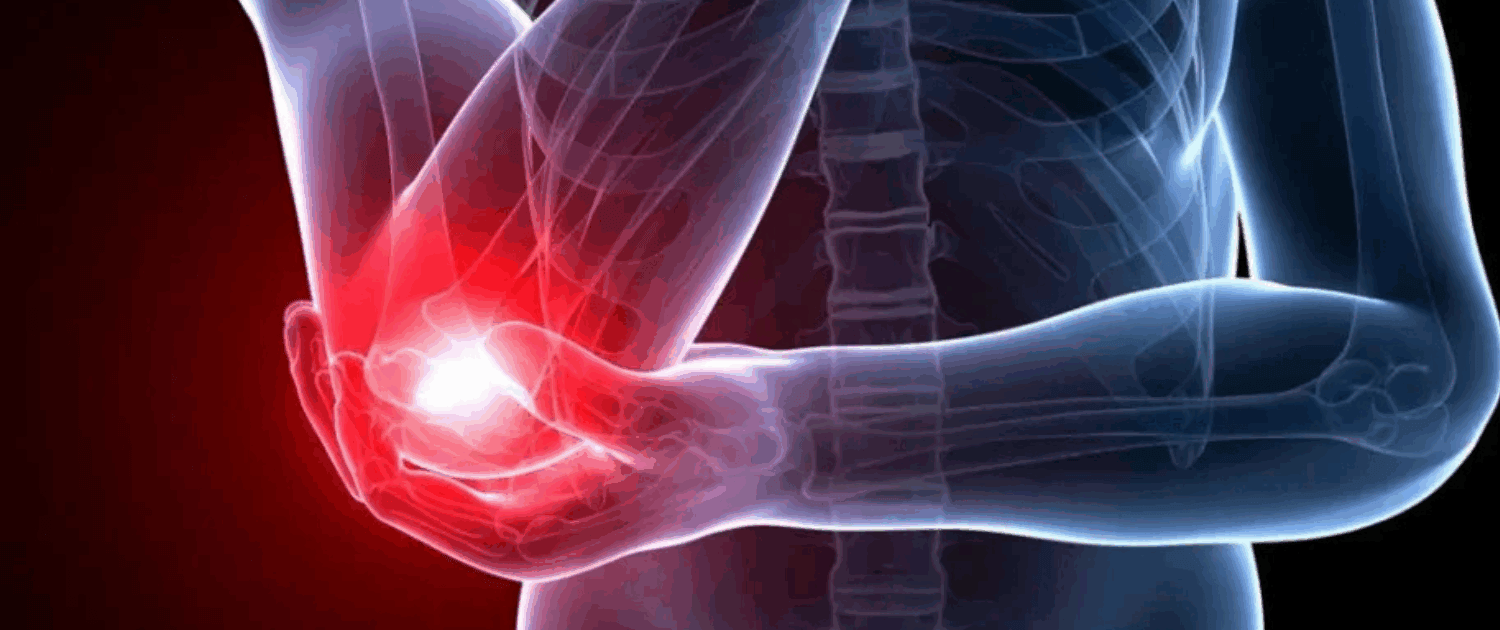
MLS Laser for Elbow Pain in Naperville IL
You’ve been dealing with elbow pain long enough to know that rest alone isn’t fixing it. Maybe it’s the outer elbow that lights up every time you grip a coffee mug or shake someone’s hand. Maybe it’s the inner elbow that aches through your entire workday. Either way, the standard playbook — ice, bracing, a round of physical therapy — hasn’t produced the lasting relief you were hoping for.
At some point, you start wondering if this is just something you have to live with — or if anyone actually knows how to fix it.
MLS laser therapy works differently from those approaches. Instead of managing symptoms from the outside, it works at the cellular level — reducing the inflammatory environment that’s keeping the tendon irritated while simultaneously stimulating the tissue repair the elbow needs to actually heal. After 26+ years treating elbow conditions in Naperville, I use MLS laser as a core component of our elbow recovery program because it addresses something passive treatments simply can’t: the biological environment inside the tendon itself.
Synergy Institute Acupuncture & Chiropractic is one of the most experienced providers of MLS laser therapy for elbow pain in Naperville, using the Cutting Edge M6 — advanced dual-wavelength technology — as part of a structured, sequenced treatment protocol that addresses the full picture of what’s driving your condition.
If you’ve been searching for MLS laser therapy for elbow pain near me in the Naperville area, this article covers how MLS works for both tennis elbow and golfer’s elbow, how it differs from the cold laser devices offered at other local clinics, and how we use it as part of a protocol that produces results that hold.
MLS laser therapy for elbow pain — what you should know: Tennis elbow and golfer’s elbow are tendinosis conditions — characterized by degenerated tendon collagen and a failed healing response, not primarily active inflammation. MLS laser therapy uses simultaneous dual-wavelength photobiomodulation to reduce the inflammatory environment and stimulate cellular repair, making it clinically distinct from single-wavelength cold laser or LLLT devices. At Synergy Institute Acupuncture & Chiropractic, we use the Cutting Edge M6 — a true MLS device — as part of the Synergy Elbow Restore Program, sequenced alongside SoftWave therapy, chiropractic, and acupuncture based on each patient’s specific presentation.
“Low-level laser therapy has demonstrated statistically significant improvements in pain and function for lateral epicondylitis, with evidence supporting its use as part of a multimodal treatment approach.” — Bjordal et al., BMC Musculoskeletal Disorders, 2008
Our approach to MLS laser for elbow pain: We identify whether the primary driver is lateral tendon degeneration (tennis elbow), medial tendon degeneration with possible ulnar nerve involvement (golfer’s elbow), or a combination — then apply MLS laser in the sequence that produces the most durable recovery.
Conveniently located off Illinois Rte 59 near 95th Street in Naperville, serving patients from Plainfield, Bolingbrook, Aurora, Oswego, and surrounding communities.
Quick Facts: MLS Laser Therapy for Elbow Pain
| Fact | Details |
|---|---|
| Device | Cutting Edge M6 — true dual-wavelength MLS laser |
| Conditions treated | Tennis elbow (lateral epicondylitis), golfer’s elbow (medial epicondylitis) |
| Wavelengths | 808nm continuous + 905nm pulsed — simultaneous emission |
| Session length | 10–15 minutes |
| Typical course | 6–10 sessions depending on chronicity |
| Downtime | None — return to normal activity immediately |
| Used alongside | SoftWave therapy, chiropractic, acupuncture (Synergy Elbow Restore Program) |
What Is MLS Laser Therapy?
MLS stands for Multiwave Locked System — a specific laser technology that simultaneously emits two therapeutic wavelengths of light. The 808nm continuous wavelength targets inflammation and pain. The 905nm pulsed wavelength penetrates deeper to stimulate cellular repair and tissue regeneration. The two wavelengths work together in a synchronized, locked emission — which is what separates MLS from every single-wavelength cold laser or low-level laser therapy (LLLT) device.
The device we use at our Naperville clinic is the Cutting Edge M6 — a Class IV MLS laser cleared by the FDA for pain and inflammation reduction. Class IV means it delivers therapeutic energy at a level that can reach deep tissue structures, including the tendons of the elbow. This matters clinically: the extensor and flexor tendons of the elbow sit close to the surface, but the degeneration is happening within the tendon body — and that’s where the energy needs to reach.
Other clinics in the Naperville area offer cold laser or LLLT. These are single-wavelength, lower-powered devices. They have some evidence for surface-level pain modulation. They don’t deliver the simultaneous dual-wavelength photobiomodulation that MLS produces — and that distinction is clinically meaningful for tendon conditions.
Why Elbow Tendinopathy Responds to MLS Laser
Here’s the clinical reality that most elbow pain treatments overlook: chronic tennis elbow and golfer’s elbow are not primarily inflammation problems. Research has established that chronically painful elbow tendons show tendinosis — disorganized, degenerated collagen — rather than the significant inflammatory infiltrate that ice, NSAIDs, and cortisone are designed to target. The tissue has failed to repair itself, not because it’s actively inflamed, but because the tendons have a poor blood supply and can’t mount the healing response they need.
This is why cortisone injections wear off. They calm the pain temporarily while leaving the underlying tissue damage untouched. When the effect fades, the degenerated tendon is still there — and the pain returns.
MLS laser addresses this from a different angle. The 808nm wavelength reduces the local inflammatory environment that’s perpetuating the pain cycle. The 905nm wavelength stimulates mitochondrial activity inside the tendon cells — accelerating ATP production, promoting collagen synthesis, and creating the cellular conditions for tissue repair. Together, they work on both the symptom layer and the tissue layer simultaneously.
For elbow tendinopathy specifically, this dual action is why MLS laser pairs so effectively with SoftWave therapy in our Elbow Restore Program. SoftWave drives the regenerative cascade — angiogenesis, stem cell recruitment, collagen remodeling. MLS laser clears the inflammatory environment so that regeneration can take hold. The two work on the same tissue through complementary mechanisms, and the clinical results are consistently stronger together than either alone.
🚨 Seek immediate care if you experience: sudden severe elbow swelling, complete loss of grip strength, acute numbness extending through the hand, or elbow pain following a fall or direct impact. These may indicate fracture, ligament rupture, or significant nerve injury requiring urgent evaluation. Call 911 or go to your nearest emergency room.
How MLS Laser Therapy Works for Elbow Pain
During a session at our Naperville clinic, the Cutting Edge M6 handpiece is positioned directly over the affected elbow — the lateral epicondyle for tennis elbow, the medial epicondyle for golfer’s elbow, and along the forearm muscle belly where compensatory tension develops alongside the tendon degeneration.
The laser energy penetrates the skin and underlying tissue without heat, without discomfort, and without any recovery period. Most patients feel nothing during treatment — occasionally a mild warming sensation over the treatment area. Sessions run 10–15 minutes. You walk in, get treated, and go about your day.
At the cellular level, here’s what’s happening:
Photobiomodulation — Light energy is absorbed by chromophores within the mitochondria of tendon cells, triggering a cascade of metabolic activity. Cells that have been in a stalled healing state begin producing ATP at higher rates — which means more energy available for tissue repair.
Inflammation modulation — The 808nm wavelength reduces pro-inflammatory cytokines and prostaglandins in the local tissue environment. This doesn’t suppress the immune response the way cortisone does — it modulates it, shifting the tissue away from a chronic inflammatory state toward a repair-oriented state.
Collagen stimulation — Studies support that photobiomodulation promotes fibroblast activity and collagen synthesis in tendon tissue — the building blocks of the structural repair that chronic tendinopathy requires.
Microcirculation enhancement — Improved local blood flow delivers oxygen and nutrients to tissue that is already poorly vascularized. For elbow tendons specifically, better circulation is one of the most important factors in recovery — and one of the hardest things to achieve through passive treatment alone.
MLS vs Cold Laser — Why the Device Matters
When patients research laser therapy in Naperville, they often encounter terms like cold laser, low-level laser, or LLLT. These refer to single-wavelength devices that operate at lower power levels — typically Class III. They have some evidence for surface pain modulation and minor tissue effects.
MLS laser is a different category of technology. The simultaneous locked emission of two wavelengths — one targeting inflammation, one targeting cellular repair — is what defines true MLS. You can’t replicate that with a single-wavelength device, regardless of how it’s marketed.
The Cutting Edge M6 is one of a small number of devices that delivers authentic MLS therapy. When you’re choosing a laser therapy provider in Naperville for a tendon condition, the question worth asking is: what device are they using, and does it actually deliver dual-wavelength simultaneous emission? The answer determines whether you’re getting MLS or something marketed to sound like it.
Tennis Elbow vs Golfer’s Elbow — How MLS Applies to Each
Both conditions respond to MLS laser, but the clinical picture is different — and the protocol reflects that.
Tennis elbow (lateral epicondylitis) involves degeneration of the extensor carpi radialis brevis tendon at the lateral epicondyle — the bony prominence on the outside of the elbow. The pain worsens with gripping, wrist extension, and forearm supination. Patients typically describe a burning or aching sensation on the outer elbow that radiates into the forearm. MLS laser is applied to the lateral epicondyle and extensor muscle belly. Because tennis elbow rarely has a significant nerve component, the protocol is more straightforward — tissue repair and inflammation modulation are the primary targets.
For a full overview of tennis elbow treatment options at our clinic, see our best treatments for tennis elbow in Napervillearticle.
Golfer’s elbow (medial epicondylitis) involves degeneration of the flexor-pronator tendon mass at the medial epicondyle — the inside of the elbow. The pain worsens with gripping, wrist flexion, and forearm pronation. What makes golfer’s elbow clinically more complex is the ulnar nerve — it runs directly adjacent to the medial epicondyle through the cubital tunnel, and it frequently gets irritated alongside the tendon degeneration. When that happens, patients experience numbness and tingling in the ring and pinky fingers alongside the inner elbow pain.
MLS laser addresses both the tendon tissue and the nerve environment in golfer’s elbow cases. The anti-inflammatory and microcirculation effects of the 808nm wavelength are particularly relevant when the ulnar nerve is involved — nerve tissue responds well to the improved local environment MLS creates. When nerve involvement is significant, we layer in acupuncture for neural modulation and, when needed, Stimpod NMS460 neuromodulation for targeted nerve healing.
For a full breakdown of golfer’s elbow treatment, see our best treatments for golfer’s elbow in Naperville article.
MLS Laser as Part of the Synergy Elbow Restore Program
Most providers in Naperville offer one tool for elbow pain. A physical therapist runs eccentric exercises. A sports medicine physician offers a cortisone shot. Another clinic runs cold laser as a standalone session. Each has some value in isolation — but none addresses the full picture of what’s driving chronic elbow tendinopathy.
The best elbow pain treatment in Naperville isn’t about one therapy — it’s about applying the right combination in the right sequence.
At our clinic, MLS laser plays a specific role within the Synergy Elbow Restore Program — it’s the inflammation and cellular environment layer that makes the rest of the protocol more effective.
Phase 1 — Clear the environment and begin tissue repair.
MLS laser is applied first — reducing the chronic inflammatory state that’s been perpetuating the pain cycle and stimulating the cellular activity the tendon needs to begin repairing. For cases where the tissue degeneration is significant, SoftWave therapy runs alongside MLS — driving angiogenesis and stem cell recruitment while MLS clears the environment. The two work through different mechanisms on the same tissue, and the combined effect is consistently stronger than either alone.
Phase 2 — Address the nerve and correct the kinetic chain.
When ulnar nerve involvement is present in golfer’s elbow cases, acupuncture addresses neural modulation and local microcirculation alongside the tendon work. Chiropractic care to the elbow joint, wrist, shoulder, and cervical spine corrects the kinetic chain dysfunction that loads the epicondyle disproportionately. These adjustments come after tissue healing has begun — corrections into damaged tissue don’t hold.
Phase 3 — Rebuild and strengthen.
Once pain is meaningfully reduced and tissue is healing, ARPwave neuromuscular reeducation retrains the movement patterns and muscle recruitment that broke down during the painful phase. Strengthening follows healing — not the other way around.
Treatment Comparison — Elbow Pain in Naperville IL
| Treatment | Mechanism | Best Role | Addresses Root Cause? |
|---|---|---|---|
| MLS Laser (Cutting Edge M6) | Dual-wavelength photobiomodulation — inflammation + cellular repair | Environment layer; pairs with SoftWave | ✅ Yes — tissue and nerve environment |
| SoftWave Therapy (TRT OrthoGold 100) | Angiogenesis, stem cell recruitment, collagen remodeling | Primary regenerative — chronic tendinopathy | ✅ Yes — tissue regeneration |
| Shockwave Therapy | Acoustic waves stimulate tissue healing | Chronic tendinopathy | ✅ Partial |
| Acupuncture | Neural modulation, microcirculation | Nerve component (golfer’s elbow primarily) | ✅ Yes — nerve layer |
| Chiropractic | Kinetic chain correction | After tissue healing — corrections hold | ✅ Yes — removes load |
| Cortisone injection | Anti-inflammatory | Short-term symptom relief only | ❌ No — doesn’t repair tissue |
| Cold laser / LLLT | Single-wavelength surface modulation | Limited — different technology tier | ⚠️ Partial |
| Surgery | Debridement, tendon repair | Last resort after conservative care fails | ✅ Structural |
Who Is a Good Candidate for MLS Laser Elbow Treatment?
You’re likely a good candidate if:
- You have lateral or medial elbow pain worsening with gripping or forearm activity
- Pain has persisted more than 4–6 weeks despite rest, bracing, or stretching
- Cortisone injections have worn off or provided minimal lasting relief
- You have golfer’s elbow with accompanying finger numbness or tingling
- You want a non-invasive approach that works at the tissue level
- You’re looking to avoid surgery and want to explore regenerative options first
You are NOT a good candidate if:
- Your pain is from an acute fracture, dislocation, or ligament rupture — orthopedic evaluation first
- You have active cancer in or near the treatment area (laser is contraindicated over malignancy)
- You are pregnant (specific modality restrictions apply)
- You have a pacemaker or photosensitive condition affecting the treatment area
- Your symptoms suggest advanced cubital tunnel syndrome with significant motor weakness — conditions like neuropathy or carpal tunnel syndrome with motor involvement need imaging evaluation before conservative care begins
I want to be direct with you: not every elbow presentation is right for MLS laser, and not every elbow presentation needs it. If I evaluate you and determine that a different approach or a referral to a specialist would serve you better, I’ll tell you directly. That’s how we’ve built the reputation we have over 26+ years in Naperville.
What to Expect at Synergy Institute
Your first visit starts with a thorough evaluation — the elbow itself, your wrist mechanics, shoulder mobility, grip strength, and for golfer’s elbow cases, a complete assessment for ulnar nerve involvement. We don’t apply laser to an elbow we haven’t evaluated. The presentation tells us whether MLS alone is appropriate, or whether SoftWave, acupuncture, or chiropractic should be part of the program from the start.
Treatment sessions are 10–15 minutes. No preparation required. No downtime after. Most patients complete 6–10 sessions depending on how long the condition has been present and how the tissue responds. We reassess regularly — if something isn’t working, we adjust.
The $49 Discovery Session includes a full evaluation and lets us give you an honest answer about whether our program is right for your situation before you commit to anything further.
Frequently Asked Questions — MLS Laser for Elbow Pain in Naperville IL
Does MLS laser therapy actually work for tennis elbow and golfer’s elbow?
Yes — the evidence for laser therapy in lateral epicondylitis is meaningful. A systematic review published in BMC Musculoskeletal Disorders found statistically significant improvements in pain and grip strength with laser therapy for lateral elbow tendinopathy. The key variable is the device and protocol. True MLS therapy — dual-wavelength simultaneous emission at Class IV power levels — produces different results than single-wavelength cold laser. At our clinic, we use the Cutting Edge M6 and apply it as part of a sequenced protocol, not as a standalone treatment.
How is MLS laser different from cold laser therapy offered at other clinics?
Cold laser and LLLT are single-wavelength, lower-powered devices — typically Class III. They have some evidence for surface pain modulation. MLS laser is a different technology: two wavelengths emitted simultaneously in a locked pattern — one targeting inflammation (808nm continuous), one targeting cellular repair (905nm pulsed). The simultaneous emission is what defines true MLS and what produces the combined anti-inflammatory and tissue repair effect. You can’t replicate that with a single-wavelength device.
How many MLS laser sessions does elbow pain typically require?
Most patients with tennis or golfer’s elbow complete 6–10 sessions. Acute or recent cases often respond within 6 sessions. Chronic cases — those present for 6 months or longer — typically benefit from the full 10-session course, often combined with SoftWave for the regenerative layer. We reassess regularly and adjust based on how the tissue is responding rather than running a fixed number of sessions regardless of progress.
Is MLS laser painful?
No. Most patients feel nothing during treatment — occasionally a mild warmth over the treatment area. There is no discomfort, no anesthesia required, and no recovery period. You can return to normal activity immediately after each session.
Can MLS laser help golfer’s elbow with finger numbness?
Yes — the ulnar nerve component that causes finger numbness in golfer’s elbow responds well to MLS laser’s anti-inflammatory and microcirculation effects. The 808nm wavelength helps create a better local tissue environment for both the tendon and the adjacent nerve. For cases where the numbness is significant or persistent, we add acupuncture for neural modulation and Stimpod NMS460 neuromodulation when the nerve needs more targeted support. Most patients with nerve involvement see the numbness improve as both the tendon and nerve environments are addressed.
Can I do MLS laser if I’ve already had a cortisone injection?
Yes — typically. Cortisone injections and MLS laser work through entirely different mechanisms. Cortisone suppresses inflammation temporarily. MLS laser works at the cellular level to shift the tissue toward repair. We do recommend waiting 4–6 weeks after a cortisone injection before starting laser therapy, as the injection temporarily alters the local tissue environment. If you’ve had recent injections, mention this at your evaluation and we’ll time the protocol appropriately.
Does insurance cover MLS laser therapy for elbow pain?
MLS laser therapy is not currently covered by most insurance plans. Chiropractic evaluation and care may be covered depending on your plan. We accept HSA and FSA accounts for laser therapy. In-house payment plans are available. Call or text (630) 454-1300 for current pricing — we’re transparent about costs before you commit to anything.
Why choose Synergy Institute for MLS laser elbow treatment in Naperville?
Three things distinguish our approach. First, we use the Cutting Edge M6 — true dual-wavelength MLS, not cold laser marketed under a similar name. Second, we apply MLS as part of a sequenced elbow protocol that matches treatment to your specific presentation — tendon, nerve, and kinetic chain — rather than running laser as a standalone session. Third, 26+ years of clinical experience treating elbow conditions means we’ve seen what works, what doesn’t, and when to refer. If MLS isn’t the right tool for your situation, we’ll tell you.
Schedule Your MLS Laser Elbow Evaluation in Naperville
If elbow pain has been limiting your grip, your work, your game, or your daily life — and passive treatments haven’t produced lasting results — we’d like to evaluate what’s actually driving it. At Synergy Institute Acupuncture & Chiropractic, we’ll assess the full picture and give you an honest answer about whether our MLS laser program is right for your situation.
Start with our $49 Discovery Session — a complete evaluation that tells you exactly what’s going on and what we’d recommend before you commit to any treatment plan.
Call or text (630) 454-1300, or call our office directly at (630) 355-8022.
Synergy Institute Acupuncture & Chiropractic 4931 Illinois Rte 59, Suite 121 Naperville, IL 60564
Serving Naperville, Plainfield, Bolingbrook, Aurora, Oswego, Romeoville, and surrounding communities.
References
- Bjordal JM, Lopes-Martins RA, Joensen J, et al. A systematic review with procedural assessments and meta-analysis of low level laser therapy in lateral elbow tendinopathy. BMC Musculoskelet Disord. 2008;9:75. https://pubmed.ncbi.nlm.nih.gov/18510742/
- Maffulli N, Khan KM, Puddu G. Overuse tendon conditions: time to change a confusing terminology. Arthroscopy.1998;14(8):840–843. https://pubmed.ncbi.nlm.nih.gov/9848612/
- Tumilty S, Munn J, McDonough S, et al. Low level laser treatment of tendinopathy: a systematic review with meta-analysis. Photomed Laser Surg. 2010;28(1):3–16. https://pubmed.ncbi.nlm.nih.gov/19708800/
- Dingemanse R, Randsdorp M, Koes BW, Huisstede BM. Evidence for the effectiveness of electrophysical modalities for treatment of medial and lateral epicondylitis: a systematic review. Br J Sports Med.2014;48(12):957–965. https://pubmed.ncbi.nlm.nih.gov/23335238/
- Notarnicola A, Moretti B. The biological effects of extracorporeal shock wave therapy (ESWT) on tendon tissue. Muscles Ligaments Tendons J. 2012;2(1):33–37. https://pmc.ncbi.nlm.nih.gov/articles/PMC3666498/
- Coombes BK, Bisset L, Vicenzino B. Efficacy and safety of corticosteroid injections and other injections for management of tendinopathy: a systematic review. Lancet. 2010;376(9754):1751–1767. https://pubmed.ncbi.nlm.nih.gov/20970844/
- Hoogvliet P, Randsdorp MS, Dingemanse R, Koes BW, Huisstede BM. Does effectiveness of exercise therapy and mobilisation techniques offer guidance for the treatment of lateral and medial epicondylitis? A systematic review. Br J Sports Med. 2013;47(17):1112–1119. https://pubmed.ncbi.nlm.nih.gov/23980919/
- Hamblin MR. Mechanisms and applications of the anti-inflammatory effects of photobiomodulation. AIMS Biophys.2017;4(3):337–361. https://pmc.ncbi.nlm.nih.gov/articles/PMC5523874/
Medical Disclaimer: The information in this article is intended for educational purposes only and does not constitute medical advice. Elbow pain can have multiple causes, some of which require urgent medical attention. Always consult a qualified healthcare provider for diagnosis and treatment recommendations specific to your condition. If you are experiencing a medical emergency, call 911 immediately.
Reviewed by Dr. Jennifer Wise, DC, Acupuncturist — April 2026