
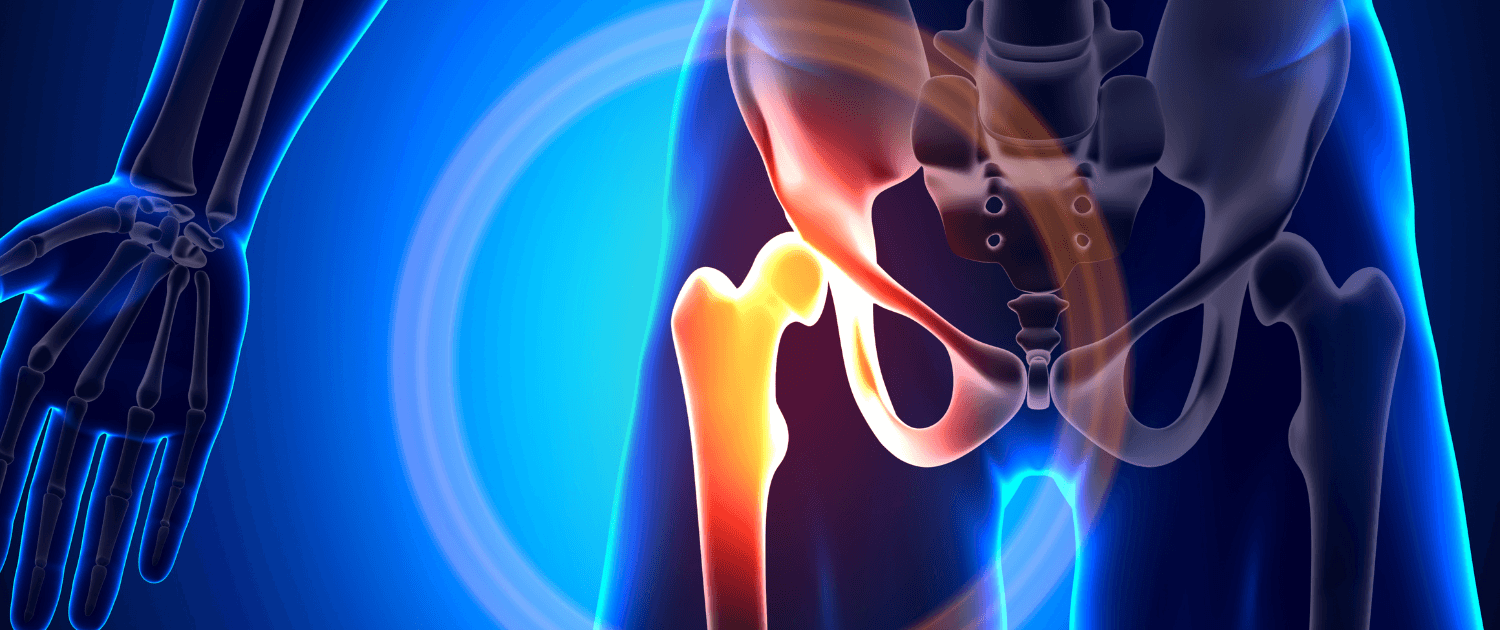
SI Joint Pain vs. Hip Pain in Naperville IL — How to Tell the Difference
Before we talk about treatment, do one thing: point to exactly where it hurts.
Where your finger lands tells me more than you’d think — and it’s the first reason so many people who say they have “hip pain” are actually dealing with something else entirely.
If you’ve been searching for help with SI joint pain or hip pain in Naperville, here’s the distinction that changes everything: a huge share of what people call “hip pain” isn’t the hip joint at all — it’s the sacroiliac (SI) joint, the spot where your pelvis meets your spine. They feel it in the back of the hip or the buttock, call it their hip, and get treated for a hip that’s working just fine. After evaluating hip and pelvis conditions in Naperville since 2000, I’ve learned that the single fastest way to sort it out starts with that one finger. This guide shows you how to tell SI joint pain from true hip pain — and why getting it right is the difference between relief and another round of treatment that doesn’t work.
Direct answer: SI joint pain and hip pain are easy to confuse because they sit close together, but they separate cleanly on two things: location and movement. SI joint pain is felt at the dimple just below the belt line, off to one side, and worsens with transitions like rising from a chair, rolling in bed, or getting out of a car. True hip pain is felt in the groin or deep in the joint and worsens with walking and rotating the leg. The fastest tell is to point: one finger on the dimple means the SI joint; a hand on the groin means the hip.
Synergy Institute Acupuncture & Chiropractic is a sacroiliac joint and hip pain treatment clinic located in Naperville, Illinois, on Illinois Rte 59 near the 111th Street intersection, serving patients from Naperville, Plainfield, Bolingbrook, Aurora, and Oswego.
What sets our approach apart is that we evaluate the hip, the SI joint, and the lumbar spine together — through chiropractic examination and, when the spine is involved, spinal decompression — rather than treating “hip pain” as a single thing. Most clinics treat what you call it. We find out what it actually is first.
“The Fortin finger test — having the patient point to the site of pain with one finger — reliably indicates sacroiliac joint pain when the finger localizes to the area just below and inward from the posterior superior iliac spine.” — Fortin & Falco, American Journal of Orthopedics
Start by Pointing to It
This is the test you can do right now, and it’s the same one I start with in the room. Point one finger at the exact center of your pain. Where it lands narrows the source immediately:
| Where Your Finger Lands | The Likely Source |
|---|---|
| One spot at the dimple just below the belt line, on one side | The SI joint |
| The groin, or deep in the front of the hip | The hip joint (arthritis, labral tear, impingement) |
| The outer hip — and you use your whole hand, not one finger | Soft tissue (bursitis or gluteal tendinopathy) |
| A broad area across the low back, maybe radiating down the leg | The lumbar spine or sciatica |
The reason this works: people can localize SI joint pain to a single point — that’s a recognized clinical sign. True hip-joint pain is deeper and harder to pinpoint, so people tend to cup the groin or the front of the hip with a whole hand. Soft-tissue problems spread across the outer hip. Spine problems feel broad and travel. One question — “point to it” — and you’ve already separated four very different problems that all get called “hip pain.”
SI Joint Pain vs. Hip Pain — Side by Side
Once location points you in a direction, movement confirms it. Here’s how the two compare:
| SI Joint Pain | Hip (Joint) Pain | |
|---|---|---|
| Where it’s felt | Dimple below the belt line, buttock, one side | Groin and deep front of the hip |
| What it is | Dysfunction of the joint between pelvis and spine | Problem inside the hip joint (arthritis, labrum, impingement) |
| What makes it worse | Rising from a chair, rolling in bed, getting out of a car, stairs, standing on one leg | Walking, weight-bearing, rotating the leg, bringing knee to chest |
| How it refers | Can radiate into the buttock and down the leg (mimics sciatica) | Can ache into the thigh and, occasionally, the knee |
| How it’s treated | Restore SI joint mechanics, address the pelvis and lumbar spine | Treat the joint and surrounding tissue directly |
The tell that catches most people: SI joint pain flares on transitions — the moment you change position. True hip pain flares on loading — when you put weight through it and move. If it hurts most when you stand up, roll over, or step out of the car, that’s the SI joint talking, not your hip.
Which Sounds More Like You?
Run through these. Whichever list sounds like your pain points you toward the source:
More likely the SI joint:
- Hurts when you roll over in bed
- Hurts when you stand up from sitting
- Hurts getting in and out of the car
- You can cover the spot with one finger at the belt-line dimple
More likely the hip joint:
- Pain in the groin
- Trouble walking any distance
- Hurts when you rotate or turn the leg
- A deep ache inside the joint
If you’re landing mostly in the first list, the SI joint is the likely culprit — and it’s exactly the one that gets missed when the focus is only on the hip.
Why the SI Joint Gets Missed
The SI joint sits in a crowded neighborhood. It’s wedged between the hip and the lumbar spine, it shares nerve pathways with both, and its pain radiates in patterns that mimic a hip problem or sciatica. So it gets caught in the middle: treated as a hip problem by people focused on the hip, treated as a low-back problem by people focused on the spine, and resolved by neither.
Why this matters for treatment: if your pain is coming from the SI joint and you treat the hip → nothing changes, because the hip was never the problem. And if you treat it as low back pain → same result. The SI joint has to be identified and addressed on its own. That’s exactly why the evaluation has to look at all three — hip, SI joint, and lumbar spine — instead of assuming the label you walked in with.
How We Tell the Difference — and Treat It
Most providers treat the area you point to. We evaluate the whole region first, because the SI joint is so often the hidden driver.
First, we localize it. The point-to-it test, movement testing, and specific SI joint provocation maneuvers tell us whether the pain is coming from the SI joint, the hip, or the spine — before any treatment starts.
Then we treat the actual source. If it’s the SI joint, we restore its mechanics through chiropractic correction and address the pelvic and lumbar mechanics feeding it. If the lumbar spine is contributing, spinal decompression and targeted spinal care come in. If it turns out to be a true hip problem after all, we treat the joint and soft tissue directly — including SoftWave regenerative therapy for degenerated tissue. Acupuncture supports pain relief and circulation throughout.
Then we keep it from coming back. SI joint problems are usually mechanical — the joint isn’t moving the way it should because of how the pelvis and spine are loading it. Correcting that pattern is what makes the relief hold instead of returning in a few weeks.
For the full picture of every hip and pelvis treatment option, see our guide to the best treatments for hip pain in Naperville.
Symptoms and When to Worry
SI joint pain typically shows up as one-sided pain at the dimple or buttock, worse with position changes and prolonged sitting or standing, sometimes radiating down the leg. Hip pain shows up in the groin and worsens with walking and weight-bearing. Either can come with stiffness, a limp, or trouble with stairs.
🚨 Seek immediate care if you experience: inability to bear weight, pain after a fall or trauma, fever with the pain (possible infection), significant or progressing leg weakness or numbness, or loss of bladder or bowel control. These can signal fracture, infection, or serious nerve compression. Call 911 or go to your nearest emergency room.
Are You a Candidate for Non-Surgical Care?
You’re likely a good candidate if your pain is at the dimple or buttock and worse with transitions, if you’ve been treated for “hip pain” without improvement, if your pain shifts between your back, hip, and buttock, or if you want the source properly identified before anyone operates. You may need different care if you have advanced hip arthritis requiring replacement, an acute fracture, signs of infection, or progressive neurological symptoms — and we’ll tell you directly if that’s what we find, and help you get to the right specialist.
Why Choose Our Clinic for SI Joint and Hip Pain in Naperville
If you’ve been searching for the best SI joint or hip pain specialist near me in Naperville, here’s what sets our clinic apart. Dr. Jennifer Wise, DC, Acupuncturist, has treated hip, SI joint, and spine conditions in Naperville since 2000. The advantage of being trained as both a chiropractor and an acupuncturist — and offering spinal care under the same roof — is that your pain gets evaluated as a hip problem, an SI joint problem, and a spine problem in one place, so the one that’s actually causing it doesn’t slip through the cracks.
Why patients choose us for SI joint and hip pain: We start by finding out which joint is actually the problem. We evaluate the hip, the SI joint, and the lumbar spine together, not in isolation. We treat the true source instead of the label you came in with. And we give you an honest answer about what’s driving your pain.
Frequently Asked Questions
Is my hip pain actually my SI joint?
Often, yes. The SI joint sits just behind and below the hip, and its pain is routinely mistaken for a hip problem. The quickest clue is to point to where it hurts: if you land on a single spot at the dimple below your belt line, off to one side, that’s the SI joint, not the hip. If you cup the groin or deep front of the hip, that’s more likely the hip joint itself. Pain that flares when you change position — standing up, rolling over, getting out of the car — also points to the SI joint.
Where is SI joint pain usually felt?
SI joint pain is typically felt on one side at the dimple just below the belt line, in the buttock, or near the base of the spine. It can radiate down the leg and mimic sciatica. Unlike hip-joint pain, which sits in the groin, SI joint pain stays lower and toward the back, and people can usually point to it with one finger.
How do you tell the difference between SI joint and hip pain?
Two things separate them: location and movement. SI joint pain is at the dimple or buttock and worsens with transitions — rising from a chair, rolling in bed, getting out of a car, standing on one leg. Hip-joint pain is in the groin and worsens with loading — walking, weight-bearing, rotating the leg. In the office, specific SI joint provocation tests and a full evaluation of the hip, pelvis, and spine confirm the source.
Can chiropractic care fix SI joint pain?
Yes — SI joint pain is usually a mechanical problem, which is exactly what chiropractic care addresses. By restoring proper movement to the SI joint and correcting the pelvic and lumbar mechanics that drive its dysfunction, chiropractic treatment targets the actual cause rather than just the symptom. Because the SI joint is influenced by the spine above and the hip below, the most effective care evaluates and addresses all three.
Why does my SI joint pain feel like sciatica?
Because the SI joint shares nerve pathways with the lower spine, its pain can radiate into the buttock and down the leg, closely mimicking sciatica. This overlap is one of the main reasons SI joint problems get misdiagnosed. A proper evaluation distinguishes true sciatica — nerve compression in the spine — from referred SI joint pain, because they’re treated differently.
Can SI joint and hip problems happen at the same time?
Yes. An unstable or dysfunctional SI joint can cause surrounding muscles to overcompensate and create secondary hip pain, and a hip problem can strain the SI joint in return. They frequently coexist, which is another reason a complete evaluation of both — plus the lumbar spine — matters more than treating whichever one you assumed was the problem.
How long does SI joint pain treatment take?
Many patients notice meaningful change within the first few weeks once the SI joint is being treated directly. Because SI joint problems are largely mechanical, lasting relief depends on correcting the movement pattern driving it, not just easing the symptom. We reassess throughout and adjust based on how you respond.
Is there an SI joint or hip pain specialist near me in Naperville?
Yes. Synergy Institute Acupuncture & Chiropractic is a hip and SI joint treatment clinic in Naperville, led by Dr. Jennifer Wise, DC, Acupuncturist, who has treated these conditions here since 2000. We’re located on Illinois Rte 59 near the 111th Street intersection and serve patients across Naperville, Plainfield, Bolingbrook, Aurora, Oswego, Lisle, and Wheaton. What sets us apart is that we evaluate the hip, SI joint, and lumbar spine together to find the true source before treating it.
Schedule Your Evaluation in Naperville
If you’ve been calling it hip pain but you’re pointing to your buttock or that dimple in your low back — and treatment so far hasn’t helped — it’s worth finding out whether your SI joint is the real source. We’ll evaluate the hip, the SI joint, and the spine together and give you an honest answer about what’s driving your pain.
Take advantage of our free consultation Pain Relief Special to get started.
Call or text (630) 454-1300, or call our office directly at (630) 355-8022.
Synergy Institute Acupuncture & Chiropractic 4931 Illinois Rte 59, Suite 121 Naperville, IL 60564 On Illinois Rte 59 near the 111th Street intersection
Serving Naperville, Plainfield, Bolingbrook, Aurora, Oswego, and surrounding communities.
References
- Fortin JD, Falco FJ. The Fortin finger test: an indicator of sacroiliac pain. Am J Orthop. 1997;26(7):477–480. https://pubmed.ncbi.nlm.nih.gov/9247654/
- Cohen SP. Sacroiliac joint pain: a comprehensive review of anatomy, diagnosis, and treatment. Anesth Analg.2005;101(5):1440–1453. https://pubmed.ncbi.nlm.nih.gov/16244008/
- Slipman CW, Jackson HB, Lipetz JS, Chan KT, Lenrow D, Vresilovic EJ. Sacroiliac joint pain referral zones. Arch Phys Med Rehabil. 2000;81(3):334–338. https://pubmed.ncbi.nlm.nih.gov/10724079/
- Dreyfuss P, Dreyer SJ, Cole A, Mayo K. Sacroiliac joint pain. J Am Acad Orthop Surg. 2004;12(4):255–265. https://pubmed.ncbi.nlm.nih.gov/15473677/
- Vleeming A, Schuenke MD, Masi AT, Carreiro JE, Danneels L, Willard FH. The sacroiliac joint: an overview of its anatomy, function and potential clinical implications. J Anat. 2012;221(6):537–567. https://pubmed.ncbi.nlm.nih.gov/22994881/
- Lesher JM, Dreyfuss P, Hager N, Kaplan M, Furman M. Hip joint pain referral patterns: a descriptive study. Pain Med. 2008;9(1):22–25. https://pubmed.ncbi.nlm.nih.gov/18254763/
Medical Disclaimer: The information in this article is intended for educational purposes only and does not constitute medical advice. SI joint pain, hip pain, and low back pain share overlapping symptoms and require professional evaluation to diagnose accurately. Always consult a qualified healthcare provider for diagnosis and treatment specific to your condition. If you experience inability to bear weight, pain after trauma, fever, progressive leg weakness or numbness, or loss of bladder or bowel control, seek immediate medical attention.
Reviewed by Dr. Jennifer Wise, DC, Acupuncturist — June 2026