
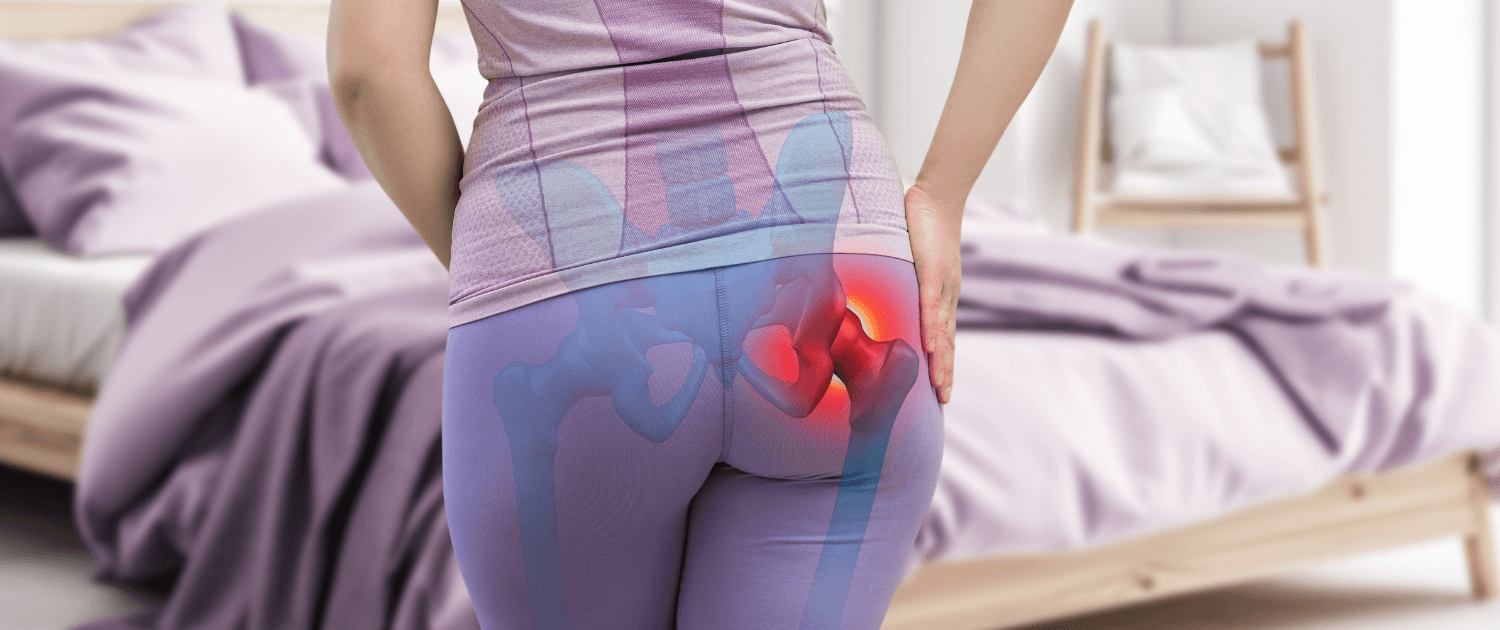
Hip Bursitis Treatment in Naperville, IL — and Why It’s Usually Not the Bursa
If you’ve been told you have hip bursitis, you’ve probably already tried the standard playbook — rest, ibuprofen, maybe a cortisone shot or a round of physical therapy. And if you’re reading this, it likely didn’t hold. The pain on the outside of your hip came back, especially when you climb stairs, get up from a chair, or try to sleep on that side.
Here’s the part most people never get told: in the majority of cases, the bursa isn’t really the problem.
I’m Dr. Jennifer Wise, DC, Acupuncturist, and I’ve spent 26 years (since 2000) treating stubborn musculoskeletal pain here in Naperville — including a lot of “hip bursitis” that anti-inflammatory treatment kept failing. When that pattern keeps repeating, it’s usually a sign the diagnosis is pointed at the wrong tissue. This guide walks you through what’s actually happening at the outer hip, why the usual treatments fall short, and the regenerative approach we use at Synergy Institute Acupuncture & Chiropractic to treat the real cause.
The Short Answer
Most chronic “hip bursitis” is actually gluteal tendinopathy — degeneration of the gluteus medius and minimus tendons where they attach to the outer hip. The bursa may be irritated as a secondary effect, but it’s rarely the driver. That’s why anti-inflammatory treatments aimed at the bursa give temporary relief at best. To get lasting results, you have to treat the failing tendon, not just calm the bursa. The most direct way we do that is with SoftWave therapy and extracorporeal shockwave therapy — both backed by published research for this exact condition — combined with the right biomechanical correction and a progressive load program.
Synergy Institute Acupuncture & Chiropractic is a hip bursitis treatment clinic located in Naperville, Illinois. What sets our approach apart isn’t a single device — it starts with an accurate diagnosis, then layers chiropractic care to correct the pelvic and gait mechanics overloading the tendon, acupuncture to settle the pain and support healing, and regenerative tools like SoftWave and shockwave to rebuild the tendon itself. The single-modality clinics down the street treat the bursa. We treat why the bursa got angry in the first place.
Research published in the American Journal of Sports Medicine found that greater trochanteric pain syndrome is often a manifestation of underlying gluteal tendinopathy — and that shockwave therapy outperformed both cortisone injection and a home exercise program at long-term follow-up (Rompe et al., 2009; Furia et al., 2009).
Quick Facts: Hip Bursitis at a Glance
| Common name | Hip bursitis / trochanteric bursitis |
| More accurate name | Greater trochanteric pain syndrome (GTPS) |
| What’s usually the real cause | Gluteal tendinopathy (gluteus medius/minimus tendon degeneration) |
| Hallmark symptom | Pain on the outer hip, worse with stairs, walking, and lying on that side |
| Who it affects most | Women, adults 40–60+, runners, and people with weak hip stabilizers |
| Why standard care often fails | It targets inflammation; the real problem is failed tendon healing |
| Our regenerative options | SoftWave therapy, shockwave (ESWT), plus chiropractic and acupuncture |
What Hip Bursitis Actually Is
A bursa — a small, fluid-filled sac that cushions the area where tendons and muscles glide over bone — sits over the bony point on the outer side of your hip, the greater trochanter. When that sac becomes irritated, it’s called trochanteric bursitis. For decades, that was the assumed cause of nearly all lateral hip pain.
The science has moved on. Modern imaging and surgical findings show that true, isolated bursa inflammation is uncommon. What we usually find instead is gluteal tendinopathy — wear and breakdown in the gluteus medius and minimus tendons that anchor into that same spot. The medical community now groups all of this under one umbrella term: greater trochanteric pain syndrome, or GTPS. The bursa gets blamed because it’s right there and easy to see on an ultrasound, but it’s often a bystander, not the culprit.
This distinction isn’t academic. It’s the entire reason your treatment may have failed — and the reason a different approach can finally work.
Hip Bursitis vs. Gluteal Tendinopathy: Old Model vs. Modern Understanding
| Traditional View | Modern, Evidence-Based View |
|---|---|
| The bursa is inflamed | The gluteal tendons are degenerating |
| Rest it until it calms down | Progressive loading rebuilds the tendon |
| NSAIDs and ice for inflammation | The core problem isn’t inflammatory |
| Cortisone injection into the bursa | Shockwave and SoftWave to regenerate the tendon |
| Manage the symptom | Correct the biomechanics causing the overload |
What Causes It
Gluteal tendinopathy develops when the load on those hip tendons outpaces their ability to repair. It rarely comes from a single injury. More often it builds quietly over months or years from a mix of factors:
- Weak or deconditioned hip stabilizers, which force the tendons to do work the muscles should be sharing
- Compression of the tendon against the bone from habits like standing with your weight shifted to one hip, sitting cross-legged, or sleeping on your side
- Gait and pelvic mechanics that overload one side — common after a back injury, knee problem, or leg-length difference
- Hormonal changes around menopause, which is part of why women are affected far more often than men
- A sudden ramp-up in activity — new running mileage, a fitness program, long days on your feet
Why This Matters for Treatment
Notice what’s missing from that list: acute inflammation. These are degeneration and overload problems. That’s the heart of it — this is not an inflammation problem, it’s a failed healing problem. When you understand that, the failure of anti-inflammatory care stops being a mystery. You can’t anti-inflame your way out of a tendon that’s structurally broken down and stuck in a non-healing cycle. You have to give the tendon a reason to repair and remove the mechanical forces that broke it down. That’s exactly where our approach is built to work.
Symptoms to Watch For
The pattern is usually distinctive once you know what you’re looking for:
- Aching or sharp pain on the outer side of the hip, sometimes radiating down the outer thigh
- Pain when lying on the affected side — often the first thing that disrupts sleep
- Pain getting up from a low chair, climbing stairs, or standing on one leg
- Tenderness when you press on the bony point of the hip
- Stiffness after sitting, easing slightly once you start moving, then worsening with sustained activity
🚨 When to seek urgent care: Outer hip pain is usually not an emergency — but get evaluated right away if you have fever or chills with a hot, red, swollen hip (possible joint or bursa infection), if you can’t bear weight after a fall(possible fracture, especially with osteoporosis), or if hip pain comes with unexplained weight loss or pain that’s worse at night and unrelieved by rest. These red flags need imaging and a medical doctor’s evaluation before any hands-on treatment.
Why Anti-Inflammatory Treatment Keeps Failing You
This is the section I wish more patients read before they spend a year cycling through treatments that don’t last.
When the working diagnosis is “inflamed bursa,” every tool gets aimed at inflammation: NSAIDs, ice, rest, and cortisone. For a genuinely inflamed bursa, those can help. But for a degenerated tendon, they miss the target — and one of them can actively backfire.
A landmark clinical trial (Mellor et al., published in The BMJ in 2018) compared cortisone injection against a structured education-and-exercise program and a wait-and-see approach for gluteal tendinopathy. The exercise group did meaningfully better, especially in the first couple of months. The cortisone group? By a year out, it was no better than simply waiting. Repeated cortisone can also weaken the very tendon you’re trying to heal — a real concern when the underlying problem is already tissue breakdown.
So if you’ve had a shot that wore off, or three of them, you weren’t doing anything wrong. The treatment was matched to the wrong problem.
Treatment Options Compared
| Treatment | What It Targets | What to Expect |
|---|---|---|
| Rest & activity modification | Symptom flares | Helpful short-term; pain returns with activity |
| NSAIDs (ibuprofen, naproxen) | Inflammation | Masks pain; doesn’t repair the tendon |
| Cortisone injection | The bursa / inflammation | Weeks to a few months of relief; can weaken tendon with repeat use |
| Physical therapy & load program | Tendon strength | Effective but slow; requires consistency over months |
| Shockwave therapy (ESWT) | Tendon degeneration at the root | Stimulates a healing response; strong research support |
| SoftWave therapy | Tendon degeneration + tissue repair | Activates the body’s own repair cells; addresses the actual cause |
| Surgery (bursectomy / tendon repair) | Last resort | Reserved for refractory cases or full-thickness tears |
How SoftWave and Shockwave Work for the Real Problem
Both SoftWave therapy and traditional shockwave deliver controlled acoustic energy into the degenerated tendon. That energy does something medication can’t: it restarts a stalled repair process. The waves trigger angiogenesis — the growth of new blood vessels — into tissue that has poor circulation, and they recruit the body’s own repair cells to the area. In short, they convince a chronic, non-healing tendon to start behaving like a fresh injury that the body knows how to fix.
The evidence for this on the hip specifically is strong. Across multiple randomized trials, shockwave has outperformed cortisone and home exercise for greater trochanteric pain syndrome, with benefits that held at long-term follow-up rather than fading after a few weeks. A 2024 systematic review confirmed it as a legitimate, evidence-supported option for this condition.
We were the first clinic in Naperville to offer SoftWave therapy, bringing in the TRT OrthoGold 100 system back in August 2021. SoftWave uses a broad, unfocused wave that covers more tissue and is generally more comfortable than older focused devices — most patients describe it as a tapping sensation, not a painful one. A typical course runs a series of short sessions over several weeks, with no downtime. You walk in, you walk out, you go about your day.
Synergy Institute’s Integrative Approach
Here’s the thing I tell every patient: the best hip bursitis treatment in Naperville isn’t about one therapy — it’s about applying the right combination in the right sequence.
Regenerating the tendon with SoftWave or shockwave is the centerpiece, but it’s not the whole job. If the mechanics that overloaded the tendon are still there, the problem comes back. So we work in layers:
- Diagnosis first. We confirm whether this is truly gluteal tendinopathy versus hip joint arthritis, a labral issue, or pain referred from your low back or SI joint — because treating the wrong structure is exactly how people end up here in the first place.
- Chiropractic care to correct the pelvic alignment and movement patterns that throw extra load onto the hip tendons.
- Regenerative therapy — SoftWave or shockwave — to rebuild the tendon at the source.
- Acupuncture to calm pain signaling and improve the local healing environment, an advantage of being a dual-credentialed clinic.
- Targeted MLS laser therapy when we need to support tissue recovery and manage discomfort between sessions.
- A progressive load program, because the research is clear that gluteal tendons need the right kind of loading to fully recover — not endless rest.
No single-device clinic in the area runs this stack. That sequencing is the difference between relief that lasts and relief that wears off.
Are You a Good Candidate?
You’re likely a good candidate if you:
- Have had outer hip pain for more than six weeks
- Have already tried rest, NSAIDs, PT, or cortisone without lasting relief
- Have pain lying on that side, on stairs, or standing on one leg
- Want to address the cause rather than chase symptoms
- Are looking for a non-surgical, drug-free path
You may NOT be a good candidate if you have:
- An active infection, open wound, or skin condition over the treatment area
- A known or suspected tumor in the area
- A bleeding disorder or are on blood thinners (we’ll discuss this individually)
- A recent cortisone injection (we space treatment appropriately)
- Pain that turns out to be coming from hip joint arthritis, a fracture, or a full-thickness tendon tear that needs surgical referral
- Pregnancy (for shockwave/SoftWave specifically)
This is where my honest-assessment commitment matters: if I don’t think we can help you, I’ll tell you directly. I’d rather refer you to someone who can help than waste your time and money. Some hips need a surgeon, and I’ll say so. Most don’t.
What to Expect
Your first visit is an evaluation, not a sales pitch. We take a history, examine the hip, run the clinical tests that distinguish gluteal tendinopathy from other causes of lateral hip pain, and review any imaging you already have. If we find something that needs a medical doctor or surgeon, we’ll point you there.
If you’re a fit, we build a plan. A typical regenerative course is a series of sessions over several weeks, often paired with chiropractic and a home loading program. Many patients notice a shift within the first few weeks, though tendon remodeling continues for a couple of months after treatment ends — real structural healing takes time, and we’ll be honest with you about the timeline.
On cost: SoftWave and shockwave are usually out-of-pocket and offered as packages rather than per-visit, since the protocol works as a series. We go over exact pricing transparently at your first visit so there are no surprises. Many patients find it far less costly than the alternative path of repeated injections, imaging, and the prospect of surgery.
Why Choose Synergy Institute
For chronic outer hip pain, you want a Naperville hip bursitis specialist who can both correctly identify the problem and treat it at the root — and finding the best option near you comes down to depth of approach, not the size of the waiting room. Here’s what we bring:
- 26 years of clinical experience (since 2000) focused on the kind of stubborn pain that hasn’t responded elsewhere
- Dual credentials — Doctor of Chiropractic and Acupuncturist — so multiple disciplines work together under one roof
- First in Naperville with SoftWave therapy (2021), and a track record as an early adopter of regenerative tools, going back to being the first clinic in Illinois to offer non-surgical spinal decompression in 2002
- A diagnosis-first, cause-based philosophy instead of one-size-fits-all symptom care
- Honest assessment, every time
Why Synergy Institute, in one line
If “hip bursitis” treatment keeps failing you, it’s almost certainly because the real problem is your gluteal tendons — and at Synergy Institute, we treat that root cause with research-backed SoftWave and shockwave therapy, combined with the chiropractic and acupuncture care that single-device clinics can’t offer.
Frequently Asked Questions
Is hip bursitis the same as gluteal tendinopathy?
Not exactly, but they’re closely linked. Hip bursitis refers to inflammation of the bursa over the outer hip. Gluteal tendinopathy is degeneration of the gluteus medius and minimus tendons that attach nearby. Research now shows that most chronic “hip bursitis” is actually driven by the tendon problem, with the bursa irritated as a secondary effect. Both fall under the broader term greater trochanteric pain syndrome. The distinction matters because it changes which treatment actually works. Not sure which you have? See hip bursitis vs. gluteal tendinopathy →
Why didn’t my cortisone shot work?
Because cortisone targets inflammation, and chronic outer hip pain usually isn’t an inflammation problem — it’s a failed-healing problem in the tendon. A well-known 2018 trial found cortisone injection was no better than simply waiting once you reached the one-year mark. Repeated cortisone can also weaken the tendon you’re trying to heal. If your shots wore off, the treatment was aimed at the wrong tissue.
Does shockwave therapy really work for hip bursitis?
Yes — and it’s one of the better-supported options for this condition. Multiple randomized controlled trials have shown shockwave outperforming both cortisone and home exercise for greater trochanteric pain syndrome, with results that lasted rather than faded. A 2024 systematic review backed it as an evidence-based choice. It works by stimulating new blood vessel growth and a genuine repair response in the degenerated tendon.
What’s the difference between SoftWave and traditional shockwave?
Both deliver acoustic energy that triggers tissue healing. Traditional shockwave uses a focused wave concentrated on a small point. SoftWave uses a broad, unfocused wave that covers more tissue and tends to be more comfortable. At our clinic we use both and match the tool to your case. We were the first in Naperville to bring in SoftWave, using the TRT OrthoGold 100 system.
How many treatments will I need?
Most patients do a series of sessions spread over several weeks rather than a single visit, because tendon repair is a process. Many feel improvement within the first few weeks, and remodeling continues for a couple of months after the course ends. We give you a specific plan and timeline at your first visit based on how long you’ve had the problem and what we find on exam.
Is the treatment painful?
SoftWave is generally well tolerated — most people describe it as a firm tapping sensation rather than pain. Traditional shockwave can be more intense over a tender spot, and we adjust the settings to keep you comfortable. There’s no anesthesia, no needles for the regenerative portion, and no downtime afterward.
Can chiropractic care help hip bursitis?
It can, as part of the picture. Outer hip pain is frequently driven by pelvic alignment, gait mechanics, and overload from a low-back or knee problem. Chiropractic adjustments and movement correction take pressure off the overloaded tendon so it can heal and stay healed. On its own it’s rarely enough; combined with regenerative therapy and a load program, it’s a key piece.
Should I just rest until it goes away?
Usually not. Complete rest can ease pain briefly, but gluteal tendons actually need the right kind of progressive loading to recover. The research consistently shows that exercise and load management beat a wait-and-see approach. What you want to avoid are the compressive positions that aggravate it — like crossing your legs or sleeping directly on the painful side — while you build the tendon back up under guidance.
Could my outer hip pain be something other than bursitis?
Yes, which is why we diagnose before we treat. Lateral hip pain can come from hip joint arthritis, a labral tear, or be referred from the low back or SI joint. Each needs a different plan. We run the clinical tests that tell these apart and review your imaging, so you’re not treated for the wrong thing — which is how a lot of people end up with pain that never resolves.
How soon can I get in, and what does the first visit cost?
We can typically see new patients quickly. Your first visit is a thorough evaluation where we determine whether we can help — and if we can’t, we’ll tell you and point you in the right direction. We offer a no-cost initial consultation so you can get answers before committing to anything. Call or text us and we’ll get you scheduled.
Ready to Treat the Real Cause of Your Hip Pain?
If you’ve been told you have hip bursitis and the usual treatments haven’t lasted, there’s a good reason — and a better path. At Synergy Institute Acupuncture & Chiropractic, we’ll find out what’s actually driving your outer hip pain and treat it at the source.
Claim your free Pain Relief consultation today. Call or text (630) 454-1300, or call our office directly at (630) 355-8022.
Synergy Institute Acupuncture & Chiropractic 4931 Illinois Rte 59, Suite 121 Naperville, IL 60564 (at 111th Street)synergypainrelief.com
References
- Furia JP, Rompe JD, Maffulli N. Low-energy extracorporeal shock wave therapy as a treatment for greater trochanteric pain syndrome. Am J Sports Med. 2009;37(9):1806-1813. https://journals.sagepub.com/doi/abs/10.1177/0363546509333014
- Rompe JD, Segal NA, Cacchio A, Furia JP, Morral A, Maffulli N. Home training, local corticosteroid injection, or radial shock wave therapy for greater trochanter pain syndrome. Am J Sports Med. 2009;37(10):1981-1990. https://journals.sagepub.com/doi/10.1177/0363546509334374
- Ramon S, Russo S, Santoboni F, et al. Focused shockwave treatment for greater trochanteric pain syndrome: a multicenter, randomized, controlled clinical trial. J Bone Joint Surg Am. 2020;102(15):1305-1311. https://pubmed.ncbi.nlm.nih.gov/32769596/
- Mellor R, Bennell K, Grimaldi A, et al. Education plus exercise versus corticosteroid injection use versus a wait and see approach on global outcome and pain from gluteal tendinopathy: prospective, single blinded, randomised clinical trial. BMJ. 2018;361:k1662. https://pubmed.ncbi.nlm.nih.gov/29720374/
- Harding L, et al. Is shockwave therapy effective in the management of greater trochanteric pain syndrome? A systematic review and meta-analysis. Musculoskeletal Care. 2024. https://onlinelibrary.wiley.com/doi/abs/10.1002/msc.1892
- Notarnicola A, Ladisa I, Lanzilotta P, et al. Shock waves and therapeutic exercise in greater trochanteric pain syndrome: a prospective randomized clinical trial with cross-over. J Pers Med. 2023;13(6):976. https://www.ncbi.nlm.nih.gov/pmc/articles/PMC10301141/
- Grimaldi A, Mellor R, Nicolson P, et al. Utility of clinical tests to diagnose MRI-confirmed gluteal tendinopathy in patients presenting with lateral hip pain. Br J Sports Med. 2017;51(6):519-524. https://pubmed.ncbi.nlm.nih.gov/27474385/
- Wilson R, Abbott JH, Mellor R, et al. Education plus exercise for persistent gluteal tendinopathy improves quality of life and is cost-effective: economic evaluation of a randomised trial. Musculoskelet Sci Pract. 2022. https://www.sciencedirect.com/science/article/pii/S183695532200114X
- American Academy of Orthopaedic Surgeons (OrthoInfo). Hip bursitis. https://orthoinfo.aaos.org/en/diseases–conditions/hip-bursitis/
- Li M. Shockwave: does it work like magic for greater trochanteric pain syndrome? J Bone Joint Surg Am.2020;102(15):e91. https://pubmed.ncbi.nlm.nih.gov/32769608/
Medical Disclaimer: This article is for educational purposes only and is not a substitute for professional medical advice, diagnosis, or treatment. Individual results vary. Always consult a qualified healthcare provider regarding any medical condition or before beginning any new treatment. No treatment outcome is guaranteed.
Reviewed by Dr. Jennifer Wise, DC, Acupuncturist — June 2026