Failed Knee Replacement Treatment In Naperville
Non Surgical Treatments for Failed Knee replacements in Naperville, Illinois

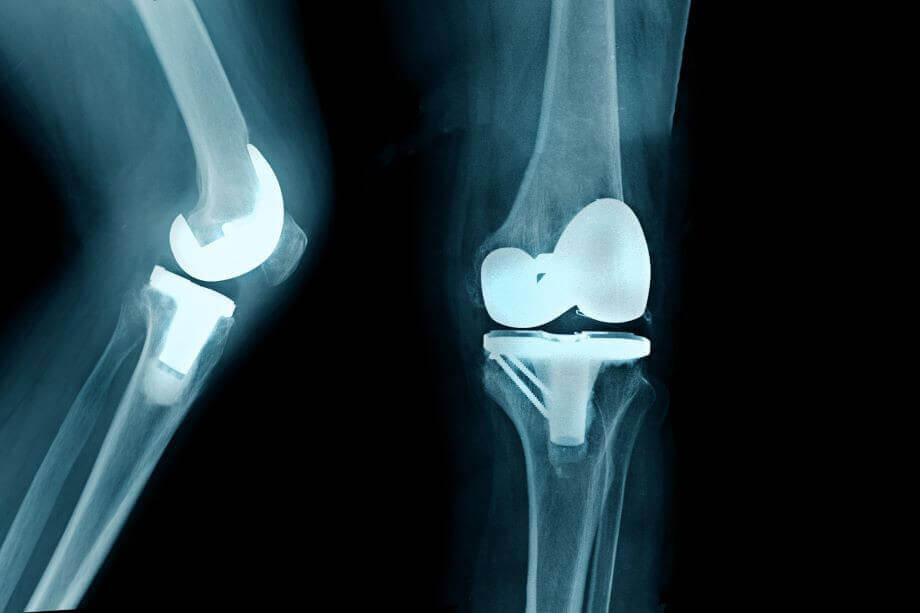
Failed Knee Replacement Treatments in Naperville, il – You had the surgery. You did the rehab. You waited the months you were told to wait. And the pain didn’t go away. Maybe it changed shape — less of a constant ache, more of a flare with stairs or a deep stiffness that doesn’t release. Maybe it never really left. The follow-up appointments tell you the imaging looks fine and that you’re “doing well,” but you know something is still wrong.
At some point, you stop accepting “give it more time” — and start wondering if there’s anyone in Naperville who can actually help you.
Most patients we see at this stage have already been told their hardware is fine and that ongoing pain is part of post-surgical recovery — and they’re not sure if they’ve been given the full picture. Here’s the reality: persistent pain after total knee arthroplasty isn’t rare. Nearly 40% of patients still report meaningful pain a year or more after their replacement. The hardware can be perfectly placed and the imaging can look textbook — and the pain can still be very real.
I’m Dr. Jennifer Wise, DC, Acupuncturist — and for 26+ years, since 2000, I’ve helped Naperville patients recover function after knee surgeries that didn’t deliver the relief they were promised. At Synergy Institute Acupuncture & Chiropractic, we were the first clinic in Naperville to offer SoftWave therapy (August 2021) and have used therapeutic laser since 2002. When patients search for the best post-surgical knee pain specialist in Naperville or treatment after failed knee replacement near me, they’re looking for exactly this: a clinic that takes ongoing pain seriously and has tools that surgeons and physical therapists don’t.
Synergy Institute Acupuncture & Chiropractic offers non-surgical treatment for persistent pain after knee replacement in Naperville, IL. We combine SoftWave therapy, MLS laser, acupuncture, knee decompression, and chiropractic adjustment into the Synergy Knee Restore Program — addressing the soft tissue, inflammation, and compensation patterns that surgery cannot reach.
Research published on ClinicalTrials.gov found that 107 of 272 patients — nearly 40% — reported persistent pain a year or more after total knee replacement, with central sensitization identified as a major contributing factor. Persistent post-surgical knee pain is one of the most under-recognized problems in orthopedic medicine.
Our office sits on Illinois Route 59 near the 111th Street intersection, serving patients throughout Naperville, Aurora, Plainfield, and Bolingbrook.
Call (630) 355-8022 — or call or text (630) 454-1300 — to schedule a free Pain Relief Special consultation.
The knee joint relies on the articular cartilage, joint space fluid, and meniscus for support. Those materials keep the knee joint functional and healthy. But overtime, with a number of injuries and overuse stress throughout the span of a person’s life, the knee starts to wear and tear until the degenerative process starts to take place.
At some point, in no particular order, the articular cartilage that covers the bone starts to fray and break, the fluid starts to dry up, and the meniscus starts to tear and break down. Eventually the bone will rub on the other bone creating a grinding sensation.
Throughout the process, a person experiences knee pain with or without movement, the joint swells with activity, there is decreased motion and function, difficulty walking, then a decrease in activities of daily living. With all of these things eventually happening all at once, some type of treatment has to happen in order to live a normal life.
The decision to get a knee replacement has to be a very serious decision to make. A moment where you are facing a Doctor who is describing a procedure where they will remove a part of the bone in your leg and replace it with an artificial one. This nervousness is likely soon replaced with eagerness and excitement with the thought that the pain and other symptoms you have been experiencing in the knee will be gone for good, or hope that’s the case.
While most knee replacements function well for many years, there are times when there is failure of the replacement. No one wants to think about their replacement failing but this is a common event. This doesn’t mean that the surgeon made any mistakes, there are a lot of things that can go wrong that are out of the surgeon’s hands once you start living your normal life with a prosthetic in your leg.
Below, we’ll talk about possible knee replacement failures and some treatment options available to prevent knee surgeries in the first place. There are many ways that will be outlined and described below that can cause a knee replacement to fail.
Listed complications from knee replacement failures:
Increased pain – Likely the most common reason to get a knee replaced is the decrease in pain. Pain hinders the activities of daily living. The more pain you’re in the less fun you have doing the active things you enjoy.
Decreased function – This involves being less active because your knee won’t functionally allow you to do them. There is no plan for a hiking trip if you can’t walk well. It’s also less likely that someone will go and see their favorite team play if climbing stairs/ ramps at the stadium are a problem.
Joint instability – The feeling like your knee will “give out” when walking. The ligaments and tendons aren’t replaced. They are reattached to the new prosthetic. If the ligaments and tendons become weak, the knee is not stable enough to hold your weight.
Joint stiffness – Decreased range of motion will limit your ability to be mobile and eventually cause compensation to other structures creating joint/muscular imbalances.
Implant wearing – Overtime an implant can start to wear and become defective. The same surface that the bone the implant is anchored to can also start to wear. In these cases, the prosthetic can become loose in the and cause instability. Especially in situations where there is high levels of activity or increased stress on the replaced knee due to being overweight. Most surgeons will insist that a patient be at a certain weight before a knee replacement surgery is performed to prevent premature wearing of the implant.
Infection/Blood Clots/Fractures – Infection post surgical is also a common side effect of surgery, especially with implanting a foreign object. Infections can show up days to years after a surgery. Blood clots can form in the vessels following a major surgery. Compression sleeves are often recommended to prevent clots. Fractures can also occur to bones where the implants are located. In these cases, the symptoms should encourage you to seek medical help immediately and likely lead to emergency surgery.
When standard post-operative care doesn’t fully resolve your pain, the next step isn’t more of the same. It’s tools that address the soft tissue, inflammation, and cellular environment around the implant — what surgery cannot reach. At Synergy Institute, these treatments work together as part of the Synergy Knee Restore Program, our integrated protocol for patients with persistent post-surgical knee pain.
SoftWave therapy – SoftWave uses focused acoustic pressure waves to break down scar tissue, resolve chronic inflammation, stimulate microcirculation, and modulate pain signaling around the implant. SoftWave is safe to use around metal and polyethylene implants — the energy targets soft tissue, not hardware. We typically begin SoftWave 6–8 weeks post-surgery with surgeon clearance, though many patients arrive months or years past their surgery and still respond well. For the full clinical breakdown, see our deep-dive on SoftWave therapy after failed knee replacement.
MLS Laser therapy – Our Cutting Edge MLS M6 laser delivers cellular-level support to the surrounding tendons, ligaments, and capsular structures. MLS boosts ATP production, supports microcirculation, and modulates inflammation in tissue that may still be in chronic inflammatory states even years after surgery. Patients typically notice meaningful reduction in pain, swelling, and stiffness with consistent treatment.
Acupuncture – Acupuncture addresses both the local tissue environment and the central sensitization that drives chronic post-surgical pain. For patients with neuropathic pain patterns after knee replacement — the burning, tingling, or sharp pain that doesn’t behave like typical mechanical pain — acupuncture often produces meaningful relief that medication and physical therapy alone don’t.
Stretching and strengthening exercises – As with any injury, especially after surgery, a rehabilitation program is important to get proper range of motion back into the joint and strength back into the muscles of the leg. We integrate this work alongside the regenerative therapies, not in place of them.
Chiropractic adjustments – Adjustments to the pelvis, spine, opposite knee, and ankle correct the compensation patterns that developed before and after surgery. This balances weight distribution and prevents the muscle imbalances and abnormal stress that can drive ongoing knee pain even when the new joint itself is fine.
Knee decompression therapy – Knee decompression mechanically distracts the thigh bone and shin bone, taking pressure off the structures between the two. It can be done typically one year following knee replacement surgery and is often combined with SoftWave and MLS for compounding benefit.
Revision surgery – In cases where there is true hardware failure — implant loosening, infection, or component wear — a revision surgery may be warranted. The risks are usually higher regarding infections, but in those specific cases, surgical correction is the right answer. For patients whose hardware is intact but pain persists, conservative care is often worth trying before committing to a second surgery.
Studies show approximately 5–10% of total knee replacements fail in a way that requires revision surgery within 10 years. However, persistent pain after total knee arthroplasty is far more common — research published on ClinicalTrials.gov found that nearly 40% of patients (107 of 272) reported meaningful persistent pain a year or more after their replacement, even when the hardware was intact. The hardware "succeeds" but the patient still hurts.
The most common causes of total knee replacement failure include implant loosening, infection, instability, component wear, and malalignment. However, persistent post-surgical pain is more often driven by issues outside the hardware itself — soft tissue inflammation, scar tissue and adhesions, neuropathic sensitization, central sensitization, and compensation patterns from years of altered movement before surgery. Pain that persists despite normal-looking imaging usually has one of these non-hardware causes.
It's common but not unfixable. Research shows nearly 40% of patients report meaningful persistent pain a year or more after total knee arthroplasty. The hardware is usually fine — the pain typically comes from soft tissue inflammation, scar tissue, neuropathic sensitization, or compensation patterns that surgery doesn't address. At Synergy Institute, we treat these specific drivers with the Synergy Knee Restore Program, combining SoftWave therapy, MLS laser, acupuncture, and chiropractic care to reach what surgery cannot.
Most patients can begin SoftWave therapy and MLS laser around 6–8 weeks post-surgery, with their surgeon's clearance. Knee decompression is typically appropriate one year post-surgery. There is no upper time limit — patients 5+ years out from their replacement still respond well to regenerative care. The middle window of 3–12 months post-op is often the most rewarding period for treatment, but earlier and later timing both work depending on the case.
No. SoftWave acoustic waves are designed to act on soft tissue and do not damage metal or polyethylene implants. The treatment specifically targets the soft tissue, ligaments, tendons, and capsular structures around the joint — not the hardware itself. Decades of clinical use of focused shockwave around implants and prostheses has not shown hardware damage, and SoftWave is widely used internationally for post-surgical recovery.
Yes. For any persistent or new pain after knee replacement, an orthopedic evaluation should rule out hardware loosening, infection, or component issues before starting any conservative care. Coordination with your surgeon is always recommended. If your surgeon has confirmed the implant is fine and you are still in pain, that is exactly when SoftWave-based regenerative care becomes a reasonable next step at Synergy Institute.
SoftWave and MLS laser therapies are typically not covered by insurance, which is consistent across every provider offering these technologies nationally. Most patients use HSA or FSA funds for the regenerative components. Chiropractic and acupuncture portions of integrated post-surgical care are often partially covered by insurance. We verify your specific benefits and provide transparent pricing during your free Pain Relief Special consultation.