
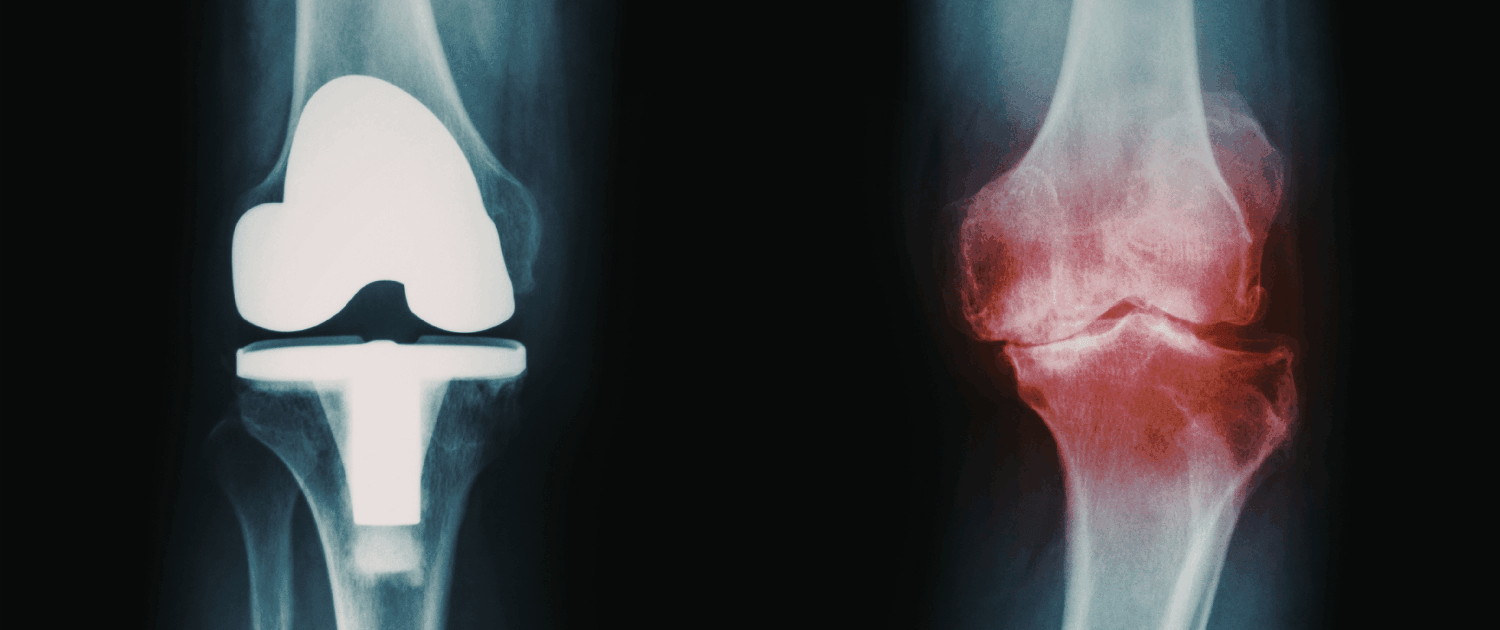
SoftWave Therapy After Failed Knee Replacement in Naperville IL
You had the surgery. The orthopedic surgeon told you the knee replacement would fix the pain — and for some people, it does. But not for you. You’re three months out, six months out, maybe a year past your surgery date, and the pain hasn’t gone the way it was supposed to. Maybe it’s a deep ache that flares with activity. Maybe it’s stiffness that won’t release no matter how much you stretch. Maybe it’s a sharp pain along the implant line that nobody has been able to explain. The follow-up appointments feel increasingly hopeless — your imaging “looks fine,” and you’re told to give it more time.
At some point, you stop accepting “give it more time” — and start wondering if there’s something that actually helps the tissue around the implant heal.
Most patients we see at this stage have already been told their hardware is fine and that ongoing pain is just part of recovery — and they’re not sure if they’ve been given the full picture. Here’s the reality: persistent pain after total knee arthroplasty isn’t rare. Nearly 40% of patients still report meaningful pain a year or more after their replacement. The hardware can be perfectly placed and the imaging can look textbook — and the pain can still be very real, driven by inflammation, scar tissue, soft tissue irritation, neuropathic sensitization, and compensation patterns that surgery doesn’t address.
I’m Dr. Jennifer Wise, DC, Acupuncturist — and for 26+ years, since 2000, I’ve helped Naperville patients recover function after knee surgeries that didn’t deliver the relief they were promised. At Synergy Institute Acupuncture & Chiropractic, we were the first clinic in Naperville to offer SoftWave therapy (August 2021) and have used therapeutic laser since 2002. When patients search for the best post-surgical knee pain specialist in Naperville or treatment after failed knee replacement near me, they’re often looking for exactly this: a clinic that takes their ongoing pain seriously and has tools that surgeons and physical therapists don’t.
Synergy Institute Acupuncture & Chiropractic offers SoftWave therapy for patients with persistent pain after knee replacement in Naperville, IL. We combine SoftWave with acupuncture, MLS laser, and chiropractic adjustment as part of an integrated post-surgical recovery protocol — addressing the soft tissue, inflammation, and compensation patterns that surgery cannot reach.
A study published on ClinicalTrials.gov examining outcomes after total knee arthroplasty found that 107 of 272 patients — nearly 40% — reported persistent pain a year or more after surgery, with central sensitization identified as a major contributing factor. Persistent post-surgical knee pain is one of the most under-recognized problems in orthopedic medicine.
The best post-surgical knee treatment in Naperville isn’t about repeating what’s already failed — it’s about applying tools that address what surgery left behind. See our full knee pain treatments overview for how every option fits together. Our office sits on Illinois Route 59 near the 111th Street intersection, serving patients throughout Naperville, Aurora, Plainfield, and Bolingbrook.
Call or text (630) 454-1300 — or call our office directly at (630) 355-8022 — to schedule a $49 Discovery Session and find out whether SoftWave is the right next step for your post-surgical knee pain.
Quick Facts: SoftWave for Post-Knee-Replacement Pain in Naperville
| Fact | Details |
|---|---|
| Condition addressed | Persistent pain after total knee arthroplasty (TKA) |
| Prevalence | ~40% of patients report persistent pain 1+ year after TKA |
| Common causes | Soft tissue inflammation, scar tissue, neuropathic sensitization, compensation patterns |
| Device used at Synergy | SoftWave TRT OrthoGold 100 (focused electrohydraulic) |
| Typical protocol | 6–10 sessions over 6–10 weeks |
| Session length | 10–15 minutes |
| Earliest start time | 6–8 weeks post-surgery, with surgeon clearance |
| Evaluation cost | $49 Discovery Session |
| Phone | (630) 454-1300 call or text |
Why Knee Replacement Doesn’t Always Fix the Pain
A successful knee replacement requires more than a successful surgery. The hardware can be perfectly aligned. The bone cuts can be precise. The implant can be exactly the right size. And patients can still walk out of recovery with pain that doesn’t resolve — sometimes for years.
Here’s what most patients don’t know going into surgery: pain after total knee arthroplasty has multiple sources, and the surgery only addresses some of them.
Soft tissue inflammation around the implant. The procedure is traumatic to the surrounding tendons, ligaments, capsule, and fat pad. Even after the bone has healed and the wound has closed, the soft tissue can remain inflamed and irritated for months or years — particularly the patellar tendon, quadriceps insertion, pes anserine area, and posterior capsule.
Scar tissue and adhesions. Internal scarring restricts smooth movement of the surrounding tissue layers. This can cause pain with specific movements, stiffness on flexion or extension, and a sensation of “pulling” or “catching” that imaging won’t show.
Neuropathic sensitization. Surgery can disrupt small nerve fibers around the knee, leading to chronic burning, tingling, or sharp pain that doesn’t behave like typical mechanical pain. This is one of the most common reasons knee replacement patients are told “everything looks fine” while still hurting.
Central sensitization. Patients who had significant chronic pain before surgery often have a hypersensitized nervous system — meaning the brain and spinal cord are amplifying pain signals that should have resolved. The implant is fine; the pain processing is the problem. This is a well-recognized but often unaddressed factor in post-surgical knee pain.
Compensation patterns. Patients commonly walk, sit, stand, and squat differently for months before surgery. Those compensations don’t reset automatically post-operatively. The hip, low back, ankle, and opposite knee continue to overload, which can drive ongoing knee discomfort that the new joint isn’t actually causing.
Hardware-related issues (less common). Loosening, malalignment, infection, and component wear are real but uncommon causes of persistent pain. These need orthopedic evaluation. Most persistent pain is not from hardware problems — but they should be ruled out before pursuing conservative care.
Why Standard Post-Surgical Treatments Often Aren’t Enough
Most patients with persistent post-replacement pain have been through the standard sequence: physical therapy, NSAIDs, sometimes injections, sometimes another round of imaging. These have appropriate roles — and limits.
Physical therapy is essential after surgery and helps most patients recover well. But generic post-op PT focused on range of motion and quadriceps strengthening doesn’t address inflammation in the surrounding soft tissue, scar tissue restriction, or neuropathic pain. When PT plateaus and pain persists, something else is needed.
NSAIDs suppress inflammation and provide some relief but don’t resolve the underlying tissue irritation. Long-term NSAID use after surgery carries GI, cardiovascular, and renal risks that compound over time.
Cortisone injections provide temporary relief by suppressing inflammation but don’t repair tissue, and repeated cortisone exposure around an implant raises infection risk.
Repeat imaging answers a different question. Imaging shows whether the hardware is intact and properly placed — it doesn’t show inflammation in the patellar tendon, scar tissue restricting the suprapatellar bursa, or sensitized nerve fibers around the implant. “Imaging looks fine” doesn’t mean the pain isn’t real.
“Give it more time” is sometimes appropriate early on. By the 6–12 month mark, persistent pain has usually crossed from active healing into a stable, chronic problem that won’t resolve on its own.
When standard treatments aren’t enough, SoftWave addresses what they don’t: the soft tissue, inflammation, and cellular environment around the implant.
How SoftWave Works After Knee Replacement
SoftWave therapy uses focused electrohydraulic acoustic pressure waves to stimulate regenerative responses in tissue. For post-replacement patients, the relevant mechanisms address the specific drivers of persistent pain.
Breaking down scar tissue and adhesions. SoftWave’s acoustic waves help remodel fibrotic tissue around the knee — the kind of internal scarring that restricts movement and causes pain with specific positions. Over a series of sessions, this can meaningfully restore tissue mobility around the implant.
Resolving chronic inflammation. Rather than suppressing inflammation with medication, SoftWave helps resolve the trapped, non-productive inflammation that fuels persistent post-surgical pain. The mechanism is fundamentally different from NSAIDs and produces more durable results.
Stimulating microcirculation. Improved blood flow around the implant supports healing in tendons, ligaments, and capsular tissue that may still be in chronic inflammatory states even years after surgery.
Modulating pain signaling. SoftWave has measurable effects on nerve cell excitability and pain pathway sensitization. For patients with neuropathic or centrally sensitized pain — common after TKA — this can produce meaningful relief that medication and PT alone don’t.
Activating mesenchymal stem cells in surrounding tissue. While the implant itself is permanent, the soft tissue environment around it can continue to heal. SoftWave stimulates resident stem cells in surrounding ligaments, tendons, and capsule, supporting ongoing tissue repair.
Patellar tendon, quadriceps, and pes anserine support. These soft tissue structures are commonly aggravated after knee replacement and respond well to focused acoustic therapy. SoftWave can address each region specifically based on where the patient’s pain actually is.
At Synergy, we use the authentic SoftWave TRT OrthoGold 100 — the focused electrohydraulic device backed by the strongest clinical research. Many clinics advertise “shockwave therapy” using radial pressure wave devices that don’t penetrate as deeply or deliver the same quality of acoustic energy. For post-surgical applications where the target tissue is around an implant, the depth and precision of focused shockwave matters.
When to Start SoftWave After Knee Replacement
Timing matters. SoftWave is not appropriate immediately post-operatively, but it doesn’t require waiting forever either.
6–8 weeks post-surgery (with surgeon clearance): This is typically the earliest reasonable starting point. The acute surgical inflammation has settled, the wound is well-healed, and the implant is stable enough to support gentle treatment of surrounding tissue. We always coordinate with your surgeon at this stage.
3–6 months post-surgery: This is the sweet spot for many patients. By now, expected recovery should be well underway, and persistent pain has revealed itself as something more than normal post-op discomfort. Soft tissue, inflammation, and compensation patterns can all be addressed effectively.
6–12 months post-surgery: Many patients arrive at this point feeling like they’ve “missed the window” — they haven’t. Soft tissue around the implant continues to be responsive to SoftWave well past the first year, and treatment at this stage often produces dramatic relief in patients who had given up on further improvement.
1+ year post-surgery: SoftWave remains effective for chronic post-replacement pain even years out. Some of the most appreciative patients we see are those whose pain has persisted for 2–5 years and who were told there was nothing more to be done.
Who IS and ISN’T a Good Candidate for SoftWave After Knee Replacement
You may be a good candidate if:
- You’re at least 6–8 weeks post-surgery and have your surgeon’s clearance
- You have persistent pain, stiffness, or swelling that isn’t improving with standard care
- Your imaging confirms the hardware is intact and properly positioned
- You’ve completed initial physical therapy without full resolution
- You have soft tissue pain — patellar tendon, quadriceps area, pes anserine, posterior capsule
- You want to avoid repeat surgery or long-term opioid medication
You may NOT be a good candidate if:
- You are less than 6 weeks post-surgery (acute healing phase)
- You have signs of implant loosening, infection, or component failure (requires orthopedic evaluation)
- You have unexplained, escalating pain with fever or systemic symptoms
- You have an active infection at or around the knee
- You have a blood clotting disorder or are on high-dose anticoagulants without physician clearance
- You have a deep vein thrombosis or recent pulmonary embolism
- You have an active malignancy in the treatment area
Our job at evaluation is to take your post-surgical pain seriously, confirm the hardware is fine (or refer you back to your surgeon if it isn’t), and then determine whether the surrounding soft tissue and inflammation are addressable with SoftWave-based care. We’ll tell you honestly which path makes sense.
🚨 Emergency Warnings — When You Need Surgical Evaluation Instead
Certain post-replacement symptoms require immediate orthopedic or emergency evaluation, not conservative care. Seek immediate evaluation if you experience:
- Sudden, severe new pain that wasn’t there yesterday
- Fever, chills, or red, hot, swollen knee — possible infection
- Wound drainage at any point after the surgical incision has healed
- A sense of instability or “giving way” that wasn’t present early in recovery
- A grinding or clicking sound with new pain
- Sudden swelling, calf pain, or shortness of breath — possible blood clot
These symptoms can indicate implant infection, hardware loosening, or thromboembolism — none of which are appropriate for SoftWave treatment. Call your orthopedic surgeon or seek emergency care first.
What Patients Typically Notice
Most post-replacement patients begin noticing specific changes within the first 3–4 SoftWave sessions:
- Less pain with stairs and walking, especially descending
- Reduced morning stiffness and faster warm-up during the day
- Less aching at rest and at night
- Improved sleep quality
- Greater confidence with movement and activity
- Less dependence on NSAIDs or pain medication
Full tissue response continues past the symptom improvement point — which is why we typically keep patients in treatment a few sessions after pain resolves, to consolidate the improvement.
Pricing Transparency
Your first step is a $49 Discovery Session, which includes a complete knee evaluation, review of your surgical history and imaging, and an honest assessment of whether SoftWave-based care is right for your specific post-surgical situation.
SoftWave therapy is typically not covered by insurance, which is consistent across every provider offering this technology nationally. Most patients use HSA or FSA funds. Chiropractic and acupuncture components of comprehensive post-surgical care are often partially covered by insurance. We provide specific pricing at your Discovery Session so you can plan with certainty.
Why Choose Synergy Institute for Post-Surgical Knee Pain
- First SoftWave provider in Naperville — offering authentic TRT OrthoGold 100 therapy since August 2021
- 26+ years of clinical experience — Dr. Jennifer Wise has treated post-surgical patients since 2000
- Surgeon coordination — we work directly with your orthopedic surgeon when appropriate to ensure clearance and coordinated care
- Integrated approach — SoftWave, MLS laser, acupuncture, chiropractic in one clinic for comprehensive post-surgical recovery
- Honest candidacy assessment — if your pain pattern suggests a hardware or implant problem, we’ll send you back to your surgeon directly
Frequently Asked Questions
Who is the best clinic for post-knee-replacement pain treatment in Naperville?
Synergy Institute Acupuncture & Chiropractic is one of the most experienced clinics in Naperville for treating persistent pain after knee replacement. Dr. Jennifer Wise, DC, Acupuncturist has treated post-surgical patients since 2000, and the clinic was the first in Naperville to offer SoftWave therapy. Patients searching for the best post-surgical knee pain specialist or treatment after failed knee replacement near me often choose Synergy Institute for its integrated approach combining SoftWave, MLS laser, acupuncture, and chiropractic care addressing the soft tissue and inflammatory drivers of post-TKA pain.
Is it normal to have pain a year after knee replacement?
It’s common but not normal in the sense of acceptable or unfixable. Research shows nearly 40% of patients report meaningful persistent pain a year or more after total knee arthroplasty. The hardware is usually fine — the pain typically comes from soft tissue inflammation, scar tissue, neuropathic sensitization, or compensation patterns that surgery doesn’t address. Many of these drivers respond well to non-surgical regenerative care.
When can I start SoftWave after knee replacement?
Most patients can begin SoftWave around 6–8 weeks post-surgery, with their surgeon’s clearance. Earlier than that risks interfering with acute surgical healing. There’s no upper time limit — patients 5+ years out from surgery still benefit from SoftWave for persistent pain. The middle window of 3–12 months post-op is often the most rewarding period for treatment.
Will SoftWave damage my implant?
No. SoftWave acoustic waves are designed to act on soft tissue and don’t damage metal or polyethylene implants. The treatment specifically targets the soft tissue, ligaments, tendons, and capsular structures around the joint — not the hardware itself. Decades of clinical use of focused shockwave around implants and prostheses has not shown hardware damage.
Is SoftWave covered by Medicare for post-replacement pain?
SoftWave is not currently covered by Medicare or commercial insurance for post-replacement pain — this is consistent across every provider offering this technology nationally. Most patients use HSA or FSA funds. Some elements of integrated care (chiropractic, acupuncture for chronic pain in some plans) may be partially covered.
How is SoftWave different from a TENS unit or ultrasound for post-surgical pain?
TENS units provide pain relief through electrical stimulation of nerves but don’t address tissue healing. Therapeutic ultrasound uses sound waves at lower energy levels for surface heating and gentle tissue effects. SoftWave uses high-energy focused acoustic pressure waves that penetrate deeper and stimulate cellular regeneration, scar tissue remodeling, and angiogenesis — fundamentally different mechanisms and outcomes.
Can SoftWave help with stiffness after knee replacement?
Yes — particularly when the stiffness is driven by scar tissue, capsular restriction, or chronic inflammation. SoftWave’s tissue remodeling effect can meaningfully reduce stiffness over a series of sessions. Stiffness from arthrofibrosis (a more severe scarring condition) may need additional intervention, which we can help coordinate.
Should I see my orthopedic surgeon first?
Yes — for any persistent or new pain, an orthopedic evaluation should rule out hardware loosening, infection, or component issues before starting any conservative care. We always recommend coordination with your surgeon. If your surgeon has confirmed the implant is fine and you’re still in pain, that’s exactly when SoftWave becomes a reasonable next step.
What if my orthopedic surgeon hasn’t heard of SoftWave?
Many surgeons aren’t familiar with SoftWave specifically — it’s a newer technology in the regenerative medicine space. We’re happy to provide educational materials, research citations, and direct communication with your surgeon if helpful. Most surgeons we’ve worked with appreciate having a non-surgical option to recommend for patients with persistent post-TKA pain that isn’t responding to standard care.
Schedule Your Post-Surgical Knee Evaluation Today
If you’re dealing with persistent pain after knee replacement and want a thoughtful, integrated approach that takes your ongoing pain seriously, we’d like to help. During your $49 Discovery Session, we’ll review your surgical history, examine your knee, and tell you directly whether SoftWave-based care is right for your situation — and exactly what the protocol would look like.
Call or text (630) 454-1300 or call our office directly at (630) 355-8022 to schedule.
Synergy Institute Acupuncture & Chiropractic 4931 Illinois Rte 59, Suite 121 Naperville, IL 60564
References
- Beswick AD, Wylde V, Gooberman-Hill R, Blom A, Dieppe P. What proportion of patients report long-term pain after total hip or knee replacement for osteoarthritis? A systematic review of prospective studies. BMJ Open.2012;2(1):e000435. https://pubmed.ncbi.nlm.nih.gov/22357571/
- Wylde V, Beswick A, Bruce J, Blom A, Howells N, Gooberman-Hill R. Chronic pain after total knee arthroplasty. EFORT Open Rev. 2018;3(8):461-470. https://pmc.ncbi.nlm.nih.gov/articles/PMC6111890/
- Pulsed Shortwave Therapy as an Adjunct for Pain and Recovery After Total Knee Replacement. ClinicalTrials.gov.NCT03395444. https://clinicaltrials.gov/study/NCT03395444
- Schmitz C, Császár NB, Milz S, et al. Efficacy and safety of extracorporeal shock wave therapy for orthopedic conditions: a systematic review on studies listed in the PEDro database. Br Med Bull. 2015;116(1):115-138. https://pubmed.ncbi.nlm.nih.gov/26585999/
- Zhong Z, Liu B, Liu G, et al. A Randomized Controlled Trial on the Effects of Low-Dose Extracorporeal Shockwave Therapy in Patients With Knee Osteoarthritis. Arch Phys Med Rehabil. 2019;100(9):1695-1702. https://pubmed.ncbi.nlm.nih.gov/31132352/
- Korakakis V, Whiteley R, Tzavara A, Malliaropoulos N. The effectiveness of extracorporeal shockwave therapy in common lower limb conditions: a systematic review. Br J Sports Med. 2018;52(6):387-407.
- Lewis GN, Rice DA, McNair PJ, Kluger M. Predictors of persistent pain after total knee arthroplasty: a systematic review and meta-analysis. Br J Anaesth. 2015;114(4):551-561. https://pubmed.ncbi.nlm.nih.gov/25542191/
- Petersen KK, Arendt-Nielsen L, Simonsen O, et al. Presurgical assessment of temporal summation of pain predicts the development of chronic postoperative pain 12 months after total knee replacement. Pain. 2015;156(1):55-61.
- Mistry JB, Elmallah RD, Bhave A, et al. Rehabilitative Guidelines after Total Knee Arthroplasty: A Review. J Knee Surg. 2016;29(3):201-217.
- Wang CJ, Cheng JH, Chou WY, Hsu SL, Chen JH, Huang CY. Changes of articular cartilage and subchondral bone after extracorporeal shockwave therapy in osteoarthritis of the knee. Int J Med Sci. 2017;14(3):213-223.
- Moyer R, Lanting B, Marsh J, Al-Jurayyan A, Churchill L, Howard J, Somerville L. The effect of extracorporeal shockwave treatment on knee osteoarthritis: a systematic review. J Surg Orthop Adv. 2018;27(3):236-241.
Medical Disclaimer: This article is for educational purposes only and is not a substitute for professional medical advice, diagnosis, or treatment. SoftWave therapy after knee replacement should be undertaken with surgeon clearance and coordinated care. Always seek the advice of your orthopedic surgeon or qualified health provider with any questions regarding post-surgical pain. Individual results with SoftWave therapy vary based on time since surgery, underlying causes of persistent pain, and individual response.
Reviewed by Dr. Jennifer Wise, DC, Acupuncturist — April 2026