
The Consumer‘s Guide to Creatine: What Your Supplement Company Won’t Tell You
Let me be straight with you: creatine is one of the most studied supplements on the planet — and one of the most misunderstood.
If you think creatine is just for bodybuilders and gym bros, you’re wrong. If you tried creatine once, got bloated, and swore it off forever, you were probably taking the wrong product. And if your doctor told you creatine damages your kidneys, that’s based on a misunderstanding of one lab marker — not on what 20+ years of research actually shows.
I’m Dr. Jennifer Wise. I’ve spent 26 years in clinical practice, and I’ve watched the supplement industry take one good nutrient after another — vitamin C, B12, magnesium, fish oil — and turn it into cheap, synthetic garbage that either doesn’t work or makes people feel worse. Then the nutrient gets blamed for what the product did.
Creatine is the latest casualty.
This guide is what I wish every patient knew before they bought a tub of creatine off Amazon or picked up a pre-workout from GNC. It’s based on the research, my clinical training, and the reality of what I see every day: people wasting money on products that never had a chance of helping them.
What Creatine Actually Is (The Simple Version)
Your body runs on a molecule called ATP — adenosine triphosphate. Think of ATP as your cellular battery. Every time your brain fires a thought, your heart beats, or your muscles contract, your cells spend ATP to make it happen.
The problem is you burn through ATP fast. When ATP gets used, it loses a phosphate and becomes ADP — basically a dead battery. Your body needs to recharge that ADP back to ATP as quickly as possible to keep up with demand.
That’s where creatine comes in. Your body stores creatine as phosphocreatine — and phosphocreatine donates a phosphate to recharge ADP back into ATP. It’s the backup battery for your cells.
Here’s what most people don’t realize: this isn’t just about muscles. The three systems that burn through ATP the fastest are:
Your brain. It accounts for roughly 20% of your body’s total energy consumption. Every decision, every conversation, every stressful email — that’s ATP being spent. When your brain runs low, you get brain fog, poor concentration, and that “I can’t think straight” feeling.
Your heart. It never stops. It beats roughly 100,000 times a day, and every single beat requires ATP. Your heart doesn’t get breaks, which means it needs a constant creatine supply to maintain its energy reserve.
Your muscles. This is the one everyone knows about — but it goes beyond the gym. After age 30, you start losing muscle mass every single year. That process is called sarcopenia, and it accelerates every decade. Creatine helps slow that loss.
The bottom line: creatine isn’t a gym supplement. It’s a foundational nutrient that your brain, heart, and muscles depend on every single day.
Who Actually Needs Creatine (It’s Not Who You Think)
If you’re over 30, you probably need creatine supplementation. Here’s why.
Your body makes creatine on its own — your liver, kidneys, and pancreas produce about 1 gram per day from the amino acids arginine, glycine, and methionine. But your body also breaks down about 1.7 to 2 grams of creatine daily just through normal turnover. That’s before exercise, stress, or any extra demand.
So right out of the gate, your body’s creatine factory can’t keep up with what it uses.
Now add in the factors that make it worse:
Age. Natural creatine production declines as you get older. The people who need it most are producing the least.
Diet. Even if you eat meat and fish — the primary food sources of creatine — you’re only getting about 1 to 2 grams per day from your diet. Vegetarians and vegans get essentially zero from food.
Women. Research shows women naturally carry 70 to 80% lower creatine stores than men. This may be related to lower muscle mass, hormonal differences, and lower dietary intake. Women may actually benefit from creatine supplementation more than men — especially during perimenopause and menopause, when estrogen decline affects muscle, bone, mood, and brain function.
Stress. When you’re under mental stress, your brain burns through ATP faster. More demand, same supply — you end up running on empty.
The result? Most adults over 30 are walking around with a creatine deficit they don’t even know about. Their brain is underfueled, their muscles are slowly wasting, and their heart’s energy reserve is thinner than it should be.
Food Sources First — Then Supplementation
I always tell my patients: food comes first. Before we talk about supplements, let’s look at what you can get from your plate.
Creatine is found naturally in animal-based foods:
| Food | Approximate Creatine Content |
|---|---|
| Beef steak | ~2g per pound |
| Salmon | ~2g per pound |
| Pork | ~2.3g per pound |
| Chicken | ~1.5g per pound |
| Herring | ~3-4g per pound |
So yes — eat your red meat, eat your fish. These are legitimate creatine sources.
But here’s the math that nobody talks about: to get the 3 to 5 grams per day that research recommends for supplementation, you’d need to eat 2 to 3 pounds of beef or fish. Every. Single. Day.
Nobody’s doing that. And if you’re vegetarian or vegan, you’re getting zero creatine from your diet.
Your body makes about 1 gram on its own. A typical diet with meat and fish adds maybe 1 to 2 grams. That leaves you short every day — with no reserve for the days when your brain is working overtime, you’re stressed, you slept badly, or you pushed hard at the gym.
That’s why supplementation makes sense. Not because food doesn’t matter — it absolutely does. But because the math doesn’t work for most people trying to reach optimal creatine levels through diet alone.
The Myths That Won’t Die
Creatine has been studied for over 20 years. There are more than 500 peer-reviewed studies on it. The International Society of Sports Nutrition calls it one of the most effective and safest supplements available. And yet the myths persist.
Let me address the big ones.
“Creatine Damages Your Kidneys”
This is probably the most common myth — and the most frustrating.
Here’s what’s actually happening: when your body uses creatine, a waste byproduct called creatinine gets filtered through your kidneys and shows up on blood work. When you supplement with creatine, your creatinine levels go up. That’s expected — it’s a direct result of having more creatine in your system.
The problem? Elevated creatinine is also a marker doctors look at for kidney stress. So creatine supplementation can trigger a false positive — your labs look like something’s wrong with your kidneys when nothing is.
Over 20 years of controlled research has consistently shown that creatine does not damage healthy kidneys. A 2023 narrative review in the journal Nutrients concluded there’s no evidence of kidney harm from creatine in healthy individuals. A 2025 meta-analysis in BMC Nephrology confirmed the same finding.
What you should do: If you take creatine and your creatinine shows up elevated on blood work, tell your doctor you’re supplementing. They can look at other kidney markers like cystatin C to get the full picture.
Who should be cautious: If you have pre-existing kidney disease, talk to your doctor before starting creatine. That’s common sense, not because creatine is dangerous — but because any supplement deserves a conversation with your healthcare provider when you have an existing condition.
“Creatine Makes You Bloated and Fat”
This one has a kernel of truth that got twisted into a myth.
Creatine does cause your muscles to hold more water. But this is intracellular water retention — water inside your muscle cells, not under your skin. Your muscles get fuller and more defined. You might see 1 to 2 pounds on the scale, but that’s lean muscle volume, not fat.
Five pounds of muscle takes up a LOT less space than five pounds of fat. Most people who take creatine consistently actually look better in the mirror — even though the scale might tick up slightly.
The bloating that people complain about? That’s almost always caused by low-quality creatine products — micronized creatine that doesn’t dissolve properly and causes GI distress. The product is the problem, not the nutrient. More on that in a moment.
“Creatine Is a Steroid”
No. Full stop. Creatine is a naturally occurring compound made from three amino acids — arginine, glycine, and methionine. Your body makes it. It’s in the food you eat. It has nothing to do with anabolic steroids or testosterone.
The International Olympic Committee, the NCAA, and every major professional sports organization allows creatine because it’s a food-based nutrient, not a performance-enhancing drug.
“Creatine Causes Hair Loss”
This myth comes from a single study in 2009 with 20 rugby players. The study measured a hormone called DHT — which is associated with male pattern baldness — and found it went up slightly with creatine use. But the study never measured actual hair loss. And the DHT levels stayed within the normal clinical range.
A comprehensive 2021 review found no significant connection between creatine and hair loss. Male pattern baldness is genetic — creatine doesn’t cause it.
“Creatine Is Just for Bodybuilders”
This might be the most damaging myth of all — because it keeps people who actually need creatine from ever trying it.
The latest research shows creatine benefits cognition, memory, mood, depression, sleep deprivation recovery, bone density, and healthy aging. Your brain uses more creatine than your biceps. Your heart depends on it 24/7.
Creatine isn’t about the gym. It’s about living well.
Why Most Creatine Products Are Garbage
Here’s what the supplement industry doesn’t want you to know: the reason so many people have bad experiences with creatine has nothing to do with creatine itself. It’s the product.
I’ve seen this pattern my entire career. The industry takes a good nutrient, puts a cheap version in a bottle, loads it up with artificial colors, flavors, and sweeteners, and sells it at a markup. People take it, feel terrible, and blame the nutrient.
It happened with vitamin C — they replaced the whole food complex with synthetic ascorbic acid and called it the same thing. It happened with B12 — they used cyanocobalamin (which literally contains a cyanide molecule) instead of the methylated form your body can actually use. It happened with magnesium — they used oxide, which has roughly 4% absorption, and people wondered why it wasn’t working.
Now it’s happening with creatine.
Most creatine on the market is “micronized” — meaning the particles are made smaller, but they still don’t fully dissolve. That’s why you get:
- A chalky, gritty texture at the bottom of your glass
- Bloating and GI distress
- Poor taste
- Products that clump when mixed
People take it for a week, feel bloated and uncomfortable, and quit. Then they tell everyone “creatine didn’t work for me” or “creatine made me sick.” But creatine didn’t do that. The poorly formulated product did.
And then there are the pre-workout powders. Walk into any GNC and flip over the label on a popular pre-workout. Count the artificial colors. Count the artificial flavors. Count the artificial sweeteners. Those effects are cumulative — the more you take, the more damage you’re doing. And somewhere buried in that ingredient list is a tiny amount of creatine, getting credit for the energy boost while the synthetic junk does its damage quietly.
If you’ve ever bought creatine off Amazon, you’re rolling the dice even further. A 2024 study found that 50% of the top-selling supplements on Amazon failed independent lab testing. Four out of six creatine gummies tested contained virtually zero actual creatine. No quality control, no accountability.
Creatine isn’t the problem. What’s in the bottle is.
What to Actually Look For in a Creatine Product
Here’s what I tell my patients to look for:
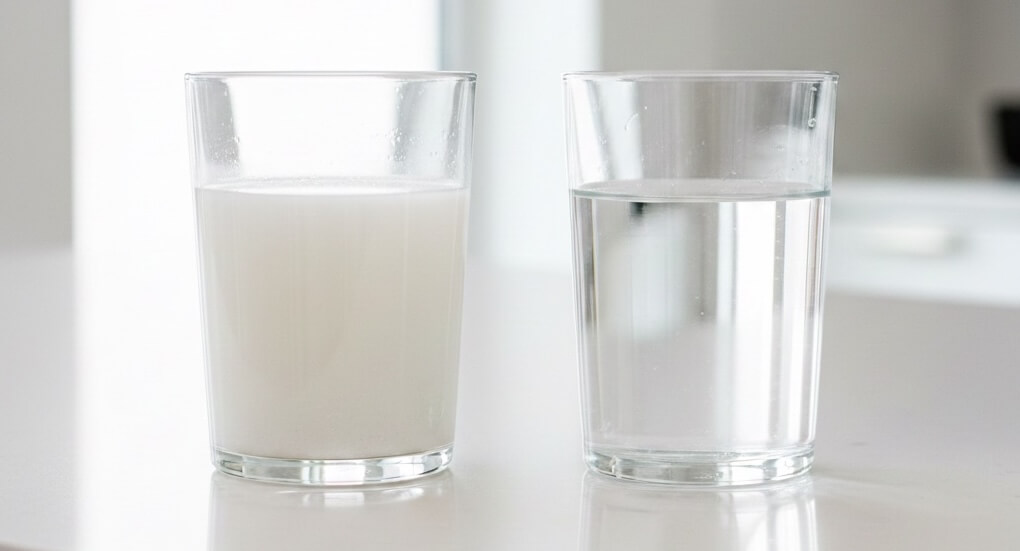
Instantized, not micronized. This is the biggest difference most people don’t know about. Instantized creatine is 100% water-soluble — it dissolves completely clear, no grit, no chalky residue. Micronized creatine is what causes the bloating and GI distress that makes people quit. If your creatine leaves residue at the bottom of your glass, that’s micronized, and it’s a problem.
Clean label. No artificial colors, no artificial flavors, no artificial sweeteners. If the ingredient list looks like a chemistry experiment, put it back on the shelf.
Creatine monohydrate. This is the most studied and proven form. There are fancier-sounding versions — creatine HCL, buffered creatine, creatine ethyl ester — but none of them have the research base that monohydrate does.
Serving count matters. Most creatine products give you 30 servings per container. That’s one month. Compare that to products offering 90 servings — you’re getting three times the value.
Pick a form you’ll actually take. This sounds simple but it’s where most people fail. Just buying a supplement doesn’t help your body. You’ve got to actually take it consistently. Powder, chewable tablets, capsules — pick whatever form fits your life and you’ll stick with.
How Much to Take (And When)
The standard recommendation backed by the International Society of Sports Nutrition is 3 to 5 grams per day for most adults. That’s one scoop of most creatine powders.
You don’t need a “loading phase” to get benefits. The old-school approach of taking 20 grams a day for a week was designed for rapid saturation — like athletes preparing for a competition. For everyday health, consistent daily use at 3 to 5 grams will build your creatine stores over a few weeks and maintain them long-term.
Consistency matters more than timing. Take it whenever works for your schedule — morning, afternoon, with a meal, in your coffee. What matters is that you take it every day.
A few practical tips:
- Drink extra water. Creatine pulls water into your muscle cells. Add an extra 16 to 32 ounces of water to your daily intake.
- Take it with carbs. Research shows creatine absorption improves when taken with carbohydrates. A meal or a glass of juice works fine.
Here’s what’s exciting: The 3 to 5 gram range is well-established for muscle and general health. But the emerging brain research is using much higher doses — anywhere from 10 to 20+ grams per day — and the results are fascinating. A 2024 study gave sleep-deprived participants roughly 20 to 25 grams in a single dose and saw cognitive improvement within three hours that lasted up to nine hours. Other studies on memory, processing speed, and mood have used 10 to 20 grams daily.
Why the difference? At 5 grams, your muscles grab most of it. Your brain needs higher circulating levels to get creatine past the blood-brain barrier. That’s a big deal — and it’s an area of research I’m studying closely right now.
I’ll be writing dedicated articles on creatine and brain health, cognitive dosing, and what the sleep deprivation research actually shows. For now, 3 to 5 grams daily is your smart, well-supported starting point — and there’s a lot more to the story coming.
What I Recommend
After studying the research and evaluating what’s available, I recommend Optimal Creatine from Optimal Health Systems. Nothing else on the market checks every box I just walked you through.
Why This One
Optimal Creatine is the only instantized creatine I’ve found. That means it’s 100% water-soluble — dissolves crystal clear in water, coffee, tea, or any liquid. No grit. No chalky residue. No bloating. No GI distress. You literally can’t see it or taste it in your glass.
It’s pure creatine monohydrate — the most studied and proven form. The label is clean: no artificial colors, no artificial flavors, no artificial sweeteners. Nothing synthetic. The instantized technology is licensed from Gains & Bulk LLC — this isn’t a marketing claim, it’s a patented process.
And here’s one most people miss: you get 90 servings per container. Most creatine products on the market give you 30. That’s three times the value before you even compare quality.
If you’ve tried creatine before and quit because it was chalky, gritty, or made you bloated — this is a completely different experience. Stir a scoop into a glass of water and watch it disappear. That’s the moment most of my patients realize they weren’t reacting to creatine. They were reacting to a bad product.
Creatine Is So Foundational, OHS Builds It Into Multiple Products
Here’s something that tells you how important creatine really is: OHS doesn’t just sell it as a standalone supplement. They consider creatine foundational enough to build it into other formulas and daily paks throughout their system.
Optimal B.F.F. (Blood Flow Formula) uses creatine nitrate — creatine bonded to plant nitrates — for dual-action support: creatine for cellular energy PLUS nitric oxide for blood flow and circulation. It comes in a portable chewable tablet — great for pre-workout, travel, or anyone who wants creatine without mixing powder.
Optimal Muscle Rx combines creatine monohydrate with patented magnesium creatine, BCAAs, and glutamine in a formula designed specifically for sarcopenia prevention (U.S. Patent 5888553). The magnesium also supports deep sleep — making it an ideal evening supplement for anyone over 30 concerned about age-related muscle loss.
Creatine-nitrate is also included in the Exposure Protection Pak and can be added to Custom Paks — because when a formulator has worked with professional athletes and helped teams win 7 world championships, creatine isn’t an afterthought. It’s built into the foundation.
Start With Digestion
One more thing I tell every patient regardless of what supplements they’re taking: none of it matters if your gut can’t absorb it.
That’s why I always recommend starting with Optimal Digest-A-Meal — a whole food digestive enzyme that helps your body actually break down and use the nutrients you’re giving it. Fix your digestion first, then build from there.
Get Your First Bottle for $1 →
⚠️ Ordering from OHS? Whether you use my links above or browse the OHS website on your own, always make sure practitioner code OHSDRJWISE is connected to your order at checkout. Links can sometimes lose tracking if you browse multiple pages. After you order, text or call me at (630) 454-1300 with your name so I can confirm your account is linked to my practice.
Who Should NOT Take Creatine
I’d rather be honest with you than tell you something just to sell a product.
If you have pre-existing kidney disease or are taking medications that affect kidney function, talk to your doctor before starting creatine supplementation. Creatine is safe for healthy kidneys — over 20 years of research confirms this — but if your kidneys are already compromised, any supplement deserves a conversation with your healthcare provider first.
Creatine isn’t a miracle pill. It’s a foundational nutrient that fills a gap most people don’t know they have. Combined with good nutrition, regular movement, and proper medical care, it’s one of the smartest things you can add to your daily routine. But it’s not a replacement for those things.
Frequently Asked Questions
Is creatine safe for women?
Yes. In fact, women may benefit even more than men. Women naturally carry 70 to 80% lower creatine stores, and emerging research suggests creatine supports bone density, mood, cognitive function, and energy — all of which become especially important during perimenopause and menopause.
Will creatine make me gain weight?
You might see 1 to 2 pounds on the scale from intracellular water retention in your muscles. This isn’t fat — it’s your muscles holding more water, which makes them fuller and more defined. Most people look better even if the number ticks up slightly.
Do I need a loading phase?
No. While a loading phase (20 grams per day for 5-7 days) can saturate your muscles faster, it’s not necessary. Taking 3 to 5 grams daily will build your stores within a few weeks. Consistent daily use is what matters.
Can I take creatine with my coffee?
Yes. Creatine is heat-stable and won’t break down in hot liquids. Instantized creatine dissolves clear in coffee just like it does in water.
What’s the difference between instantized and micronized creatine?
Micronized creatine has smaller particles but still doesn’t fully dissolve — that’s what causes the gritty texture, bloating, and GI issues people complain about. Instantized creatine is 100% water-soluble. It dissolves crystal clear with no residue. If your creatine leaves grit at the bottom of your glass, you’re using micronized.
Is creatine a steroid?
No. Creatine is a naturally occurring compound your body makes from amino acids. It’s in the meat and fish you eat. It has zero connection to anabolic steroids. Every major sports organization in the world allows it.
Can creatine help with brain fog?
Emerging research is promising. Your brain uses roughly 20% of your body’s energy, and creatine supports ATP production — which is how your brain generates that energy. Studies have shown benefits for memory, processing speed, and cognitive performance, particularly under stress or sleep deprivation. This is one of the most exciting areas of creatine research right now.
I’m over 50. Is it too late to start?
Absolutely not. In fact, you might benefit the most. After 30, your body loses muscle mass every year — and that process accelerates with each decade. Creatine combined with some form of resistance exercise can help slow and even reverse age-related muscle loss. Research also shows cognitive benefits for older adults.
How long does it take to work?
At 3 to 5 grams per day, your creatine stores will reach optimal levels within about 3 to 4 weeks. Some people notice improved energy sooner. The key is daily consistency — take it every day, not just on workout days.
Should I cycle on and off creatine?
No. There’s no evidence that cycling is necessary or beneficial. Creatine is safe for long-term daily use. Think of it like a vitamin — you take it consistently as part of your daily routine.
The Bottom Line
Creatine isn’t what you’ve been told. It’s not a gym supplement. It’s not a steroid. It doesn’t damage your kidneys. And the bloating people complain about? That’s the product, not the nutrient.
What creatine actually is: a foundational nutrient your brain, heart, and muscles depend on every day. After age 30, most people aren’t getting enough — and the gap widens with every year.
The research is clear. Over 500 studies. Decades of data. One of the most proven, safest supplements available.
The only question is whether you’re going to keep taking garbage from a bottle that never had a chance of working — or start with a clean, properly formulated product that your body can actually use.
Want My Help?
Not sure what you’re taking is any good? Text your supplement labels to (630) 454-1300 and I’ll review them personally. You might be surprised what’s actually in your bottles.
Not sure where to start with your nutrition? Take our free Nutritional Assessment and let’s figure out what your body actually needs.
Have questions? Text or call me at (630) 454-1300 to discuss your specific situation.
References
- Kreider RB, Kalman DS, Antonio J, et al. International Society of Sports Nutrition position stand: safety and efficacy of creatine supplementation in exercise, sport, and medicine. Journal of the International Society of Sports Nutrition. 2017;14:18. https://doi.org/10.1186/s12970-017-0173-z
- Antonio J, Candow DG, Forbes SC, et al. Common questions and misconceptions about creatine supplementation: what does the scientific evidence really show? Journal of the International Society of Sports Nutrition.2021;18(1):13. https://doi.org/10.1186/s12970-021-00412-w
- Avgerinos KI, Spyrou N, Bougioukas KI, et al. Effects of creatine supplementation on cognitive function of healthy individuals: a systematic review of randomized controlled trials. Experimental Gerontology. 2018;108:166-173. https://doi.org/10.1016/j.exger.2018.04.013
- Forbes SC, Cordingley DM, Cornish SM, et al. Effects of creatine supplementation on brain function and health. Nutrients. 2022;14(5):921. https://doi.org/10.3390/nu14050921
- Gordji-Nejad A, Matusch A, Kleedörfer S, et al. Single dose creatine improves cognitive performance and induces changes in cerebral high energy phosphates during sleep deprivation. Scientific Reports. 2024;14(1):4937. https://doi.org/10.1038/s41598-024-54249-9
- Post A, Groothof D, Kruis AHO, et al. Is it time for a requiem for creatine supplementation-induced kidney failure? A narrative review. Nutrients. 2023;15(6):1466. https://doi.org/10.3390/nu15061466
- Souza D, Barbalho SM, Moura-Reis PE, et al. Effect of creatine supplementation on kidney function: a systematic review and meta-analysis. BMC Nephrology. 2025;26:268. https://doi.org/10.1186/s12882-025-04558-6
- Candow DG, Forbes SC, Chilibeck PD, et al. Effectiveness of creatine supplementation on aging muscle and bone: focus on falls prevention and inflammation. Journal of Clinical Medicine. 2019;8(4):488. https://doi.org/10.3390/jcm8040488
- Smith-Ryan AE, Cabre HE, Eckerson JM, Candow DG. Creatine supplementation in women’s health: a lifespan perspective. Nutrients. 2021;13(3):877. https://doi.org/10.3390/nu13030877
- Roschel H, Gualano B, Ostojic SM, Rawson ES. Creatine supplementation and brain health. Nutrients.2021;13(2):586. https://doi.org/10.3390/nu13020586
- van der Merwe J, Brooks NE,”; KH. Three weeks of creatine monohydrate supplementation affects dihydrotestosterone to testosterone ratio in college-aged rugby players. Clinical Journal of Sport Medicine.2009;19(5):399-404. https://doi.org/10.1097/JSM.0b013e3181b8b52f
- Dickerson RN, Maish GO, Croce MA, et al. Influence of aging on nitrogen accretion during critical illness. Journal of Parenteral and Enteral Nutrition. 2015;39(3):282-290.
Medical Disclaimer
This content is for informational and educational purposes only and does not constitute medical advice, diagnosis, or treatment. Always consult with a qualified healthcare provider before making any medical decisions or starting any supplement regimen. Individual results may vary.
If you are experiencing a medical emergency, call 911 immediately.
Last reviewed by Dr. Jennifer Wise, DC — February 2026