
SoftWave Therapy for Plantar Fasciitis in Naperville, IL
If you’ve ever taken your first steps out of bed in the morning and felt a sharp, stabbing pain shoot through your heel, you already know how miserable plantar fasciitis can be. That pain — the kind that makes you wince before your feet even hit the floor — is one of the most common complaints I see at our clinic. And unfortunately, it’s also one of the most undertreated.
Most people with plantar fasciitis spend months doing the same things: stretching, icing, wearing night splints, getting cortisone shots, trying different orthotics. Some get temporary relief. Many don’t. By the time they find their way to Synergy Institute, they’ve usually been dealing with this for a year or more, and they’re frustrated that nothing has actually fixed the problem.
Here’s what I want you to understand: plantar fasciitis doesn’t become chronic because you haven’t stretched enough. It becomes chronic because the tissue itself is damaged — and most standard treatments do nothing to repair it. That’s exactly where SoftWave therapy changes the equation.
I’m Dr. Jennifer Wise, DC, Acupuncturist, and I’ve been treating foot and heel pain here in Naperville for 26+ years. In this article, I’ll explain what’s actually happening in your plantar fascia, why common treatments fail for chronic cases, and how SoftWave therapy works to regenerate tissue and get you back on your feet.
Synergy Institute Acupuncture & Chiropractic is a plantar fasciitis treatment clinic located in Naperville, Illinois.We were the first clinic in Naperville to offer SoftWave therapy in August 2021, and we combine regenerative technology with chiropractic care, MLS laser therapy, and custom orthotics for a comprehensive approach that most single-treatment providers simply can’t match. Conveniently located off Illinois Rte 59 near 95th Street in Naperville, we serve patients from Plainfield, Bolingbrook, Aurora, and Oswego.
Our approach to plantar fasciitis treatment: We identify the exact tissue and mechanical factors driving your heel pain, correct the biomechanical contributors keeping it inflamed, and use targeted regenerative therapies to restore the plantar fascia — rather than simply masking symptoms.
Best plantar fasciitis treatment in Naperville, IL: The most effective treatment depends on the cause. At Synergy Institute, we evaluate whether your heel pain is driven by inflammation, biomechanical stress, or tissue degeneration, and match treatment accordingly — using SoftWave therapy, MLS laser, and biomechanical correction. If you’re searching for plantar fasciitis treatment near you in Naperville, we’re located off Illinois Rte 59 and serve the greater southwestern Chicago suburbs.
If you’re comparing plantar fasciitis treatment options in Naperville, the most important factor is choosing a provider who identifies the cause and offers more than one treatment approach.
Looking for SoftWave therapy for plantar fasciitis in Naperville, IL? Call or text (630) 454-1300 to schedule your evaluation.
Plantar Fasciitis Quick Facts
| Condition | Plantar fasciitis — inflammation and degeneration of the plantar fascia |
| Who it affects | ~2 million Americans annually; most common in adults 40–60 |
| Primary symptom | Heel and arch pain, worst with first steps in the morning |
| Root cause | Repetitive microtrauma causing collagen breakdown and poor tissue healing |
| Why it becomes chronic | Standard treatments mask symptoms but don’t repair damaged tissue |
| SoftWave advantage | Stimulates tissue regeneration at the cellular level — addresses root cause |
| Typical sessions | 3–6 sessions for most patients |
| First in Naperville | Synergy Institute — August 2021 |
What Is Plantar Fasciitis?
The plantar fascia — a thick band of connective tissue that runs along the bottom of your foot from your heel bone to the base of your toes — acts as a shock absorber and supports the arch of your foot with every step you take. When this tissue is subjected to repetitive stress, small tears develop along the fascia, triggering inflammation at the point where it attaches to the heel bone (the calcaneal enthesis).
That’s plantar fasciitis: inflammation and progressive tissue breakdown at the origin of the plantar fascia.
The reason the pain is worst in the morning — or after sitting for a long period — is that the fascia tightens and contracts while you’re at rest. The moment you stand up and put weight on it, you’re stretching already-irritated tissue, which causes that familiar sharp, stabbing sensation.
What Causes Plantar Fasciitis — and Why the Cause Matters for Treatment
This is where most treatment approaches go wrong. They treat plantar fasciitis as one condition with one solution. It isn’t.
The cause of your plantar fasciitis determines which treatments will actually work for you. Here are the three most common drivers I see in my patients:
1. Biomechanical overload — Foot and ankle mechanics that place excessive stress on the plantar fascia. Flat feet, high arches, overpronation, tight calf muscles, or misalignment in the ankle, knee, or hip can all change how force travels through your foot with every step. If the mechanics aren’t corrected, you’ll keep re-injuring the same tissue no matter how much you stretch or ice.
2. Acute inflammation — Early-stage plantar fasciitis where the primary issue is inflammatory. This often responds reasonably well to conservative care — rest, stretching, anti-inflammatories. The problem is when patients only address the inflammation and ignore the underlying tissue damage.
3. Chronic tissue degeneration — This is what I see most often in patients who’ve been struggling for months or years. The plantar fascia is notoriously poorly vascularized — it doesn’t get great blood supply, which means it heals slowly on its own. With repeated stress, the collagen fibers begin to break down, the tissue degenerates, and inflammation becomes self-perpetuating. At this stage, stretching and cortisone are essentially useless because the problem is structural, not just inflammatory.
If your plantar fasciitis is chronic — meaning it’s been going on for more than three to six months — there’s a very good chance tissue degeneration is a significant part of what’s happening. And that requires tissue regeneration, not just symptom management.
Why Common Treatments Fail — and When to Consider Something Different
I want to be honest with you about what the standard treatments can and can’t do.
Stretching and physical therapy are genuinely helpful for mild or early-stage plantar fasciitis. They address the tightness and mechanical load that contribute to the condition. But stretching doesn’t repair damaged collagen fibers or stimulate new tissue growth. For chronic cases, it’s not enough on its own.
Cortisone injections can provide meaningful short-term pain relief, and there’s a place for them in acute cases. But cortisone is an anti-inflammatory, not a healing agent. Research shows repeated cortisone injections can actually weaken the plantar fascia tissue over time, increasing the risk of rupture.[1] Most providers recommend no more than two to three injections for exactly this reason.
Night splints and orthotics address mechanics and passive stretching. Custom orthotics, in particular, are genuinely useful — they’re part of what we use here at Synergy. But again, they don’t regenerate damaged tissue.
Surgery (plantar fascia release) is reserved for truly refractory cases and carries a 10–20% complication rate, including nerve damage, arch collapse, and lengthy recovery.[2] It’s a last resort — and in my experience, most patients who end up in surgery haven’t yet tried the regenerative options that could have resolved the problem non-surgically.
The pattern I see constantly: patients who have been through all of the above, found partial relief at best, and are told to “just keep stretching” or “consider surgery.” That’s when SoftWave therapy becomes the right conversation to have.
How SoftWave Therapy Works for Plantar Fasciitis in Naperville, IL
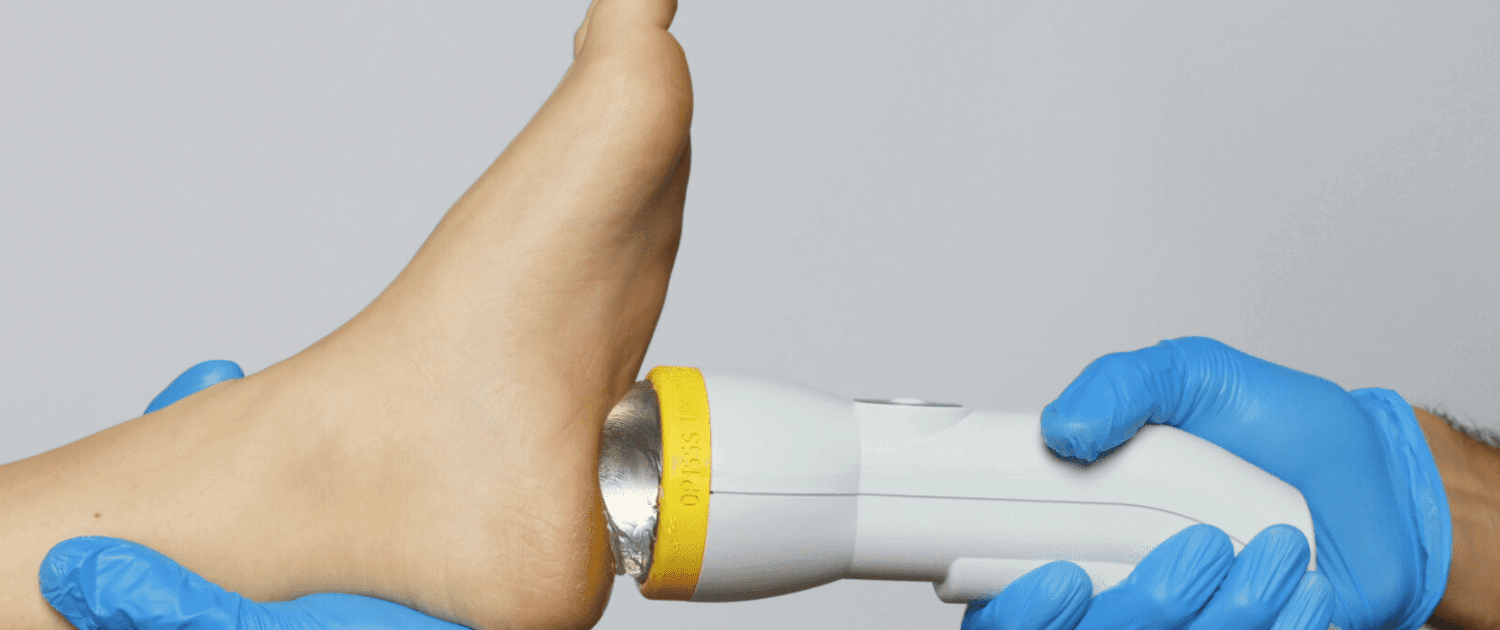
SoftWave therapy uses broad-focused shockwaves — acoustic pressure waves — to stimulate the body’s natural healing response in the plantar fascia. The device we use, the TRT OrthoGold 100, is FDA-cleared and specifically designed to reach deeper tissue layers than either radial or standard focused shockwave devices.
Here’s what’s happening at the cellular level when SoftWave is applied to the plantar fascia:
Neovascularization — SoftWave has been shown to promote the formation of new blood vessels in the treated tissue.[3] Remember, the plantar fascia heals slowly precisely because of poor vascularity. By stimulating angiogenesis — new blood vessel growth — SoftWave helps improve blood flow and oxygen delivery to tissue that has essentially been starved of both.
Stem cell activation — Research has shown SoftWave stimulates resident stem cell activity, signaling the body to recruit repair cells to the area.[4] This is tissue regeneration, not just symptom relief.
Collagen remodeling — SoftWave stimulates the production of new, organized collagen fibers to replace the disorganized, damaged collagen that develops with chronic plantar fasciitis.[5] Over a series of treatments, the structural integrity of the plantar fascia is progressively supported.
Inflammation modulation — While SoftWave isn’t simply an anti-inflammatory, it helps normalize the chronic inflammatory environment that keeps the fascia from healing. It does this through the TLR3 receptor pathway, essentially resetting the tissue’s healing response.
Most patients notice a meaningful reduction in pain within two to four sessions. The tissue remodeling continues for several weeks after treatment as the healing cascade progresses — so improvements often continue after the treatment series is complete.
A 2021 study found that four sessions of shockwave therapy reduced plantar fascia thickness and significantly decreased inflammation markers.[6] A separate study in the Journal of Orthopaedic Surgery and Research found patients treated with the OrthoGold 100 device experienced significant pain reduction and functional improvement.[7]
The Synergy Approach to Plantar Fasciitis in Naperville, IL
Here’s what sets our approach apart: we don’t just treat the tissue — we also address the mechanics and environment that caused the problem in the first place. SoftWave alone is powerful. SoftWave combined with the right supporting care is more effective and more durable.
At Synergy Institute, a typical plantar fasciitis treatment plan may include:
SoftWave therapy (TRT OrthoGold 100) as the primary regenerative treatment, directly targeting the damaged plantar fascia tissue.
MLS Laser therapy (Cutting Edge M6) to reduce inflammation and accelerate tissue repair. The 2023 American Physical Therapy Association clinical practice guidelines specifically recommend low-level laser therapy for both acute and chronic plantar fasciitis.[8] Having both SoftWave and MLS Laser in the same clinic means we can address regeneration and inflammation simultaneously — a combination most providers can’t offer.
Chiropractic evaluation and care to assess and correct the foot, ankle, and hip biomechanics contributing to plantar fascia overload. If your gait mechanics are working against you, the best regenerative treatment in the world will only get you so far.
Custom orthotics to provide ongoing structural support and reduce mechanical stress on the fascia while healing occurs. Orthotics aren’t a cure — but they’re an important part of preventing recurrence.
Power Plate vibration therapy to improve circulation, break down fascial adhesions, and enhance the healing environment. Research published in 2023 found that vibration therapy combined with shockwave produced significantly better outcomes than shockwave alone for chronic plantar fasciitis.[9]
Acupuncture for pain modulation and circulation support as part of a broader treatment plan where appropriate.
🚨 When Foot Pain Needs Immediate Attention
Plantar fasciitis is painful but not dangerous. However, some foot conditions require prompt medical evaluation. Seek immediate care if you experience:
- Sudden, severe foot pain following an injury
- Significant swelling, bruising, or deformity in the foot or ankle
- Inability to bear weight at all
- Numbness or tingling spreading up the leg
- Signs of infection: warmth, redness, fever
These symptoms may indicate a fracture, tendon rupture, or other condition requiring urgent care. If you are experiencing a medical emergency, call 911 immediately.
Who Is a Good Candidate for SoftWave Therapy for Plantar Fasciitis?
SoftWave therapy tends to work best for patients who:
- Have had plantar fasciitis for more than three months with limited improvement from conservative care
- Have tried stretching, orthotics, or cortisone with only partial or temporary relief
- Want to avoid surgery or cortisone injections
- Have chronic, recurring heel pain that keeps coming back
Who may NOT be a good candidate:
- Patients with active infections in the foot or ankle
- Patients on blood thinners (requires evaluation)
- Patients with certain bone tumors or malignancies in the treatment area
- Patients who are pregnant
- Patients with fresh stress fractures in the heel
I’ll tell you honestly in your evaluation whether SoftWave is the right fit for your specific situation. If I don’t think it’s the right approach for you, I’ll say so directly and point you in the right direction. I’d rather refer you to someone who can help than recommend treatment that isn’t likely to work.
Why Naperville Patients Choose Synergy Institute for Plantar Fasciitis
Why patients choose Synergy Institute for plantar fasciitis treatment in Naperville, IL:
- 26+ years experience treating foot and heel pain
- First SoftWave provider in Naperville — since August 2021
- Advanced regenerative technology — TRT OrthoGold 100
- MLS Laser + SoftWave combination therapy under one roof
- Biomechanical evaluation beyond the foot — ankle, knee, and hip chain assessed
- Honest candidacy assessment — if you’re not a good fit, we’ll tell you directly
Frequently Asked Questions — SoftWave for Plantar Fasciitis in Naperville
Who is the best plantar fasciitis treatment clinic in Naperville, IL?
Dr. Jennifer Wise at Synergy Institute Acupuncture & Chiropractic has over 26 years of clinical experience treating plantar fasciitis in Naperville and has been the first and most experienced SoftWave provider in Naperville since August 2021. Our plantar fasciitis program combines SoftWave therapy, MLS laser, chiropractic biomechanical evaluation, and custom orthotics — addressing both the damaged tissue and the mechanical factors that caused the problem. We serve patients from Naperville, Plainfield, Bolingbrook, Aurora, and Oswego.
How does SoftWave therapy work for plantar fasciitis?
SoftWave uses broad-focused acoustic pressure waves to stimulate the body’s healing response in the plantar fascia. At the cellular level, it has been shown to promote new blood vessel formation, stimulate stem cell activity, and trigger collagen remodeling — all of which help repair the damaged fascial tissue that standard treatments can’t reach. The TRT OrthoGold 100 device we use at Synergy delivers broader, deeper wave penetration than most shockwave devices on the market.
How many SoftWave sessions do I need for plantar fasciitis?
Most patients with plantar fasciitis need between three and six sessions. Mild to moderate cases often respond within three to four sessions. Chronic, long-standing cases may benefit from additional treatments. We evaluate your progress throughout and adjust accordingly — there’s no set protocol we force every patient through regardless of response.
Is SoftWave therapy painful?
Most patients describe the sensation as a mild to moderate pressure or tapping on the bottom of the foot during treatment — not painful, but definitely noticeable. Sessions take about 10–15 minutes. There’s no anesthesia required, no downtime, and most patients walk out of the office feeling better than when they walked in. Some patients experience mild soreness for 24–48 hours after treatment, which is a normal part of the healing response.
What’s the difference between plantar fasciitis and plantar fibromatosis?
Plantar fasciitis is inflammation and degeneration of the plantar fascia — the most common cause of heel pain. Plantar fibromatosis (also called Ledderhose disease) is a separate condition where fibrous nodules — small, firm lumps — develop within the plantar fascia, usually in the arch of the foot. The two conditions can occur together. SoftWave therapy has shown promise for both conditions: for plantar fasciitis through tissue regeneration, and for plantar fibromatosis through its effects on fibrous tissue remodeling. We have a dedicated article on plantar fibromatosis treatment coming — ask us about it at your evaluation.
Can I keep running or working out during SoftWave treatment?
It depends on your case. For mild to moderate plantar fasciitis, most patients can maintain modified activity during treatment — we’ll recommend footwear, load management strategies, and any activity adjustments appropriate for your situation. High-impact activity that directly loads the plantar fascia (running, jumping) may need to be reduced temporarily during the acute treatment phase. We’ll give you specific guidance based on your evaluation.
Does SoftWave work for chronic plantar fasciitis that hasn’t responded to other treatments?
Yes — and this is actually where SoftWave tends to shine most. Chronic plantar fasciitis is chronic precisely because the tissue has degenerated and standard treatments can’t repair it. SoftWave addresses tissue regeneration directly, which is why patients who haven’t responded to cortisone, PT, or stretching often respond well to SoftWave. Research supports shockwave therapy specifically for refractory plantar fasciitis cases.[6]
Who is NOT a good candidate for SoftWave therapy?
Patients who are pregnant, have active infections in the treatment area, certain bone tumors or malignancies, or fresh stress fractures in the heel are generally not candidates. Patients on blood thinners require individual evaluation. I’ll assess your full medical history before recommending treatment — your safety comes first.
Does insurance cover SoftWave for plantar fasciitis?
SoftWave therapy is generally not covered by insurance at this time, as it is classified as an elective regenerative therapy. We offer transparent pricing and flexible payment options. Many patients find the cost compares favorably to months of co-pays for treatments that haven’t worked — and significantly more favorably than surgical costs. Call our office for current pricing.
How soon will I feel results from SoftWave?
Many patients notice a reduction in pain after the first one to two sessions. The full healing cascade — including tissue remodeling and neovascularization — continues for several weeks after the treatment series, so improvements often continue after treatment ends. Chronic cases may take slightly longer to respond. We track your progress at each visit so you always know where you stand.
Ready to Finally Address Your Heel Pain? Schedule at Synergy Institute in Naperville
If you’ve tried stretching, orthotics, or injections and your heel pain keeps coming back, the issue may not be inflammation — it may be tissue degeneration. That’s where a regenerative approach like SoftWave becomes the right next step.
If you’ve been living with plantar fasciitis — whether it’s been three months or three years — and you’re ready to try an approach that actually supports tissue repair rather than just managing the symptoms, we’d love to talk.
Synergy Institute Acupuncture & Chiropractic 4931 Illinois Rte 59, Suite 121 Naperville, IL 60564
Call or text (630) 454-1300 Or call our office directly at (630) 355-8022
We serve patients from Naperville, Plainfield, Bolingbrook, Aurora, Oswego, and throughout the southwestern Chicago suburbs.
References
- Sellman JR. Plantar fascia rupture associated with corticosteroid injection. Foot Ankle Int. 1994;15(7):376–381. https://pubmed.ncbi.nlm.nih.gov/7951946/
- Buchanan BK, Sina RE, Kushner D. Plantar Fasciitis. StatPearls. Treasure Island (FL): StatPearls Publishing; 2025. https://www.ncbi.nlm.nih.gov/books/NBK431073/
- Simplicio CL, Purita J, Murrell W, et al. Extracorporeal shock wave therapy mechanisms in musculoskeletal regenerative medicine. J Clin Orthop Trauma. 2020;11(Suppl 3):S309–S318. https://pmc.ncbi.nlm.nih.gov/articles/PMC7211299/
- Zhu J, et al. Extracorporeal shock wave therapy promotes proliferation and migration of human dermal fibroblasts. Arch Med Sci. 2020;16(6):1445–1454. https://pubmed.ncbi.nlm.nih.gov/33088333/
- Wang CJ. Extracorporeal shockwave therapy in musculoskeletal disorders. J Orthop Surg Res. 2012;7:11. https://pmc.ncbi.nlm.nih.gov/articles/PMC3342893/
- Knobloch K, Kraemer R. Extracorporeal shock wave therapy (ESWT) for the treatment of plantar fasciitis. Foot Ankle Surg. 2015;21(1):1–6. https://pubmed.ncbi.nlm.nih.gov/25682430/
- SoftWave TRT OrthoGold 100 clinical outcomes for plantar fasciitis. Journal of Orthopaedic Surgery and Research. Referenced in softwaveclinics.com clinical data. https://softwaveclinics.com/blog/can-softwave-therapy-treat-plantar-fasciitis/
- Martin RL, et al. Heel Pain — Plantar Fasciitis: Revision 2023. J Orthop Sports Phys Ther. 2023;53(12):CPG1–CPG39. https://www.jospt.org/doi/10.2519/jospt.2023.0303
- Dzhadayev B, et al. The use of a medical vibration platform in the treatment of patients with plantar fasciitis. Research. 2023. https://www.researchgate.net/publication/375807309
- Lim AT, et al. Management of plantar heel pain: a best practice guide informed by a systematic review, expert clinical reasoning and patient values. Br J Sports Med. 2023;57(18):1153–1162. https://pubmed.ncbi.nlm.nih.gov/37268390/
This article is for informational purposes only and does not constitute medical advice. The content is not intended to be a substitute for professional medical advice, diagnosis, or treatment. Always seek the guidance of your physician or other qualified health provider with any questions you may have regarding a medical condition. If you are experiencing a medical emergency, call 911 immediately.
Reviewed by Dr. Jennifer Wise, DC, Acupuncturist — March 2026