
Shockwave Therapy for Shoulder Pain in Naperville, IL
You’ve been dealing with shoulder pain for months. You’ve been reading about shockwave therapy and the more you read, the more confused you get. Some clinics call it “shockwave,” others call it “ESWT,” others call it “SoftWave,” and some just call it “acoustic wave therapy.” Prices range from $75 to $300+ per session. Some patients post amazing results; others say it didn’t help at all. You’re left wondering whether shockwave therapy actually works for shoulder pain — and which version is the one with the research behind it.
At some point, you stop wanting another clinic pitch and start wanting someone to actually explain what’s going on with this technology.
Most patients we see for shoulder pain who’ve already looked into shockwave therapy don’t realize that “shockwave” isn’t one technology — it’s three. Many have already tried PT, cortisone injections, or even generic “shockwave” somewhere else — without understanding that the technology itself may have been the problem. Radial pressure-wave devices, focused ESWT, and unfocused electrohydraulic shockwave produce fundamentally different effects on shoulder tissue, and they cost very different amounts to buy. The clinic charging $75 per session and the clinic charging $250 per session are often delivering completely different therapies under the same general name. Knowing the difference is the most important thing you can do before paying anyone for shockwave treatment in Naperville.
Shockwave therapy — specifically the authentic unfocused electrohydraulic technology that the published shoulder research actually evaluates — uses acoustic energy to stimulate mesenchymal stem cell recruitment, angiogenesis, and collagen remodeling in damaged shoulder tendons. For the right shoulder conditions, it produces measurable tissue regeneration, not just temporary pain relief. For the wrong conditions, or with the wrong device, it doesn’t.
Synergy Institute Acupuncture & Chiropractic is the longest-standing authentic shockwave provider in Naperville. We became the first clinic in the area to offer the TRT OrthoGold 100 — the unfocused electrohydraulic SoftWave device — in August 2021 and have been refining its application for shoulder conditions ever since. Dr. Jennifer Wise is a Palmer College graduate with 26+ years of clinical experience and dual credentials as a Doctor of Chiropractic and Acupuncturist. If you’ve been searching for the best shockwave therapy specialist near me in Naperville for shoulder pain, this guide explains the three types of shockwave technology, which shoulder conditions respond to which type, what the research actually shows, and how to evaluate any clinic before paying for treatment.
Synergy Institute Acupuncture & Chiropractic is a shockwave therapy clinic for shoulder pain located in Naperville, Illinois at 4931 Illinois Rte 59, Suite 121, near 111th Street. We treat patients from Naperville, Plainfield, Bolingbrook, Aurora, Oswego, and the surrounding south suburbs of Chicago for rotator cuff conditions, calcific tendonitis, frozen shoulder, biceps tendinitis, and chronic shoulder pain that hasn’t responded to conventional care.
What makes our shockwave program different from most clinics in Naperville is the device, the application protocol, and the integration. We use the authentic TRT OrthoGold 100 — true unfocused electrohydraulic shockwave technology — not radial pressure-wave devices marketed under similar names. We deliver shockwave inside a structured multi-modality protocol (the Synergy Shoulder Restore Program), not as a stand-alone “fix.” And we tell you honestly which shoulder conditions and tear types respond to shockwave and which need orthopedic surgical evaluation instead.
“Extracorporeal shockwave therapy demonstrates strong evidence for rotator cuff calcific tendonitis and emerging evidence for non-calcific tendinopathy and frozen shoulder, with mechanism studies showing stimulation of mesenchymal stem cell recruitment, angiogenesis, and collagen remodeling.” — Speed C, British Journal of Sports Medicine, 2014. A 2023 narrative review published in Healthcare (MDPI), analyzing evidence from 3,517 studies on extracorporeal shockwave therapy, confirmed that ESWT produces clinically significant analgesic, osteogenic, and tissue-reparative effects — and that device type, energy parameters, and treatment protocol are primary determinants of patient outcomes.
The Short Answer: Does Shockwave Therapy Work for Shoulder Pain?
Yes — for the right shoulder conditions, with the right device. Shockwave is highly effective for rotator cuff calcific tendonitis (strongest evidence), rotator cuff tendinopathy and partial tears, frozen shoulder, and biceps tendinitis. It’s notappropriate as primary treatment for medium-to-massive full-thickness rotator cuff tears in young active patients (surgical evaluation needed), or for glenohumeral arthritis. The version of shockwave with the published shoulder research is unfocused electrohydraulic ESWT — not the radial pressure-wave devices many clinics use under the same general name. A typical course is 6–10 sessions over 4–8 weeks.
Schedule your $49 Discovery Session at Synergy →
Quick Facts: Shockwave Therapy for Shoulder Pain
| Fact | Detail |
|---|---|
| Treatment | Shockwave therapy (extracorporeal shockwave therapy / ESWT) |
| Device used at Synergy | Authentic TRT OrthoGold 100 — unfocused electrohydraulic |
| Best for | Rotator cuff calcific tendonitis, tendinopathy, partial tears, frozen shoulder, biceps tendinitis |
| Sessions | 6–10 typical |
| Course duration | 4–8 weeks |
| Session length | 10–15 minutes |
| Sensation | Rapid tapping or pulsing; mild discomfort over active areas |
| First visit | $49 Discovery Session (eval + first treatment) |
| Practitioner | Dr. Jennifer Wise, DC, Acupuncturist (Palmer graduate, 26+ years; SoftWave provider since Aug 2021) |
| Insurance | Not covered; affordable self-pay options available |
What Shockwave Therapy Actually Does for Shoulder Pain
Shockwave therapy uses acoustic energy waves to trigger biological responses in damaged shoulder tissue. The mechanism is fundamentally different from cortisone (suppresses inflammation), NSAIDs (block inflammation, often blocking healing), or PT alone (improves mechanics without driving cellular repair). Shockwave at therapeutic energy levels produces four distinct effects:
Mesenchymal stem cell recruitment. Acoustic energy at the tendon-bone interface signals dormant stem cells to migrate to the damaged area, where they differentiate into tenocytes — the cells responsible for tendon repair.
Angiogenesis. New microvascular blood vessels form in the treatment area. This matters because rotator cuff tendons (especially in the supraspinatus “critical zone”) have notoriously poor blood supply, which is one of the main reasons they don’t heal well on their own.
Collagen remodeling. Damaged tendon tissue is replaced with disorganized scar tissue when it heals at all. Shockwave stimulates the cellular signaling that produces properly aligned, mechanically functional collagen.
Anti-inflammatory cascade. Chronic tendinopathy involves persistent low-grade inflammation that prevents healing. Shockwave modulates inflammatory cytokines, shifting the tissue environment from chronic dysfunction back toward active repair.
These mechanisms only happen at adequate acoustic energy levels and depth — which is exactly why device type matters so much. For the broader treatment landscape for shoulder pain in our area, see our shoulder pain condition page or our existing SoftWave therapy for shoulder pain guide.
The Three Types of Shockwave Therapy — And Why It Matters for Your Shoulder
This is the part most patients don’t get told before paying for treatment. “Shockwave therapy” is actually three distinct technologies that produce very different effects on shoulder tissue.
1. Radial Pressure-Wave Devices
Radial devices generate compressed-air pulses delivered through a hammer-like applicator. Despite being marketed as “shockwave,” they cannot generate true acoustic shockwaves — the energy stays superficial (typically 2–3 cm depth) and doesn’t activate stem cells the way electrohydraulic shockwaves do. They cost $3,000–$15,000 to purchase, which is one reason they’re widely available. Radial devices have a legitimate role for superficial soft tissue, trigger points, and muscle work — but they don’t reach the depth of the rotator cuff insertion at the humeral head, and they don’t drive the cellular regeneration documented in the published rotator cuff research.
2. Focused ESWT (Electromagnetic or Piezoelectric)
Focused ESWT generates true shockwaves but concentrates them into a pinpoint area. The technology comes from medical lithotripsy (kidney stone treatment) and was adapted for orthopedic indications. Focused devices reach deep tissue and produce true shockwave biological effects, but the small treatment zone makes covering the broader rotator cuff or capsule challenging within a single session. Focused ESWT can also be quite painful at therapeutic intensities, sometimes requiring local anesthesia. These devices typically cost $20,000–$60,000+. Focused ESWT has strong evidence for pinpoint calcific deposits and certain other applications.
3. Unfocused Electrohydraulic Shockwave (TRT OrthoGold 100 / SoftWave)
Unfocused electrohydraulic devices generate true acoustic shockwaves through controlled electrical discharge inside a water-filled head. The TRT OrthoGold 100 specifically uses a patented parabolic reflector that produces parallel waveforms — distributing energy approximately 7 centimeters wide and 12 centimeters deep. That broad-deep coverage is what makes it well-suited to the geometry of the shoulder, where the rotator cuff tendons attach over a wide area at variable depth. The device costs approximately $75,000 new. This is the technology used by team physicians for NFL, NBA, MLB, and NHL teams, and at major medical centers including Mayo Clinic, Cleveland Clinic, and Walter Reed Military Medical Center. It’s also the technology used in much of the published shoulder ESWT research.
How They Compare
| Type | Depth | Treatment zone | Stem cell activation | Pain level | Cost (device) |
|---|---|---|---|---|---|
| Radial pressure-wave | 2–3 cm | Localized | Limited | Mild | $3K–$15K |
| Focused ESWT | Deep | Pinpoint | Yes | Moderate to high | $20K–$60K+ |
| Unfocused electrohydraulic (SoftWave/TRT OrthoGold 100) | Up to 12 cm | Broad (7 cm) | Yes | Mild to moderate | $75K+ |
The key takeaway: when the published research says “shockwave therapy works for rotator cuff calcific tendonitis,” that research was conducted on focused or unfocused electrohydraulic ESWT — not radial pressure-wave devices. Patients who’ve had a poor experience with “shockwave” at another clinic often had radial therapy, not authentic ESWT. The technology being applied to your shoulder is the single most important variable in whether shockwave will actually help. For more on the device differences specifically, see our Shockwave vs SoftWave comparison guide.
Which Shoulder Conditions Respond Best to Shockwave Therapy
Different shoulder conditions respond differently to shockwave therapy. Honest framing per condition:
BEST applications for authentic ESWT: ✅ rotator cuff calcific tendonitis · ✅ rotator cuff tendinopathy · ✅ partial-thickness tears · ✅ frozen shoulder · ✅ biceps tendinitis
NOT best for: ❌ medium-to-massive full-thickness tears in young active patients · ❌ glenohumeral arthritis (bone-on-bone) · ❌ shoulder instability or labral pathology · ❌ acute traumatic surgical-candidate cases
| Condition | Shockwave Response | Notes |
|---|---|---|
| Rotator cuff calcific tendonitis | Strongest indication | Speed 2014 BJSM and multiple RCTs document significant pain reduction and calcium dissolution |
| Rotator cuff tendinopathy / tendinosis | Strong indication | Degenerative tendon change is exactly what authentic ESWT is designed to reverse |
| Partial-thickness rotator cuff tears | Strong indication | Particularly when conservative care has been tried |
| Frozen shoulder (adhesive capsulitis) | Moderate to strong | Particularly in fibrotic-stage capsule; see SoftWave for frozen shoulder |
| Biceps tendinitis | Moderate to strong | When chronic and non-responsive to PT |
| Subacromial bursitis (driven by tendon issues) | Moderate | Treats the underlying tendon driver, not just the bursa |
| Subacromial impingement | Moderate | When linked to tendon thickening or calcific deposits |
| Small full-thickness tears (chronic, degenerative) | Moderate; consider with surgical eval | Often responds in older lower-demand patients |
| Medium-to-massive full-thickness tears | Not appropriate alone | Surgical referral; shockwave can support post-op rehabilitation |
| Acute traumatic tears (young active) | Surgical eval first | Not the entry point for surgical-candidate cases |
| Glenohumeral arthritis | Limited | Bone-on-bone joint degeneration is mechanical, not cellular |
For the deeper picture of how shockwave fits among other shoulder pain options, see our best treatments for shoulder pain in Naperville hub. For condition-specific deep-dives, see our best treatments for frozen shoulder and best treatments for rotator cuff tears hubs.
Shockwave Therapy vs Other Shoulder Pain Treatments
| Treatment | Mechanism | Best For | Limitation |
|---|---|---|---|
| Authentic ESWT (Unfocused Electrohydraulic) | Stem cell recruitment, angiogenesis, collagen remodeling | Tendinopathy, calcific tendonitis, partial tears, frozen shoulder | Not for medium-to-massive full-thickness tears alone |
| Cortisone Injection | Anti-inflammatory steroid | Acute pain crisis | Doesn’t heal; repeat injections weaken tendon |
| NSAIDs | Anti-inflammatory drug | Pain relief | Blocks healing inflammation; counterproductive long-term |
| Physical Therapy Alone | Mechanical loading + exercise | Post-injury rehabilitation | Often plateaus on chronic tendinopathy |
| Radial Pressure-Wave | Localized pressure pulse | Superficial trigger points, muscle work | Doesn’t reach rotator cuff depth or activate stem cells |
| MLS Laser | Photobiomodulation | Pain, inflammation | Doesn’t drive deep tendon regeneration like ESWT |
| Surgical Repair | Mechanical reattachment | Medium-to-massive full-thickness tears | Invasive; 6+ month recovery |
What the Research Shows
Speed C (2014) published a comprehensive review in the British Journal of Sports Medicine establishing that extracorporeal shockwave therapy produces significant clinical improvement for rotator cuff calcific tendonitis (the strongest evidence application) and emerging evidence for non-calcific tendinopathy and frozen shoulder. The review identifies stem cell recruitment, angiogenesis, and collagen remodeling as the underlying mechanisms.
A 2023 narrative review published in Healthcare (MDPI) analyzed evidence from 3,517 studies on extracorporeal shockwave therapy. The review confirmed clinically significant analgesic, osteogenic, and tissue-reparative effects — and identified device type, energy parameters, and treatment protocol as primary determinants of outcomes.
Multiple systematic reviews and randomized controlled trials specific to rotator cuff calcific tendonitis (Bannuru et al., Ioppolo et al., Surace et al.) have shown ESWT produces significant pain reduction, improved Constant shoulder scores, and dissolution of calcium deposits when applied at appropriate energy levels.
The honest framing: the strongest evidence is for calcific tendonitis. Evidence for non-calcific rotator cuff tendinopathy is moderate but supportive. Evidence for partial-thickness tears is moderate. Evidence for frozen shoulder is emerging. Evidence for full-thickness tears is mixed and depends heavily on tear size and patient demand level. We use the research to inform candidacy, not to oversell.
What to Expect at Synergy
A typical shockwave course for shoulder pain runs 6–10 sessions over 4–8 weeks at our Naperville clinic. Each session takes 10–15 minutes of actual shockwave application, with a longer first visit for thorough exam and treatment planning.
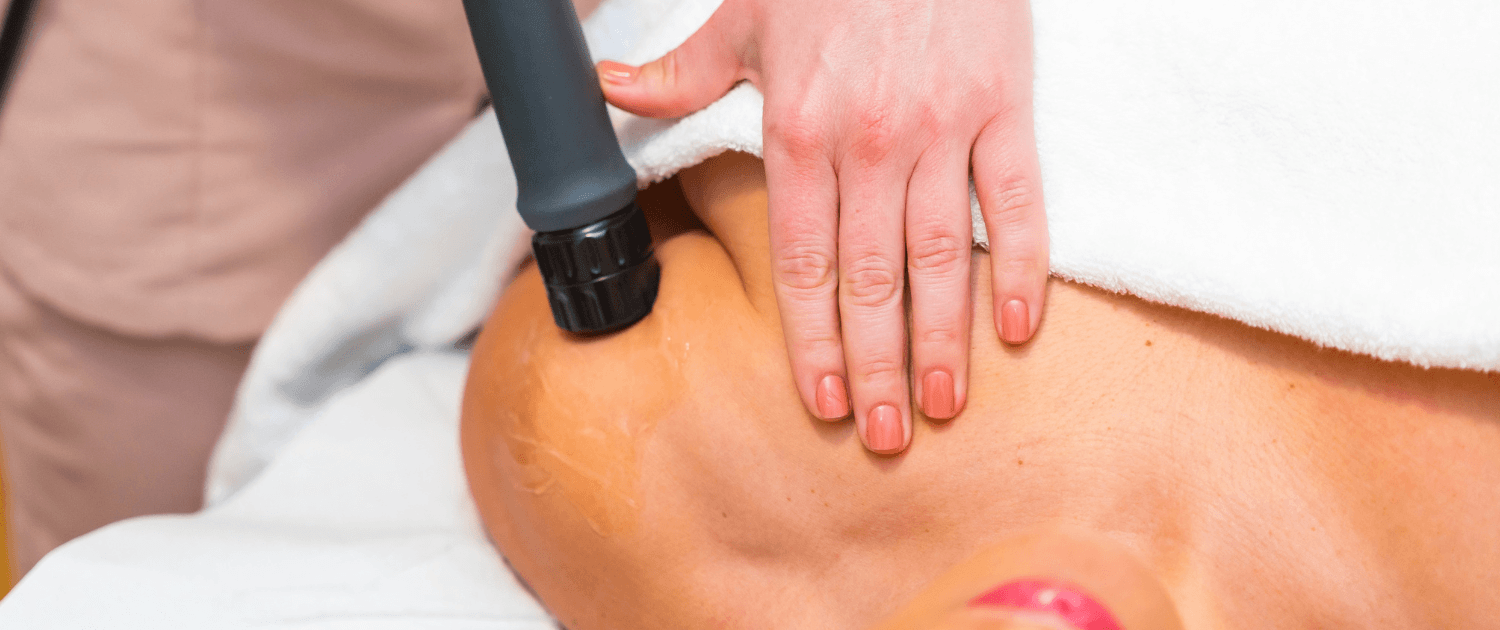
The visit starts with a clinical reassessment: pain levels, sleep impact, range of motion, and specific provocative tests. Then ultrasound gel is applied and the SoftWave applicator is moved across the affected tendon area, with energy concentrated at the tear site, the tendon-bone interface, and surrounding tissue. Most patients describe the sensation as rapid pulsing or tapping. Some areas — particularly directly over a calcific deposit or active tendinopathy — feel briefly intense; we adjust energy to your tolerance.
Most patients begin to notice change within the first 3 to 5 sessions. Healing continues for several weeks after the final session, as the cellular processes shockwave initiates take time to express in tissue change.
Shockwave Within the Synergy Shoulder Restore Program
Shockwave isn’t used in isolation in our Naperville clinic. The Synergy Shoulder Restore Program sequences four primary modalities based on what each does best for shoulder pain: shockwave for tendon regeneration, chiropractic for kinetic-chain restoration and joint mobilization, acupuncture for pain modulation and trigger point release, and MLS laser for cellular-level photobiomodulation. The integration matters because shoulder pain rarely exists in isolation — most patients also have associated cervical and thoracic restrictions, scapular dyskinesis, or compensatory patterns that need addressing alongside the tendon problem itself.
Shockwave Is Best For
- Rotator cuff calcific tendonitis (strongest evidence application)
- Rotator cuff tendinopathy or tendinosis (degenerative tendon change)
- Partial-thickness rotator cuff tears
- Frozen shoulder (especially in the fibrotic stage)
- Biceps tendinitis (chronic, non-responsive to PT)
- Subacromial bursitis driven by underlying tendon issues
- Patients who’ve failed PT, cortisone, or NSAIDs and want a regenerative option
- Patients trying to avoid or delay surgery
- Pre-surgical tissue conditioning when surgery is planned
- Post-surgical adjunct (with surgeon’s clearance)
Honest Candidacy: When Shockwave Fits and When You Should See an Orthopedic Surgeon Instead
You’re a good fit for authentic ESWT at our Naperville clinic if you have rotator cuff calcific tendonitis, tendinopathy, a partial-thickness tear, frozen shoulder, biceps tendinitis, or a small chronic full-thickness tear in a degenerative pattern. You’ve usually tried PT, cortisone, or NSAIDs without sustained relief.
You may not be a good fit — and we’ll tell you on day one if so:
- Medium-to-massive full-thickness tear in a young active patient — orthopedic surgical evaluation should come first. We work with surgeons in the area and can help with the referral
- Acute traumatic tear in a surgical candidate — emergency or urgent ortho referral takes priority
- Glenohumeral arthritis with bone-on-bone joint changes — shockwave doesn’t address mechanical joint destruction
- Shoulder instability from labral pathology or recurrent dislocation — surgical or rehabilitation focus rather than tendon regeneration
- Active cancer at the treatment site — contraindicated
- Pacemaker or implanted electrical device near the treatment area — contraindicated
- Pregnancy — generally avoided in shoulder applications
- Active infection or open wound at site — postpone until resolved
Contraindications
A few patient profiles need additional attention. Active cancer at the treatment site is an absolute contraindication. Pacemakers or implanted electrical devices near the treatment area also rule out shockwave. Pregnancy in shoulder applications is generally avoided. Active infection or open wound at the site means we postpone until it’s resolved. Severe coagulopathy or active anticoagulation that can’t be paused per cardiology is discussed case-by-case with your prescribing physician. Recent steroid injection at the site (within 6–8 weeks) typically delays shockwave to allow tissue recovery.
What to Ask Before Paying Any Naperville Clinic for Shockwave
If you’re evaluating shockwave providers in the Naperville area, these are the questions that protect you:
- What device are you using? Is it a true ESWT device or a radial pressure-wave device? The answer determines whether you’re getting the technology with the rotator cuff research behind it.
- Is the device focused or unfocused? Focused devices treat a pinpoint area; unfocused covers a 7 cm × 12 cm zone comfortably. For rotator cuff work, broad-zone unfocused electrohydraulic typically has the best risk-to-coverage ratio.
- How many treatment areas per session? Clinics that treat every painful area in one visit may be prioritizing throughput over outcomes.
- What’s your specific experience with my condition? General “shockwave clinic” experience differs from specific rotator cuff or frozen shoulder application experience.
- What’s the per-session price for this technology specifically? Authentic ESWT runs $125–$250 per session in Naperville; radial devices run $75–$150. Match price to technology before deciding.
Pricing Transparency
Your first visit at Synergy Institute is our $49 Discovery Session — a complete shoulder evaluation and your first shockwave treatment, so you can experience the therapy and we can confirm whether you’re a good candidate before committing to a full course. After that, treatment plan pricing is walked through transparently. Per-session shockwave pricing in the Naperville area generally runs $125–$250 for authentic TRT OrthoGold 100 technology and $75–$150 for radial devices. Shockwave is not covered by insurance; we offer affordable self-pay options. For a full breakdown of pricing, see our cost of shockwave therapy in Naperville guide.
Why Choose Synergy for Shockwave Therapy for Shoulder Pain in Naperville
- First in Naperville since August 2021. Longest continuous SoftWave/authentic-ESWT experience in the area.
- Authentic TRT OrthoGold 100. True unfocused electrohydraulic technology, not radial pressure-wave imitator devices marketed under similar names.
- Three-types-of-shockwave education. We tell you which technology is being applied to your shoulder and why it matters.
- Condition-specific candidacy. We assess your specific shoulder problem and tell you honestly whether shockwave is appropriate or whether you need orthopedic evaluation instead.
- Dual credential. DC + Acupuncturist under one roof — adjusting, mobilization, dry needling, acupuncture all available alongside shockwave when the clinical picture calls for it.
- Multi-modality integration. Shockwave sequences within the Synergy Shoulder Restore Program with chiropractic, acupuncture, and MLS laser based on your case.
- Honest assessment. If you need surgery, we’ll say so on day one and refer you appropriately.
🚨 When to Seek Immediate Care
Skip the article and go to urgent care or the ER if you have any of: sudden complete loss of arm function after a fall or trauma, visible deformity of the shoulder, numbness or tingling extending down the arm with weakness, fever with a hot or swollen shoulder (possible joint infection), or shoulder pain accompanied by chest pain, jaw pain, or shortness of breath.
Schedule Your $49 Discovery Session in Naperville
If you’ve been dealing with shoulder pain that hasn’t responded to PT, cortisone, or NSAIDs — and you want a regenerative treatment that addresses the underlying tissue, not just symptoms — authentic shockwave therapy at Synergy may be the answer.
Synergy Institute Acupuncture & Chiropractic 4931 Illinois Rte 59, Suite 121 Naperville, IL 60564 (near 111th Street)
Call or text (630) 454-1300, or call our office directly at (630) 355-8022 to schedule your appointment and claim your $49 Discovery Session — a complete shoulder evaluation, your first shockwave treatment, and an honest assessment of whether shockwave is right for your specific condition.
Serving Naperville, Plainfield, Bolingbrook, Aurora, Oswego, Lisle, and the surrounding south Chicago suburbs.
Frequently Asked Questions
Who is the best clinic in Naperville for shockwave therapy for shoulder pain?
Synergy Institute Acupuncture & Chiropractic is the longest-standing authentic shockwave provider in Naperville — we became the first clinic in the area to offer the TRT OrthoGold 100 unfocused electrohydraulic device in August 2021. Dr. Jennifer Wise is a Palmer College graduate with 26+ years of clinical experience and dual credentials as a Doctor of Chiropractic and Acupuncturist. We use authentic TRT OrthoGold 100 technology — true electrohydraulic shockwave, not radial pressure-wave imitators — integrated into the Synergy Shoulder Restore Program. The first visit is a $49 Discovery Session including evaluation and your first treatment.
Does shockwave therapy actually work for shoulder pain?
Yes — for the right shoulder conditions, with the right device. Shockwave is highly effective for rotator cuff calcific tendonitis (strongest evidence in the published research), rotator cuff tendinopathy, partial-thickness tears, frozen shoulder, and biceps tendinitis. Patients who’ve had a poor experience with “shockwave” at another clinic often had radial pressure-wave therapy rather than authentic ESWT — fundamentally different technologies despite similar marketing. The Speed 2014 British Journal of Sports Medicine review and a 2023 MDPI analysis of 3,517 ESWT studies both support clinical efficacy when authentic technology is used.
What’s the difference between radial, focused, and unfocused shockwave?
Three distinct technologies. Radial pressure-wave uses compressed air to create localized pulses; energy stays superficial (2–3 cm depth) and doesn’t activate stem cells; cost $3,000–$15,000. Focused ESWT generates true shockwaves but in a pinpoint zone; deep penetration but small treatment area; can be painful; cost $20,000–$60,000+. Unfocused electrohydraulic (TRT OrthoGold 100 / SoftWave) generates true shockwaves in a broad zone (7 cm wide × 12 cm deep); activates stem cells and angiogenesis; cost approximately $75,000. The published rotator cuff research was conducted on focused or unfocused electrohydraulic ESWT, not radial devices.
Which shoulder conditions respond best to shockwave therapy?
Rotator cuff calcific tendonitis is the strongest indication (multiple RCTs and systematic reviews documenting calcium dissolution and pain reduction). Rotator cuff tendinopathy and partial-thickness tears are strong indications. Frozen shoulder, biceps tendinitis, and subacromial bursitis driven by underlying tendon issues all respond well. Medium-to-massive full-thickness rotator cuff tears in young active patients are NOT good candidates — surgical evaluation is the right next step. Glenohumeral arthritis (bone-on-bone joint degeneration) doesn’t respond meaningfully to shockwave.
How is SoftWave different from generic shockwave?
SoftWave is a specific brand of unfocused electrohydraulic shockwave technology — the TRT OrthoGold 100 device. It’s true ESWT with broad treatment zone and deep penetration, used by team physicians for major sports leagues and at medical centers including Mayo Clinic and Cleveland Clinic. “Generic shockwave” at most clinics in the Naperville area refers to radial pressure-wave devices, which use a fundamentally different technology and don’t reach the depth or activate the cellular processes that authentic ESWT does. The published shoulder research is on authentic ESWT, not radial.
Will shockwave heal a rotator cuff tear?
For appropriate tear types, yes. Tendinopathy, calcific tendonitis, partial-thickness tears, and small chronic full-thickness tears in degenerative patterns often respond to authentic ESWT with measurable tissue regeneration. For medium-to-massive full-thickness tears in young active patients, shockwave alone is not appropriate — surgical evaluation is needed. For a deeper breakdown of which tear types respond, see our SoftWave for rotator cuff tears guide.
How many shockwave sessions does a shoulder problem typically take?
A typical course is 6–10 sessions over 4–8 weeks at our Naperville clinic. Calcific tendonitis often responds in fewer sessions; chronic tendinopathy or larger partial tears may require the full course. Most patients begin noticing change within the first 3–5 sessions. Healing continues for several weeks after the final treatment as the cellular processes initiated by shockwave take time to express in tissue change.
What does shockwave therapy for shoulder pain cost in Naperville? Is it covered by insurance?
The first visit is our $49 Discovery Session, including evaluation and your first treatment. After that, per-session shockwave pricing in the Naperville area generally runs $125–$250 for authentic TRT OrthoGold 100 technology, and $75–$150 for radial pressure-wave devices. Most insurance plans classify shockwave therapy as advanced regenerative care and do not cover it. We offer affordable self-pay options.
Is shockwave therapy painful? What does it feel like?
Most patients describe authentic ESWT as rapid pulsing or tapping. Some areas — particularly directly over a calcific deposit or active tendinopathy — feel briefly intense; we adjust energy to your tolerance. There’s no anesthesia or numbing required, no incisions, no needles. Mild soreness for 24–48 hours after a session is common, especially early in the course, and is part of the healing response.
Can shockwave replace cortisone or surgery for shoulder pain?
For appropriate conditions, yes for cortisone — and often yes for surgery. Cortisone provides 4–6 weeks of pain relief without healing tissue and weakens the tendon with repeat injections; authentic ESWT addresses the tissue itself. For surgical alternatives, shockwave can replace surgery for tendinopathy, calcific tendonitis, partial tears, and small chronic full-thickness tears. For medium-to-massive full-thickness tears in young active patients, surgery is typically the right answer and shockwave’s role becomes pre-/post-surgical adjunct.
How quickly will I see results from shockwave for my shoulder?
Most patients begin to notice change within the first 3 to 5 sessions — typically reduced night pain, less morning stiffness, or better sleep. Range-of-motion and strength improvements typically arrive in weeks 3 to 6. Healing continues for several weeks after the final session as the cellular processes shockwave initiates take time to express in tissue change. Calcific tendonitis often shows the fastest response; chronic tendinopathy progresses more gradually.
What does a first visit at Synergy Institute look like for shockwave evaluation?
The first visit is a $49 Discovery Session at our Naperville clinic. We start with a thorough history, then a hands-on shoulder exam: posture and scapular position, active and passive range of motion, capsular pattern testing, resisted strength testing for each rotator cuff muscle, and review of any imaging you’ve had. We screen for contraindications and assess which condition category your case falls into. If you’re a shockwave candidate, we deliver your first treatment in the same visit. By the end you’ll have a clear diagnosis, an honest candidacy assessment, recommended session frequency, and transparent pricing — or a referral to ortho if that’s the right next step.
References
- Speed C. A systematic review of shockwave therapies in soft tissue conditions: focusing on the evidence. Br J Sports Med. 2014;48(21):1538-1542. https://pubmed.ncbi.nlm.nih.gov/24662010/
- Vavken P, Holinka J, Rompe JD, Dorotka R. Focused extracorporeal shock wave therapy in calcifying tendinitis of the shoulder: a meta-analysis. Sports Health. 2009;1(2):137-144. https://pubmed.ncbi.nlm.nih.gov/23015865/
- Auersperg V, Trieb K. Extracorporeal shock wave therapy: an update. EFORT Open Rev. 2020;5(10):584-592. https://pubmed.ncbi.nlm.nih.gov/33204500/
- Surace SJ, Deitch J, Johnston RV, Buchbinder R. Shock wave therapy for rotator cuff disease with or without calcification. Cochrane Database Syst Rev. 2020;3(3):CD008962. https://pubmed.ncbi.nlm.nih.gov/32128761/
- Ioppolo F, Tattoli M, Di Sante L, et al. Clinical improvement and resorption of calcifications in calcific tendinitis of the shoulder after shock wave therapy at 6 months follow-up: a systematic review and meta-analysis. Arch Phys Med Rehabil. 2013;94(9):1699-1706. https://pubmed.ncbi.nlm.nih.gov/23499780/
- Bannuru RR, Flavin NE, Vaysbrot E, Harvey W, McAlindon T. High-energy extracorporeal shock-wave therapy for treating chronic calcific tendinitis of the shoulder: a systematic review. Ann Intern Med. 2014;160(8):542-549. https://pubmed.ncbi.nlm.nih.gov/24779326/
- d’Agostino MC, Craig K, Tibalt E, Respizzi S. Shock wave as biological therapeutic tool: From mechanical stimulation to recovery and healing, through mechanotransduction. Int J Surg. 2015;24(Pt B):147-153. https://pubmed.ncbi.nlm.nih.gov/26537116/
- Notarnicola A, Moretti B. The biological effects of extracorporeal shock wave therapy (eswt) on tendon tissue. Muscles Ligaments Tendons J. 2012;2(1):33-37. https://pubmed.ncbi.nlm.nih.gov/23738271/
- Galasso O, Amelio E, Riccelli DA, Gasparini G. Short-term outcomes of extracorporeal shock wave therapy for the treatment of chronic non-calcific tendinopathy of the supraspinatus: a double-blind, randomized, placebo-controlled trial. BMC Musculoskelet Disord. 2012;13:86. https://pubmed.ncbi.nlm.nih.gov/22672772/
- Krasny C, Enenkel M, Aigner N, Wlk M, Landsiedl F. Ultrasound-guided needling combined with shock-wave therapy for the treatment of calcifying tendonitis of the shoulder. J Bone Joint Surg Br. 2005;87(4):501-507. https://pubmed.ncbi.nlm.nih.gov/15795200/
Reviewed by Dr. Jennifer Wise, DC, Acupuncturist — May 2026
Medical Disclaimer: This article is for educational purposes only and does not constitute medical advice or replace professional evaluation. Shockwave therapy is appropriate for many but not all shoulder conditions, and individual response varies based on diagnosis, tissue health, and overall patient factors. Always consult a qualified healthcare provider for diagnosis and treatment of your specific condition.