
SoftWave Therapy for Plantar Fibromatosis (Ledderhose Disease) in Naperville, IL
You’ve felt it — a firm, painful lump in the arch of your foot that won’t go away. Maybe it started small, something you could ignore. But it’s grown, and now every step on a hard floor feels like you’re walking on a stone that’s lodged itself permanently under your skin. You’ve probably been told one of three things: surgery, radiation, or live with it.
If that sounds familiar, I want you to know there’s a fourth option — one that most providers in Naperville don’t know about, and one that the research increasingly supports.
I’m Dr. Jennifer Wise, DC, Acupuncturist, and I’ve been treating complex foot and pain conditions here in Naperville for 26+ years. Plantar fibromatosis — also called Ledderhose disease — is one of those conditions where patients feel completely abandoned by conventional medicine. Surgery has a 60% recurrence rate. Radiation carries a 50% risk of functional impairment. And most providers stop there. We don’t.
In this article I’ll explain what plantar fibromatosis actually is, why the standard treatment options fall short, and how SoftWave therapy combined with our comprehensive cellular-level approach offers real hope for patients who’ve been told they’re out of options.
Synergy Institute Acupuncture & Chiropractic is a plantar fibromatosis treatment clinic located in Naperville, Illinois. We were the first clinic in Naperville to offer SoftWave broad-focused shockwave therapy in August 2021 — the same technology the research validates for fibroproliferative conditions — and we combine it with MLS laser therapy, HT Cellular Reset high-frequency electrotherapy, and a full integrative protocol that addresses fibromatosis at the tissue, cellular, and systemic level. Conveniently located off Illinois Rte 59 near 95th Street in Naperville, we serve patients from Plainfield, Bolingbrook, Aurora, and Oswego.
Our approach to plantar fibromatosis: We identify the full picture of what’s driving your condition — fibrous tissue proliferation, cellular inflammation, biomechanical load, and systemic inflammatory burden — and address all of it simultaneously, rather than offering a single modality and hoping for the best.
Best plantar fibromatosis treatment in Naperville, IL: Plantar fibromatosis is a fibroproliferative condition requiring treatment that addresses both the abnormal fibrous tissue and the cellular environment driving it. At Synergy Institute, we combine SoftWave broad-focused shockwave therapy, HT Cellular Reset high-frequency electrotherapy, MLS laser, and biomechanical correction to provide a comprehensive non-surgical approach that no other provider in Naperville offers. If you’re searching for plantar fibromatosis or Ledderhose disease treatment near you in Naperville, the combination of technologies and clinical depth matters far more than any single modality.
If you’re comparing plantar fibromatosis treatment options in Naperville, the most important factor is finding a provider who understands the fibroproliferative nature of the condition and offers more than one therapeutic approach.
Looking for plantar fibromatosis treatment in Naperville, IL? Call or text (630) 454-1300 to schedule your evaluation.
Plantar Fibromatosis — Quick Facts
| Condition | Plantar fibromatosis (Ledderhose disease) — benign fibrous nodules in the plantar fascia |
| Who it affects | Primarily adults 40–70; male predominance 2:1; affects less than 200,000 Americans |
| Primary symptom | Firm, painful lump in foot arch; worse with walking, standing, or going barefoot |
| Often confused with | Plantar fasciitis — different condition, different treatment |
| Is it cancerous? | No — nodules are benign, but they are progressive if untreated |
| Surgery recurrence rate | Up to 60% — most patients require additional procedures |
| Radiation side effects | Functional impairment in up to 50% of patients |
| SoftWave advantage | Pain reduction + nodule softening — non-surgical, no radiation required |
| First in Naperville | Synergy Institute — SoftWave since August 2021 |
What Is Plantar Fibromatosis?
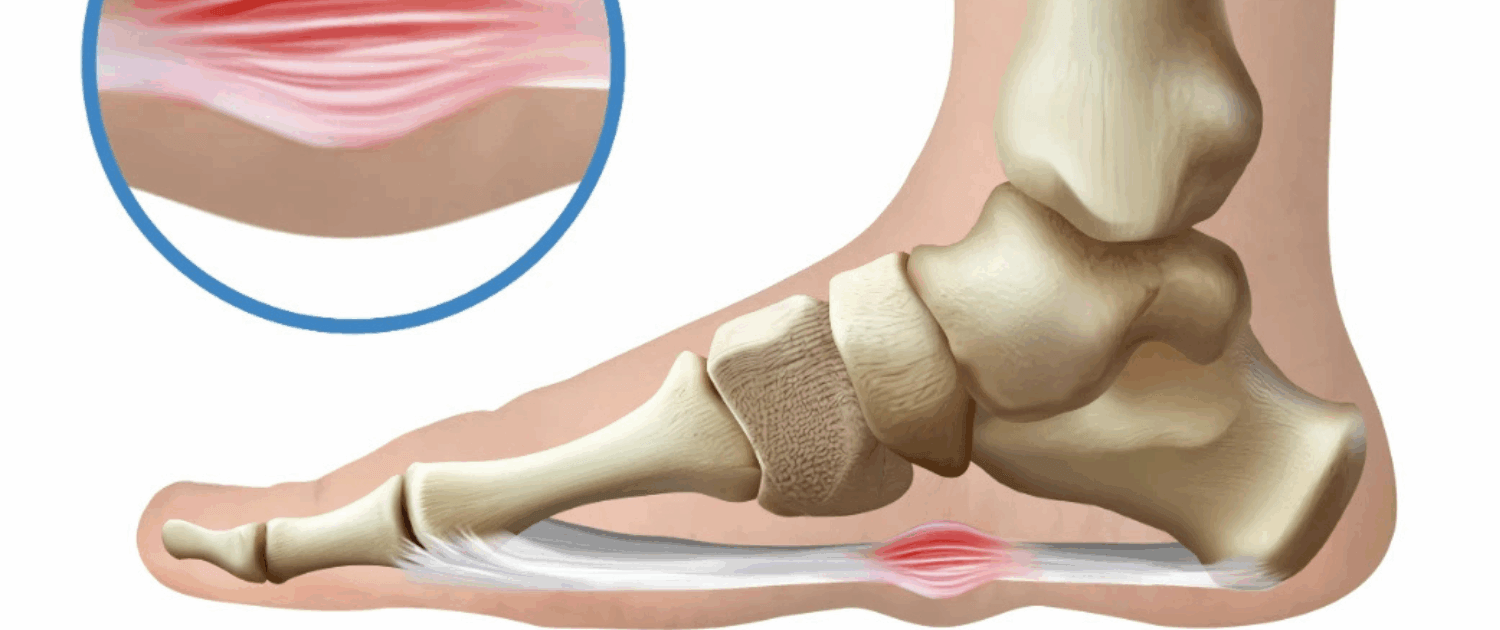
Plantar fibromatosis — known medically as Ledderhose disease after the German surgeon who first described it in 1894 — is a fibroproliferative condition characterized by the formation of benign fibrous nodules within the plantar fascia, the thick band of connective tissue running along the bottom of your foot.
The nodules — called plantar fibromas — develop when fibroblasts, the cells responsible for producing collagen, begin overproducing disorganized fibrous tissue. The result is a firm, rubbery mass embedded in the arch of the foot. Small nodules may be asymptomatic. As they grow, they become increasingly painful, making walking, standing, and even fitting shoes genuinely difficult.
Plantar fibromatosis is closely related — both histologically and clinically — to Dupuytren’s contracture (the same fibroproliferative process in the hand) and Peyronie’s disease. All three conditions involve the same fundamental defect: fibroblast cells that don’t know when to stop producing collagen.
This is critically important for treatment. Because plantar fibromatosis involves the same cellular mechanisms as Dupuytren’s contracture and Peyronie’s disease, treatments shown to be effective for those conditions — including high-energy focused shockwave therapy — offer a meaningful clinical rationale for plantar fibromatosis as well.[1]
Plantar Fibromatosis vs. Plantar Fasciitis — Not the Same Condition
These two conditions are frequently confused. Both involve the plantar fascia and both cause foot pain — but they are fundamentally different in their nature and treatment:
| Plantar Fasciitis | Plantar Fibromatosis | |
|---|---|---|
| What it is | Inflammation and degeneration of the plantar fascia | Fibrous nodule growth within the plantar fascia |
| Location | Heel and arch pain | Firm lump in the arch — mid-foot |
| Feel | Diffuse pain, worst in morning | Palpable hard nodule, painful with pressure |
| Cause | Repetitive microtrauma, overuse | Fibroblast overproduction — genetic, trauma, systemic factors |
| Progressive? | Can become chronic | Yes — nodules typically grow over time |
| Treatment focus | Tissue regeneration and inflammation | Fibrous tissue remodeling + cellular reset |
Both conditions can occur simultaneously in the same foot. If you have a palpable lump in your arch — not just diffuse heel pain — plantar fibromatosis should be assessed. Read our full article on SoftWave therapy for plantar fasciitis for more on the plantar fasciitis side of things.
What Causes Plantar Fibromatosis?
The exact cause isn’t fully understood, but research points to a combination of factors:[2]
Genetic predisposition — Plantar fibromatosis has a hereditary component. It occurs more frequently in people of Northern European descent and often runs in families. The presence of Dupuytren’s contracture in a family member is a recognized risk factor.
Repetitive microtrauma — Small tears in the plantar fascia that “over-heal,” producing excessive scar tissue rather than clean repair. This is why people who are on their feet constantly, or who have experienced foot injuries, are at higher risk.
Associated systemic conditions — Diabetes, epilepsy, chronic liver disease, and long-term use of certain medications (including phenobarbital) are all associated with higher incidence. This systemic connection is why nutritional and cellular-level treatment is a logical part of the approach.
The progressive nature of the condition means that without intervention, nodules typically continue to grow. Early treatment is not just about managing current pain — it’s about preventing further progression.
Why Standard Treatments Fall Short
Most patients with plantar fibromatosis are offered one of the following — and most find them inadequate:
| Treatment | What It Does | The Problem |
|---|---|---|
| Orthotics / offloading pads | Reduces pressure on the nodule | Manages discomfort only — no effect on fibroma |
| Cortisone injections | Temporarily reduces inflammation | Short-term relief; doesn’t address fibrous tissue |
| Surgery (fasciectomy) | Removes fibroma | Up to 60% recurrence rate; risk of nerve damage, arch collapse[3] |
| Radiation therapy | Reduces nodule activity | Functional impairment in up to 50% of patients; radiation exposure risk[4] |
| “Watch and wait” | — | Condition is progressive — nodules typically grow without intervention |
The surgical recurrence rate is worth pausing on. Research shows that after plantar fasciectomy, up to 60% of patients experience recurrence — many within the first two years. This isn’t a treatment failure in an unusual case. It’s the expected outcome for the majority of patients who undergo surgery for this condition.[3]
Radiation therapy produces better results for some patients, but the trade-off is meaningful: impaired functional status in up to half of patients treated, plus long-term radiation exposure risks.[4]
I tell my patients directly: if I think surgery or radiation is the right next step for you, I’ll tell you. But most patients I see haven’t yet exhausted the regenerative and cellular options that may resolve the problem without those risks.
How SoftWave Therapy Works for Plantar Fibromatosis in Naperville, IL
SoftWave therapy uses broad-focused electrohydraulic acoustic waves to stimulate the body’s healing response in fibrous tissue. For plantar fibromatosis specifically, three mechanisms are particularly relevant:
Collagenase upregulation — Published research has shown that high-energy focused shockwave therapy stimulates collagenase enzyme activity — the same enzymes that break down abnormal, disorganized collagen.[5] In plantar fibromatosis, the nodules are composed primarily of disordered collagen produced by overactive fibroblasts. Stimulating collagenase activity directly targets the fibrous tissue makeup of the nodule. This is the same mechanism that makes ESWT effective for Dupuytren’s contracture and Peyronie’s disease — both fibroproliferative conditions histologically identical to plantar fibromatosis.
Neovascularization — Fibrous nodules are poorly vascularized, meaning they have limited blood supply. This is one reason they’re so resistant to healing. SoftWave has been shown to stimulate angiogenesis — the formation of new blood vessels — restoring circulation to tissue that has been effectively cut off from the body’s normal healing resources.[6]
Mechanotransduction signaling — Acoustic pressure waves have been shown to modulate the behavior of overactive fibroblasts — the cells driving continued nodule formation. By delivering precise mechanical signals to the tissue, SoftWave may help normalize fibroblast activity rather than allowing the hyperproliferative process to continue unchecked.[7]
What the Research Says — An Honest Assessment
The evidence base for shockwave therapy in plantar fibromatosis is smaller than for plantar fasciitis — but what exists is consistently positive, and the clinical rationale is well-established.
Key published findings:
A study published in BMC Research Notes (Knobloch, 2012) applied high-energy focused ESWT to six patients with plantar fibromatosis. Pain reduced from 6/10 at baseline to 2/10 after 14 days and 1/10 at three months. All patients reported nodule softening. No adverse effects were noted.[5]
A 2020 PLOS One study evaluated ESWT for plantar fibromatosis with long-term follow-up averaging 34 months. Pain scores reduced from 6.2/10 at baseline to 1.8/10 at short-term follow-up, with sustained improvement confirmed at long-term assessment.[8]
A 2024 study published in Life (MDPI) — the most recent published research — confirmed that ESWT significantly reduces pain and alters the fibrous tissue structure within nodules, providing long-term relief and improving patients’ quality of life. The authors noted the treatment is particularly effective at modifying tissue structure even when nodule size changes are variable.[9]
A comprehensive 2024 review published in Foot and Ankle Surgery described “strong evidence supporting high-energy focused ESWT for Ledderhose disease” across multiple studies.[10]
What we can and cannot claim: SoftWave has been shown to soften nodules, reduce pain significantly, and alter fibrous tissue structure. It has not been proven to consistently eliminate nodules entirely — and I won’t tell you otherwise. What the research supports is meaningful, sustained pain relief and tissue modification that makes daily life significantly more manageable without surgery or radiation.
One important technical note: the research validates high-energy focused or broad-focused shockwave — not radial shockwave. Radial devices deliver superficial, outward-spreading energy and are not effective for deep fibrous tissue. SoftWave’s broad-focused electrohydraulic technology delivers the deep, wide-coverage acoustic energy the research supports.
The Synergy Approach to Plantar Fibromatosis in Naperville, IL
Plantar fibromatosis is a systemic condition with a local manifestation. Treating only the nodule without addressing the cellular environment, systemic inflammation, and biomechanical factors that contributed to it is why so many patients see limited long-term results. Our protocol addresses all of it.
SoftWave therapy (TRT OrthoGold 100) — Primary treatment. Broad-focused acoustic waves targeting the fibrous tissue directly. As the first clinic in Naperville to offer this technology since August 2021, we have more clinical experience with SoftWave for foot conditions than any other local provider.
MLS Laser therapy (Cutting Edge M6) — Reduces the inflammatory environment surrounding the nodule and accelerates tissue response through photobiomodulation. Laser therapy is referenced in the literature for connective tissue conditions including plantar fibromatosis, and it complements SoftWave by addressing inflammation simultaneously with tissue remodeling.
HT Cellular Reset (Hakomed high-frequency electrotherapy) — Operating at 4,000–12,000 Hz — significantly higher than traditional stimulation devices — the HT Cellular Reset allows deeper tissue interaction and is used clinically to support cellular function, circulation, and tissue environment. While research specific to plantar fibromatosis is still emerging, high-frequency electrotherapy is used to help create the conditions for regenerative therapies like SoftWave to be most effective — addressing the cellular inflammatory environment that standard treatments never reach. We routinely see patients who were told surgery was their only option and haven’t yet had access to this level of cellular support.
Power Plate vibration therapy — Enhances circulation around the nodule, breaks down fascial adhesions in the surrounding tissue, and improves the overall healing environment. Research confirms that vibration combined with shockwave produces better outcomes than shockwave alone for fascial conditions.
Custom orthotics — Offloads direct pressure from the nodule during treatment and daily activity, reducing mechanical aggravation while tissue remodeling progresses.
Nutritional support — Plantar fibromatosis involves chronic fibroblast overactivity and collagen dysregulation. Nutrients that support proper collagen remodeling, reduce systemic inflammation, and support cellular function are a logical complement to hands-on treatment. We assess each patient’s nutritional status and make targeted recommendations as part of the comprehensive plan.
Chiropractic care — Foot, ankle, and hip biomechanical assessment to identify and correct mechanical factors contributing to plantar fascia stress.
Acupuncture — Pain modulation and circulation support in appropriate cases.
Not every patient needs every component. After a thorough evaluation I build a plan based on what’s actually driving your condition.
Think you might be a candidate? Call or text (630) 454-1300 to schedule your evaluation.
🚨 When Foot Pain Needs Immediate Attention
Plantar fibromatosis causes chronic pain but is not a medical emergency. However, seek prompt evaluation if you notice:
- A new or rapidly growing lump in the foot that is hard, fixed, and painless — this requires imaging to rule out other conditions
- Significant swelling, bruising, or sudden severe pain following an injury
- Numbness or tingling spreading into the toes or up the leg
- Signs of infection: redness, warmth, fever
While plantar fibromas are benign, any new foot mass should be properly diagnosed before treatment begins. If you are experiencing a medical emergency, call 911 immediately.
Who Is a Good Candidate for This Approach?
Our treatment protocol tends to work best for patients who:
- Have a confirmed or suspected plantar fibroma — a palpable nodule in the foot arch
- Have had symptoms for 3+ months with limited improvement from conservative care
- Want to avoid surgery given the high recurrence rate
- Are not candidates for or are not interested in radiation therapy
- Have had surgery with recurrence and are looking for a non-surgical option going forward
- Want a comprehensive approach rather than a single modality
Who may NOT be a good candidate:
- Patients with active infections in the foot or ankle
- Patients with certain bone tumors or malignancies — imaging required to rule out prior to treatment
- Patients who are pregnant
- Patients on blood thinners (requires individual evaluation)
- Patients with rapidly progressive, aggressive fibromatosis requiring urgent surgical evaluation
Here’s what I tell every patient: I’ll give you an honest assessment of what I think we can achieve. If I believe surgery or another referral is the right next step for your specific situation, I’ll tell you directly. I’d rather point you toward the right care than recommend treatment that won’t serve you.
Why Naperville Patients Choose Synergy Institute for Plantar Fibromatosis Treatment
Why patients choose Synergy Institute for plantar fibromatosis treatment in Naperville, IL:
- 26+ years clinical experience treating complex musculoskeletal and connective tissue conditions
- First SoftWave provider in Naperville — since August 2021, more experience with this technology than any other local provider
- 8-modality protocol — SoftWave + MLS laser + HT Cellular Reset + Power Plate + orthotics + nutritional support + chiropractic + acupuncture
- Cellular-level treatment — HT Cellular Reset addresses fibromatosis at the cellular voltage level, not just the tissue level
- Honest assessment — if surgery or another referral is the right answer for you, we’ll tell you
If you’re comparing plantar fibromatosis treatment providers in Naperville, the most important factor is finding someone who understands that this condition requires a multi-level approach — not a single treatment and a referral to a surgeon.
Frequently Asked Questions — Plantar Fibromatosis Treatment in Naperville
Who is the best plantar fibromatosis treatment clinic in Naperville, IL?
Dr. Jennifer Wise at Synergy Institute Acupuncture & Chiropractic has over 26 years of clinical experience treating complex foot and connective tissue conditions and has been the first and most experienced SoftWave provider in Naperville since August 2021. Our plantar fibromatosis protocol combines SoftWave broad-focused shockwave therapy, HT Cellular Reset high-frequency electrotherapy, MLS laser, Power Plate, custom orthotics, and nutritional support — addressing the condition at the tissue, cellular, and systemic level. We serve patients from Naperville, Plainfield, Bolingbrook, Aurora, and Oswego. Call or text (630) 454-1300.
What is plantar fibromatosis and how is it different from plantar fasciitis?
Plantar fibromatosis (Ledderhose disease) is a fibroproliferative condition where firm fibrous nodules develop within the plantar fascia — typically in the arch of the foot. Plantar fasciitis is inflammation and degeneration of the plantar fascia causing heel pain. Both involve the plantar fascia but are completely different in their nature, appearance, and treatment. Plantar fibromatosis involves palpable hard lumps; plantar fasciitis involves diffuse heel pain without a nodule. Both can occur in the same foot simultaneously.
How does SoftWave therapy work for plantar fibromatosis?
SoftWave uses broad-focused electrohydraulic acoustic waves that have been shown to stimulate collagenase enzyme activity — breaking down the disorganized collagen fibers that form the fibroma nodule. It also has been shown to promote new blood vessel formation and modulate fibroblast activity. These are the same mechanisms that make ESWT effective for Dupuytren’s contracture and Peyronie’s disease — two conditions histologically identical to plantar fibromatosis. The research supports significant pain reduction and nodule softening with this approach.
Can SoftWave shrink plantar fibromas?
The research shows that SoftWave has been shown to soften nodules and alter fibrous tissue structure — published studies confirm nodule softening in 100% of patients treated in one key study, with significant pain reduction in all. Whether nodule size consistently decreases varies between patients — the 2024 research noted that tissue structure modification and pain relief are more reliable outcomes than measurable size reduction. I’ll give you honest expectations based on your specific case at your evaluation.
What does the research say about shockwave therapy for Ledderhose disease?
Multiple published studies support shockwave therapy for plantar fibromatosis. A 2012 BMC Research Notes study showed pain reduced from 6/10 to 1/10 at three months, with nodule softening in all patients. A 2020 PLOS One study confirmed sustained improvement at 34-month follow-up. A 2024 MDPI study confirmed significant pain reduction and fibrous tissue structural changes. A 2024 Foot and Ankle Surgery comprehensive review described strong evidence supporting high-energy focused ESWT. The research base is smaller than for plantar fasciitis but consistently positive.
What happens if plantar fibromatosis is left untreated?
Plantar fibromatosis is a progressive condition. Nodules typically continue to grow over time without intervention, increasing pain and making walking and standing progressively more difficult. In advanced cases, toe contractures can develop. Unlike plantar fasciitis, which sometimes resolves with conservative care, plantar fibromatosis rarely regresses on its own. Early intervention offers the best outcomes.
Is surgery the only option for plantar fibromatosis?
No — and given the surgical recurrence rate of up to 60%, surgery is often not the best first option. Shockwave therapy, particularly high-energy focused and broad-focused ESWT, has the strongest evidence base among non-surgical options. Our comprehensive protocol combining SoftWave, HT Cellular Reset, MLS laser, and nutritional support offers a meaningful non-surgical pathway before committing to a procedure with a high likelihood of recurrence.
How many SoftWave sessions are needed for plantar fibromatosis?
Plantar fibromatosis typically requires more sessions than plantar fasciitis given the fibrous nature of the tissue. Most patients benefit from six to ten sessions, with evaluation at each visit to assess progress. The healing process continues between sessions as the tissue remodeling cascade progresses. We track your response and adjust accordingly.
Who is NOT a good candidate for SoftWave therapy for plantar fibromatosis?
Patients with active foot infections, certain bone tumors or malignancies (imaging required first), pregnancy, or rapidly progressive aggressive fibromatosis requiring urgent surgical evaluation are generally not candidates. Any new foot mass should be imaged before treatment begins to confirm its benign nature. Patients on blood thinners require individual evaluation.
Does insurance cover plantar fibromatosis treatment?
SoftWave therapy, MLS laser, and HT Cellular Reset are generally not covered by insurance as they are classified as elective regenerative treatments. Custom orthotics and chiropractic evaluation are often covered by PPO plans. We accept most PPO plans and welcome HSA and FSA payments. Call our office at (630) 454-1300 for specific pricing and insurance questions.
Ready to Explore a Non-Surgical Approach? Visit Synergy Institute in Naperville
If you’ve been told your only options for plantar fibromatosis are surgery with a 60% recurrence rate, radiation with significant side effect risks, or learning to live with it — there is another path. The research supports it. The clinical rationale is sound. And no other provider in Naperville offers this combination of technologies and expertise for this specific condition.
Plantar fibromatosis doesn’t have to mean permanent disability. With the right approach — one that addresses the fibrous tissue, the cellular environment driving it, and the systemic factors contributing to it — meaningful improvement is possible.
Synergy Institute Acupuncture & Chiropractic 4931 Illinois Rte 59, Suite 121 Naperville, IL 60564
Call or text (630) 454-1300 Or call our office directly at (630) 355-8022
We serve patients from Naperville, Plainfield, Bolingbrook, Aurora, Oswego, and throughout the southwestern Chicago suburbs.
References
- Young JR, Sternbach S, Willinger M, et al. The etiology, evaluation, and management of plantar fibromatosis. Orthop Res Rev. 2019;11:1–7. https://pmc.ncbi.nlm.nih.gov/articles/PMC6367723/
- Tomac A, Ion AP, Opris DR, et al. Ledderhose’s Disease: An Up-to-Date Review of a Rare Non-Malignant Disorder. Clin Pract. 2023;13(5):1182–1195. https://pmc.ncbi.nlm.nih.gov/articles/PMC10605618/
- Van der Veer WM, Hamburg SM, de Gast A, Niessen FB. Recurrence of plantar fibromatosis after plantar fasciectomy. Plast Reconstr Surg. 2008;122(2):486–491. https://pubmed.ncbi.nlm.nih.gov/18626348/
- de Haan A, van Nes JGH, Werker PMN, et al. Radiotherapy for patients with Ledderhose disease: Long-term effects, side effects and patient-rated outcome. Radiother Oncol. 2022;168:83–88. https://pubmed.ncbi.nlm.nih.gov/35074466/
- Knobloch K, Vogt PM. High-energy focussed extracorporeal shockwave therapy reduces pain in plantar fibromatosis (Ledderhose’s disease). BMC Res Notes. 2012;5:542. https://pmc.ncbi.nlm.nih.gov/articles/PMC3637402/
- Simplicio CL, Purita J, Murrell W, et al. Extracorporeal shock wave therapy mechanisms in musculoskeletal regenerative medicine. J Clin Orthop Trauma. 2020;11(Suppl 3):S309–S318. https://pmc.ncbi.nlm.nih.gov/articles/PMC7211299/
- Wang CJ. Extracorporeal shockwave therapy in musculoskeletal disorders. J Orthop Surg Res. 2012;7:11. https://pmc.ncbi.nlm.nih.gov/articles/PMC3342893/
- Hwang J, et al. Follow-up of clinical and sonographic features after extracorporeal shock wave therapy in painful plantar fibromatosis. PLOS One. 2020. https://journals.plos.org/plosone/article?id=10.1371/journal.pone.0237447
- Fulceri F, Ryskalin L, Morucci G, et al. Pain-Relieving Effects of Shockwave Therapy for Ledderhose Disease: An Ultrasound-Based Study of an Unusual Bilateral Case. Life (Basel). 2024;14(2):169. https://pmc.ncbi.nlm.nih.gov/articles/PMC10889909/
- Soleful solutions: Advancements in treatment strategies for Ledderhose disease. Foot Ankle Surg. 2024. https://www.sciencedirect.com/science/article/pii/S1268773124001589
This article is for informational purposes only and does not constitute medical advice. The content is not intended to be a substitute for professional medical advice, diagnosis, or treatment. Always seek the guidance of your physician or other qualified health provider with any questions you may have regarding a medical condition. If you are experiencing a medical emergency, call 911 immediately.
Reviewed by Dr. Jennifer Wise, DC, Acupuncturist — March 2026