
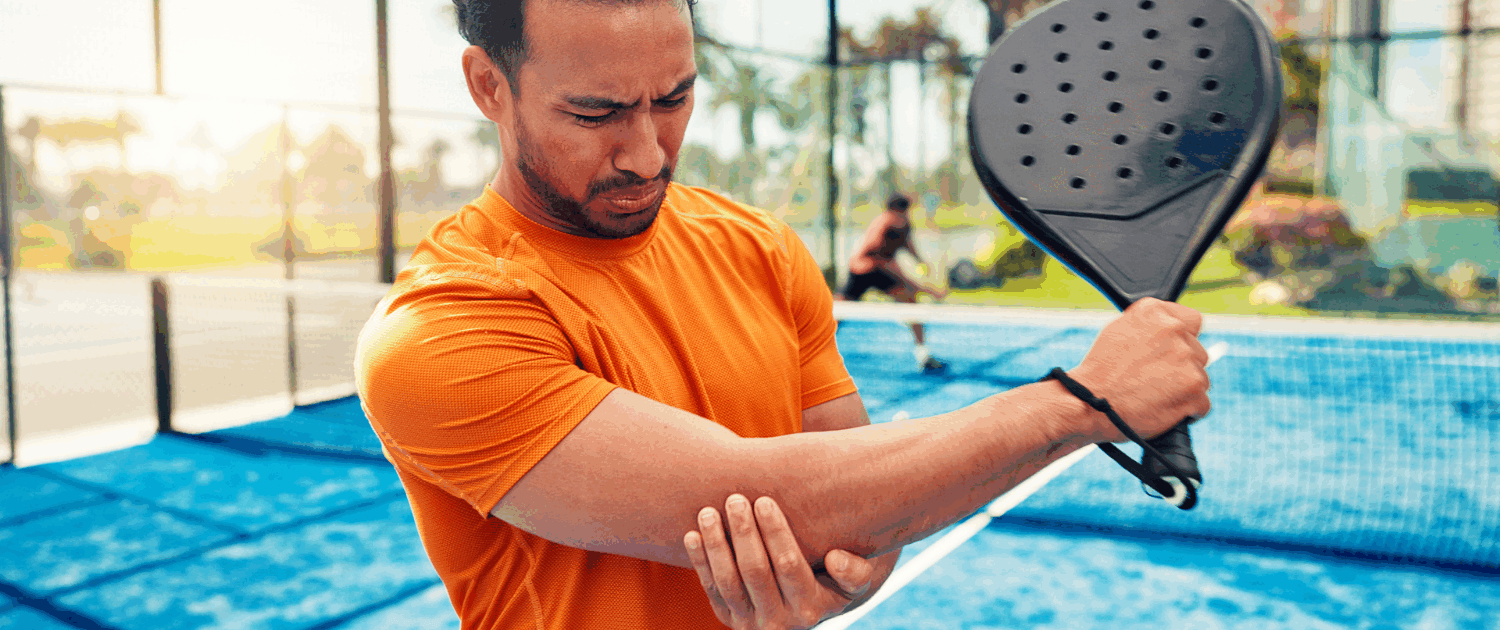
Best Treatments for Tennis Elbow in Naperville IL
You’ve been gripping through the pain for weeks. Maybe months. You grab your coffee mug and feel that familiar ache on the outside of your elbow. You shake someone’s hand and wince. You’ve tried resting it, icing it, wearing that strap around your forearm. You might have even done a round of physical therapy or taken a cortisone shot — and you’re still here, still hurting, still searching for an answer that actually works.
Tennis elbow is one of the most frustrating conditions I see in my Naperville practice. Not because it’s complicated to understand, but because so many patients have already been through the standard treatment playbook — and it didn’t fix them. After 26+ years treating patients with elbow pain, I can tell you why: most conventional treatments for tennis elbow are aimed at the wrong problem.
In this guide, I’ll walk you through what’s actually happening in the tendon, why common treatments often fall short, and the specific combination of therapies we use at Synergy Institute that gets results for even long-standing cases. You’ll leave with a clear picture of your options and what to look for in a provider.
Looking for tennis elbow treatment in Naperville? Call or text (630) 454-1300 to schedule your evaluation.
Tennis elbow — what you should know: Lateral epicondylitis is a tendon degeneration condition affecting the outer elbow, most commonly caused by repetitive gripping, lifting, or wrist extension. It is not primarily an inflammatory condition — which is why anti-inflammatory treatments alone rarely resolve it. At Synergy Institute Acupuncture & Chiropractic, we treat tennis elbow with a regenerative, multi-modality approach targeting both the degenerated tendon tissue and the biomechanical factors driving the overload.
“Extracorporeal shockwave therapy has been shown to improve pain and function in patients with lateral epicondylitis, with research supporting its role in stimulating tissue regeneration through mechanotransduction and angiogenesis.” — Journal of Orthopaedic Research
Our approach to tennis elbow treatment: We identify the exact tendon degeneration pattern and contributing mechanical factors, correct alignment dysfunction from the wrist through the shoulder and cervical spine, and use targeted regenerative therapies to restore healthy tendon tissue — rather than simply reducing symptoms.
We’re located just off Illinois Rte 59 in Naperville, and we see patients from across the southwest suburbs who’ve tried other approaches without lasting relief.
Quick Facts: Tennis Elbow
| Fact | Details |
|---|---|
| Medical name | Lateral epicondylitis / lateral elbow tendinopathy |
| Who it affects | Estimated 1–3% of adults annually; most common ages 35–54 |
| Most common cause | Repetitive gripping, lifting, or wrist extension — not just racquet sports |
| Tissue involved | Extensor carpi radialis brevis (ECRB) tendon at the lateral epicondyle |
| Non-surgical success | 80–90% of cases resolve with appropriate non-surgical treatment |
| Typical timeline | 6–12 weeks with targeted treatment; longer without |
| Treatment at Synergy | SoftWave, MLS Laser + Acupuncture, Myofascial Release, Chiropractic |
What Is Tennis Elbow — And Why Does It Keep Coming Back?
Tennis elbow — medically called lateral epicondylitis, or more accurately lateral elbow tendinopathy — is an overuse condition affecting the tendons that attach the forearm extensor muscles to the bony prominence on the outside of the elbow called the lateral epicondyle. The primary tendon involved is the extensor carpi radialis brevis, or ECRB.
Here’s the part most people — and even some providers — get wrong: this is not primarily an inflammatory condition.
Research has consistently shown that when you examine chronically painful elbow tendons under a microscope, you don’t find significant inflammation. What you find instead is disorganized, degenerated collagen — a condition called tendinosis. The tendon’s normal, tightly organized collagen fibers have broken down and been replaced with chaotic, immature tissue that can’t handle load. There’s no active inflammatory response driving the pain. What’s driving it is a failed healing process.
This is not an inflammation problem. It’s a failed healing problem.
This distinction matters enormously for treatment. If the problem isn’t inflammation, then anti-inflammatory medications and cortisone injections are treating the wrong target. They may reduce discomfort temporarily, but they don’t — and can’t — repair degenerated collagen. That’s why so many patients feel better for a few weeks after a cortisone shot, then find themselves right back where they started.
The tendons at the elbow also have a relatively poor blood supply compared to muscle tissue. That poor vascularity is exactly why these injuries become chronic — the tissue doesn’t receive the oxygen and growth factors it needs to heal on its own. Effective treatment has to address this directly. SoftWave therapy works precisely because it stimulates angiogenesis — the formation of new blood vessels — in tissue that is otherwise starved of circulation.
What Causes Tennis Elbow in Naperville Patients — And Why It Matters for Treatment
Despite the name, only about 5% of tennis elbow cases actually come from playing tennis. The condition is caused by any repetitive activity that loads the forearm extensor muscles — and that covers a lot of ground.
Common causes I see in my practice:
- Occupational overuse — painters, carpenters, plumbers, mechanics, office workers who grip a mouse for hours
- Racquet sports — tennis, pickleball, racquetball (especially with poor technique or equipment mismatch)
- Golf — particularly the leading arm in the downswing
- Weightlifting — repeated gripping with wrist extension
- Keyboard and mouse use — chronic low-grade loading that accumulates over months
What most patients don’t realize is that the elbow doesn’t always fail in isolation. The wrist, shoulder pain, and cervical spine are all part of the same kinetic chain. When alignment or mobility is off anywhere in that chain — a stiff wrist, a restricted shoulder joint, tightness in the neck that affects nerve signaling down the arm — the elbow compensates by absorbing forces it wasn’t designed to handle. I see this constantly: a patient whose tennis elbow keeps coming back because the real driver is shoulder mechanics or upper cervical restriction that no one has addressed.
This is why a thorough evaluation matters. Treating only the local tendon without assessing the full kinetic chain is one of the primary reasons tennis elbow recurs.
🚨 Seek immediate care if you experience: sudden severe elbow swelling, inability to straighten your arm, numbness or tingling extending into your hand or fingers, or elbow pain following a fall or direct impact. These may indicate fracture, ligament tear, or nerve injury requiring urgent evaluation. Call 911 or go to your nearest emergency room.
Why Standard Tennis Elbow Treatments Often Fall Short
Most Naperville patients I meet with chronic tennis elbow have already tried at least two or three of these approaches:
Rest helps prevent further damage, but it doesn’t regenerate degenerated collagen. You can rest an injured tendon for three months and still have the same disorganized tissue you started with.
Ice and NSAIDs target inflammation — which, as we’ve established, is not the primary driver in chronic tendinopathy. They can provide short-term symptom relief but don’t address the underlying tissue quality.
Cortisone injections are probably the most common intervention patients have tried before finding us. Cortisone is a powerful anti-inflammatory — but in a condition where the histology shows tendinosis, not tendinitis, you’re applying an anti-inflammatory to a structural repair problem. Studies have shown cortisone can provide short-term pain relief in tennis elbow, but outcomes at 6 and 12 months are no better — and in some cases worse — than doing nothing. Repeated injections can also weaken the surrounding tendon tissue over time.
Physical therapy exercises have good evidence for long-term outcomes, particularly eccentric loading programs. But exercise alone doesn’t address the degenerated tissue matrix, the vascular deficit, or the mechanical contributors upstream. It’s a piece of the puzzle, not the whole picture.
If any of this sounds familiar — if you’ve done the exercises, worn the brace, had the shot, and still aren’t better — you’re not a failure. You’ve just been working with incomplete tools for the actual problem.
Best Treatments for Tennis Elbow in Naperville IL — A Comparison
Tennis Elbow Treatment Options
| Treatment | How It Works | Best Stage | Addresses Root Cause? |
|---|---|---|---|
| SoftWave Therapy | Broad-focused shockwaves stimulate angiogenesis, recruit stem cells, trigger collagen remodeling | Chronic tendinopathy; failed conservative care | ✅ Yes — regenerates tissue |
| MLS Laser + Acupuncture | Dual-wavelength laser drives photobiomodulation; acupuncture enhances local circulation and pain modulation simultaneously | Acute to chronic; excellent as adjunct to SoftWave | ✅ Yes — cellular repair + circulation |
| Myofascial Release | Manual therapy breaks up adhesions and trigger points in forearm extensor muscles | Any stage; essential for tissue mobility | ✅ Partial — releases load contributors |
| Chiropractic Adjustments | Elbow, wrist, shoulder, cervical alignment corrects kinetic chain dysfunction | After tissue healing — adjustments hold best in prepared tissue | ✅ Yes — removes biomechanical load |
| Eccentric Exercise / PT | Controlled loading stimulates tendon remodeling | Subacute to chronic; after tissue environment is restored | ⚠️ Partial — helpful but incomplete |
| Counterforce Brace | Offloads ECRB tendon during activity | Acute symptom management | ❌ No — symptom management only |
| Cortisone Injection | Reduces inflammation; temporary pain relief | Short-term acute relief only | ❌ No — does not repair tissue |
| Shockwave Therapy | Acoustic waves stimulate tissue healing; traditional focused/radial device | Chronic tendinopathy | ✅ Partial — less depth than SoftWave |
| Surgery | Debrides and reattaches damaged tendon | Refractory cases after 6–12 months failed conservative care | ✅ Structural — last resort |
The Synergy Elbow Restore Program — Our Integrative Approach
Most clinics in Naperville treat tennis elbow with one or two tools. A chiropractor adjusts the elbow. A physical therapist prescribes exercises. A sports medicine doctor offers an injection. Each approach has value — but none of them alone addresses the full picture of what’s happening in a chronic tennis elbow.
The best tennis elbow treatment in Naperville isn’t about one therapy — it’s about applying the right combination in the right sequence.
At Synergy Institute, we built our Elbow Restore Program around four modalities that work together to target every layer of the condition:
1. SoftWave Therapy (TRT OrthoGold 100)
SoftWave uses broad-focused shockwaves to do something no passive treatment can — it activates your body’s regenerative response at the cellular level. The acoustic waves trigger mechanotransduction, stimulating angiogenesis (new blood vessel formation) and recruiting stem cells to the degenerated tendon tissue. This is how we address the root cause: creating the biological conditions for actual collagen repair, not just temporary symptom relief.
We were the first SoftWave therapy provider in Naperville — we’ve been treating patients with this technology since August 2021 and have performed thousands of treatments.
If the tendon degeneration is driving your pain → SoftWave initiates the healing cascade the tendon couldn’t mount on its own.
2. MLS Laser Therapy + Acupuncture
This is one of my favorite combinations for elbow tendinopathy. The MLS Laser M6 uses simultaneous dual-wavelength photobiomodulation — one wavelength for anti-inflammatory effect, one for tissue repair and pain reduction — penetrating directly into the tendon tissue.
When I combine that with acupuncture needles placed precisely at the lateral epicondyle and along the forearm extensor muscle belly, we’re working two systems at once. The acupuncture enhances local microcirculation, modulates pain signaling through the nervous system, and reduces muscle guarding in the forearm — all while the laser is driving cellular repair in the tendon itself. Patients often notice a significant change in elbow sensitivity and forearm tension after just the first combined session.
If residual inflammation and compromised circulation are sustaining your pain → MLS Laser and acupuncture together address both simultaneously.
3. Myofascial Release
The forearm extensor muscles — particularly the ECRB and extensor digitorum — almost always develop adhesions, trigger points, and restricted fascial planes alongside the tendon degeneration. These tight bands create additional mechanical pull on an already compromised tendon attachment, and they limit the tissue mobility needed for proper healing.
Manual myofascial release work through the forearm, elbow, and into the wrist restores tissue glide, deactivates trigger points, and reduces the compressive load on the lateral epicondyle. It’s hands-on, targeted, and often immediately noticeable.
If restricted forearm tissue is adding mechanical stress to the tendon → myofascial release restores the tissue environment for healing.
4. Chiropractic Adjustments — The Kinetic Chain
Tennis elbow that keeps coming back almost always has a kinetic chain component. I evaluate the elbow joint itself (radioulnar, humeroulnar), the wrist, the shoulder, and the cervical spine. A restricted radial head at the elbow, a locked C5-C6 segment in the neck, or reduced shoulder external rotation can all load the lateral elbow disproportionately — no matter how many times you treat the tendon directly.
Targeted chiropractic adjustments to restore joint mechanics throughout the chain remove the biomechanical drivers of recurrence. This is what makes the difference between resolving tennis elbow and managing it indefinitely.
If kinetic chain dysfunction is the reason your elbow keeps flaring → chiropractic alignment addresses what local treatment can’t reach.
Why Sequence Matters — And Why Most Tennis Elbow Protocols Get It Wrong
Here’s something I want to be direct about, because I see it cause real setbacks: the order of treatment matters as much as the treatments themselves.
Poor alignment combined with repetitive overuse is how tennis elbow develops in the first place. The tendon is absorbing forces it was never designed to handle because the joint mechanics upstream are off. But here’s what most providers miss — adjusting into damaged, degenerated tissue before it has been prepared doesn’t hold. The alignment correction doesn’t stick when the surrounding tissue is still locked up, inflamed, and disorganized. I’ve seen patients who’ve had weekly chiropractic adjustments for months with minimal lasting improvement, not because chiropractic doesn’t work, but because the tissue wasn’t ready to receive it.
Our sequence is deliberate: tissue healing first with SoftWave and MLS Laser to restore the cellular environment, myofascial release to break up adhesions and restore tissue mobility, then chiropractic adjustments to correct alignment into tissue that can now actually hold the correction.
Stretching follows the same logic — and this is where I see a significant amount of damage done by well-meaning providers. The standard wrist extensor stretch prescribed in most physical therapy protocols pulls directly on the lateral epicondyle attachment. If the alignment is already off — if the radial head is restricted, the shoulder is internally rotated, or the cervical spine is loading the arm asymmetrically — that stretch reinforces the exact misalignment that’s driving the overload. It doesn’t release the tendon; it pulls harder on it. I prescribe stretches only after I understand which direction the misalignment is pulling, and I adjust the stretching protocol accordingly. The right stretch, at the right time, for the specific pattern I’m seeing — not a generic protocol handed to every elbow patient.
This integrated, sequenced approach is what separates lasting recovery from temporary relief.
Who Is a Good Candidate for Tennis Elbow Treatment in Naperville?
You’re likely a good candidate if:
- You have lateral elbow pain that worsens with gripping, lifting, or wrist extension
- Your pain has persisted for more than 4–6 weeks despite rest
- You’ve tried conservative care (rest, ice, brace, PT) without lasting relief
- You’ve had cortisone injections that wore off
- You want to avoid surgery and are looking for a regenerative alternative
- You have an active lifestyle or occupation that makes rest-only treatment impractical
You are NOT a good candidate if:
- Your pain is primarily from an acute fracture, dislocation, or ligament rupture (these need orthopedic evaluation first)
- You have a local infection, open wound, or active skin condition over the treatment area
- You are pregnant (specific modality restrictions apply)
- You have a bleeding disorder or are on anticoagulant therapy that affects tissue treatment
- Your elbow symptoms are driven by a cervical radiculopathy or nerve entrapment that hasn’t been diagnosed — in these cases, we need to treat the nerve component first. Conditions like carpal tunnel syndrome or cervical nerve compression can mimic or compound lateral elbow pain and need to be differentiated before treatment begins.
I want to be straightforward with you: not every case of elbow pain is right for our program. When I evaluate a new patient, if I believe a different provider or approach would serve you better, I’ll tell you directly and help you get there. I’d rather do that than have you spend time and money on something that isn’t the right fit.
What to Expect at Synergy Institute in Naperville
Your first visit begins with a comprehensive evaluation — not just the elbow, but your full upper extremity mechanics, cervical range of motion, grip strength, and a review of what you’ve already tried. I want to understand the whole picture before recommending anything.
From there, most patients with lateral epicondylitis begin a structured program of 6–8 SoftWave sessions, with MLS Laser and acupuncture integrated into each appointment. Myofascial work and chiropractic adjustments are woven in based on what the evaluation reveals.
Many patients notice a meaningful reduction in pain within the first 2–3 sessions. Full tendon remodeling takes longer — typically 6–12 weeks — because that’s the biological timeline for collagen reorganization. We track your progress and adjust the program as you improve.
Most sessions run 30–45 minutes. No downtime, no anesthesia, no injections. You can return to normal activities the same day.
If you’ve been dealing with chronic pain from a tennis elbow that won’t resolve, the issue is almost never that the right treatment hasn’t been tried — it’s that the treatments haven’t been applied in the right sequence, targeting the right layers, at the right time. That’s exactly what our program is built to do.
Ready to find out if you’re a candidate? Call or text (630) 454-1300.
What Patients Typically Notice
As tissue heals and alignment is restored, most patients progress through a recognizable pattern of improvement:
- Pain with gripping, lifting, and twisting begins to decrease — often within the first 2–3 sessions
- Morning stiffness and soreness at the outer elbow reduces
- Forearm tension and muscle guarding ease as myofascial work progresses
- Grip strength returns gradually as the tendon remodels
- Daily activities — opening jars, carrying bags, shaking hands — become pain-free
- Return to sport or full occupational activity without flare-ups
We routinely see patients improve after failing injections and physical therapy. The difference isn’t the modality — it’s identifying the correct layers driving the problem and treating them in the right order.
Why patients choose Synergy Institute for tennis elbow treatment in Naperville:
- 26+ years clinical experience treating elbow and upper extremity conditions
- First SoftWave provider in Naperville — treating patients since August 2021
- Sequenced protocol: tissue healing before adjustments — so corrections hold
- Stretch prescriptions based on your specific misalignment pattern, not a generic handout
- One of the few clinics combining SoftWave, MLS Laser, acupuncture, myofascial release, and chiropractic under one roof
- Full kinetic chain evaluation — we find the mechanical drivers, not just the local symptoms
- Honest assessment — if we’re not the right fit, we’ll tell you
Frequently Asked Questions — Tennis Elbow Treatment in Naperville IL
Who is the best tennis elbow treatment clinic in Naperville?
Dr. Jennifer Wise at Synergy Institute Acupuncture & Chiropractic has over 26 years of clinical experience treating lateral epicondylitis and elbow conditions, and has been the first and most experienced SoftWave provider in Naperville since August 2021. Our Synergy Elbow Restore Program combines SoftWave therapy, MLS Laser with acupuncture, myofascial release, and chiropractic kinetic chain correction — a regenerative, multi-modality approach that addresses both the degenerated tendon tissue and the mechanical contributors no single-treatment clinic can reach.
How long does tennis elbow last without treatment?
Tennis elbow can persist for 6 months to 2 years without appropriate care. Some cases do resolve on their own, but chronic tendinopathy that has lasted more than 3 months rarely resolves fully without targeting the degenerated collagen tissue directly. The longer it goes untreated, the more entrenched the tendinosis becomes.
Does tennis elbow go away on its own?
Mild cases, especially those caught early, can improve with relative rest and activity modification. However, if pain has persisted for more than 6–8 weeks, the tissue has likely progressed from acute irritation to tendinosis — degenerated collagen that needs active regenerative input to heal properly. Waiting longer typically extends the recovery timeline.
Can I keep working and playing sports during treatment?
In most cases, yes — with modifications. We help you identify which specific activities are loading the tendon most aggressively and how to modify them. Complete rest is rarely necessary and often counterproductive. Controlled, appropriate use of the arm alongside regenerative treatment tends to produce better outcomes than immobilization.
How many SoftWave treatments does tennis elbow take?
Most patients with lateral epicondylitis complete a course of 6–8 SoftWave sessions. Each session is 10–15 minutes. Many patients notice significant improvement between sessions 2 and 4 as the regenerative process builds. We reassess at regular intervals and adjust the program based on your response.
Are the standard tennis elbow stretches actually helping — or making things worse?
This is one of the most important questions I get asked. The standard wrist extensor stretch most physical therapists and online resources prescribe pulls directly on the lateral epicondyle attachment. If the underlying alignment is off — a restricted radial head, internal shoulder rotation, or cervical loading pattern that’s asymmetric — that stretch reinforces the misalignment and adds tension to an already overloaded tendon attachment. I’ve had patients who diligently stretched twice a day for months and made no progress, or actively got worse, because the stretch was pulling in exactly the wrong direction for their specific pattern. Stretches should be prescribed based on a proper kinetic chain assessment, not handed out generically.
Why did my cortisone shot stop working?
Cortisone injections reduce inflammation — but chronic tennis elbow is a tendinosis condition, meaning the primary problem is collagen degeneration, not active inflammation. The shot provides temporary relief by calming the pain response, but it doesn’t repair the damaged tissue. Over time, the underlying structural problem reasserts itself. Repeated cortisone can also weaken the tendon further. Regenerative approaches like SoftWave work differently — they stimulate tissue repair rather than suppressing the body’s response.
Is tennis elbow the same as golfer’s elbow?
No. Tennis elbow (lateral epicondylitis) affects the outside of the elbow and involves the extensor tendons — the muscles that extend your wrist and fingers. Golfer’s elbow (medial epicondylitis) affects the inside of the elbow and involves the flexor tendons. Both are forms of elbow tendinopathy, but they affect different muscle groups and respond to slightly different treatment targeting.
Can a chiropractor treat tennis elbow?
Yes — and chiropractic plays a specific and important role in tennis elbow recovery that goes beyond local treatment. Adjustments to the elbow joint itself (particularly the radial head), the wrist, shoulder, and cervical spine address the kinetic chain dysfunction that is often the reason tennis elbow keeps recurring. Chiropractic alone may not be sufficient for advanced tendinopathy, but as part of an integrated program it addresses the biomechanical drivers that local treatments miss.
Does acupuncture help tennis elbow?
Yes, and I find it particularly effective when combined with MLS Laser therapy. Acupuncture placed at the lateral epicondyle and along the forearm extensor muscle belly enhances local microcirculation, reduces muscle guarding, and modulates pain signaling through the nervous system. When combined with laser photobiomodulation at the same session, the two modalities work on complementary mechanisms — neural and circulatory modulation from acupuncture, cellular repair from the laser — in a way that produces faster clinical response than either alone.
What happens if tennis elbow doesn’t respond to treatment?
If symptoms have not improved after 6–12 months of well-directed conservative care, surgical evaluation may be appropriate for some patients. Surgery for tennis elbow — lateral epicondyle release — has good outcomes in carefully selected cases where conservative measures have been genuinely exhausted. At Synergy Institute, we work hard to get patients better without surgery, and if we’re not seeing progress, we’ll have an honest conversation about your options and refer you appropriately.
Who is the best tennis elbow doctor in Naperville?
Dr. Jennifer Wise, DC, Acupuncturist at Synergy Institute Acupuncture & Chiropractic brings over 26 years of clinical experience and a multi-modality approach that no single-specialty provider can match. As a Doctor of Chiropractic with diplomate-level acupuncture training, she evaluates and treats tennis elbow across every layer — tendon tissue, soft tissue, and the full kinetic chain — rather than defaulting to a single tool. Her Synergy Elbow Restore Program combines SoftWave therapy, MLS Laser with acupuncture, myofascial release, and chiropractic alignment in a deliberate sequence that addresses why the elbow fails and why it keeps coming back.
What is the fastest way to heal tennis elbow?
The fastest path to recovery is addressing all three components simultaneously: the degenerated tendon tissue, the restricted soft tissue surrounding it, and the alignment dysfunction driving the overload. SoftWave therapy and MLS Laser initiate tissue regeneration at the cellular level — this is what most patients are missing when they’ve only tried rest, bracing, or cortisone. Myofascial release restores tissue mobility, and chiropractic correction of the kinetic chain removes the mechanical stress that caused the injury. Patients who engage all three layers typically see meaningful improvement within 3–6 sessions rather than waiting months for passive recovery.
Is shockwave or laser better for tennis elbow?
They work on different mechanisms, which is why we use both. Shockwave therapy — and SoftWave specifically — triggers mechanotransduction, stimulating angiogenesis and stem cell recruitment to regenerate the degenerated collagen. MLS Laser therapy works through photobiomodulation, driving anti-inflammatory effect and cellular repair at the mitochondrial level. Neither alone is as effective as both together. SoftWave addresses the structural regeneration need; laser addresses the circulatory and cellular environment around it. That combination, paired with acupuncture for neural modulation, is why our results hold when single-modality approaches haven’t.
Schedule Your Tennis Elbow Evaluation in Naperville
If you’ve been dealing with lateral elbow pain that isn’t responding to standard care, we’d like to take a look. At Synergy Institute Acupuncture & Chiropractic, we’ll evaluate your elbow, assess the full kinetic chain, and give you an honest assessment of whether our program is right for your situation.
Call or text (630) 454-1300, or call our office directly at (630) 355-8022.
Synergy Institute Acupuncture & Chiropractic 4931 Illinois Rte 59, Suite 121 Naperville, IL 60564
Serving Naperville, Plainfield, Bolingbrook, Aurora, Oswego, Romeoville, and surrounding communities.
References
- Coombes BK, Bisset L, Vicenzino B. Efficacy and safety of corticosteroid injections and other injections for management of tendinopathy: a systematic review of randomised controlled trials. Lancet. 2010;376(9754):1751–1767. https://pubmed.ncbi.nlm.nih.gov/20970844/
- Maffulli N, Khan KM, Puddu G. Overuse tendon conditions: time to change a confusing terminology. Arthroscopy.1998;14(8):840–843. https://pubmed.ncbi.nlm.nih.gov/9848612/
- Rompe JD, Overend TJ, MacDermid JC. Validation of the Patient-rated Tennis Elbow Evaluation Questionnaire. J Hand Ther. 2007;20(1):3–11. https://pubmed.ncbi.nlm.nih.gov/17254903/
- Notarnicola A, Moretti B. The biological effects of extracorporeal shock wave therapy (ESWT) on tendon tissue. Muscles Ligaments Tendons J. 2012;2(1):33–37. https://pmc.ncbi.nlm.nih.gov/articles/PMC3666498/
- Wang CJ, Ko JY, Chan YS, Weng LH, Hsu SL. Extracorporeal shockwave for chronic patellar tendinopathy. Am J Sports Med. 2007;35(6):972–978. https://pubmed.ncbi.nlm.nih.gov/17369562/
- D’Agostino MC, Craig K, Tibalt E, Respizzi S. Shock wave as biological therapeutic tool: from mechanical stimulation to recovery and healing, through mechanotransduction. Int J Surg. 2015;24(Pt B):147–153. https://pubmed.ncbi.nlm.nih.gov/26255786/
- Bjordal JM, Lopes-Martins RA, Joensen J, et al. A systematic review with procedural assessments and meta-analysis of low level laser therapy in lateral elbow tendinopathy. BMC Musculoskelet Disord. 2008;9:75. https://pubmed.ncbi.nlm.nih.gov/18510742/
- Tang H, Fan H, Chen J, et al. Acupuncture for lateral epicondylitis: a systematic review. Evid Based Complement Alternat Med. 2015;2015:401252. https://pubmed.ncbi.nlm.nih.gov/25866536/
- Peerbooms JC, Sluimer J, Bruijn DJ, Gosens T. Positive effect of an autologous platelet concentrate in lateral epicondylitis in a double-blind randomized controlled trial. Am J Sports Med. 2010;38(2):255–262. https://pubmed.ncbi.nlm.nih.gov/20448192/
- Stasinopoulos D, Johnson MI. Cyriax physiotherapy for tennis elbow/lateral epicondylitis. Br J Sports Med.2004;38(6):675–677. https://pubmed.ncbi.nlm.nih.gov/15562157/
- Hoogvliet P, Randsdorp MS, Dingemanse R, Koes BW, Huisstede BM. Does effectiveness of exercise therapy and mobilisation techniques offer guidance for the treatment of lateral and medial epicondylitis? A systematic review. Br J Sports Med. 2013;47(17):1112–1119. https://pubmed.ncbi.nlm.nih.gov/23980919/
Medical Disclaimer: The information in this article is intended for educational purposes only and does not constitute medical advice. Tennis elbow and lateral elbow pain can have multiple causes, some of which require urgent medical attention. Always consult a qualified healthcare provider for diagnosis and treatment recommendations specific to your condition. If you are experiencing severe pain, sudden swelling, inability to move your elbow, or numbness in your hand or fingers, call 911 or go to your nearest emergency room immediately.
Reviewed by Dr. Jennifer Wise, DC, Acupuncturist — March 2026