
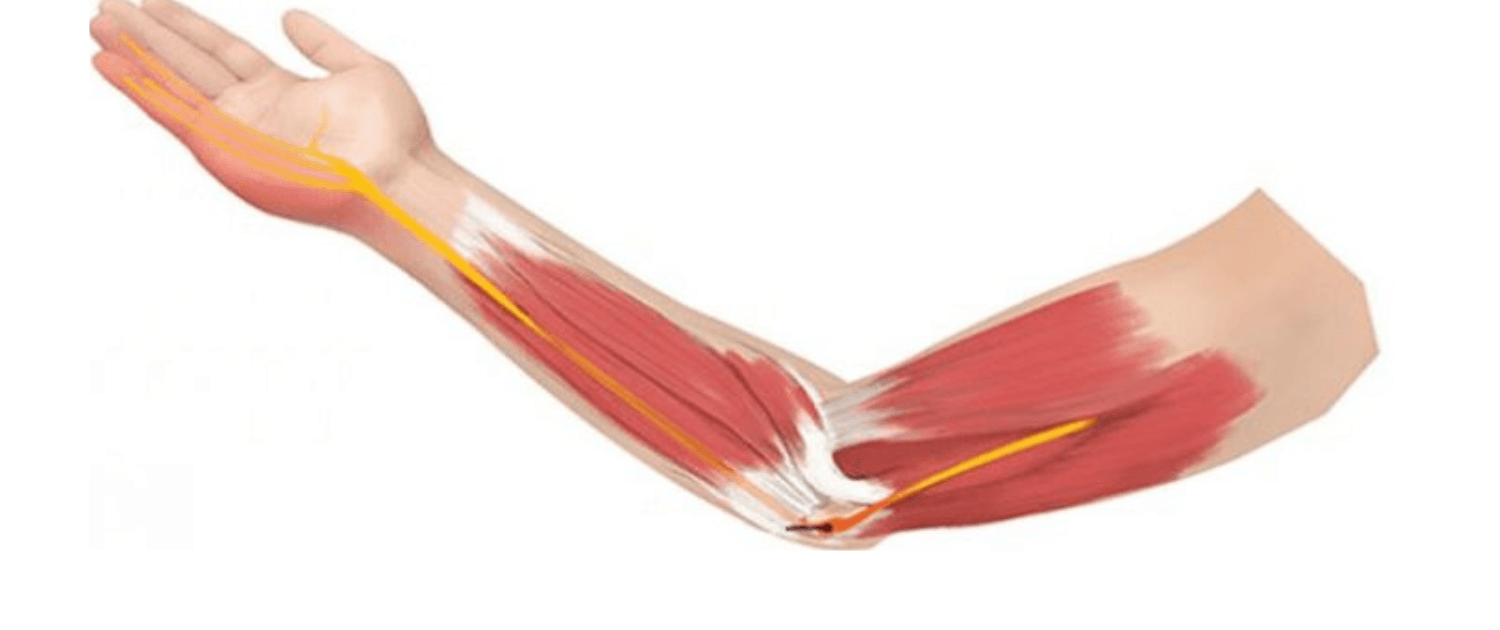
Cubital Tunnel Syndrome Treatment in Naperville IL
It starts small. Your ring and pinky fingers go numb when you bend your elbow to hold a phone. You wake up with a dead, tingling hand because you slept with your arm curled. You drop things you used to grip without thinking. Maybe you’ve already been treated for golfer’s elbow for months — and it never got better, because the problem was never the tendon.
The problem is your nerve.
Cubital tunnel syndrome treatment in Naperville starts with one thing most providers skip: correctly identifying that the ulnar nerve — not a tendon — is driving your symptoms. After treating nerve conditions in Naperville since 2000, I’ve seen how often cubital tunnel gets mistaken for golfer’s elbow and treated at the wrong layer for months. This guide explains what cubital tunnel syndrome actually is, how to tell it apart from a tendon problem, and how we treat the nerve directly without rushing to surgery.
Direct answer: Cubital tunnel syndrome is compression or irritation of the ulnar nerve at the inner elbow. For mild-to-moderate cases, the most effective non-surgical approach treats the nerve directly — targeted neuromodulation, acupuncture, activity and positioning correction, and addressing any contribution from the neck — rather than treating it as a tendon problem. At our clinic, that starts with an honest evaluation: if you have advanced nerve damage that needs a surgeon, we’ll tell you.
Synergy Institute Acupuncture & Chiropractic is a cubital tunnel syndrome treatment clinic located in Naperville, Illinois, on Illinois Rte 59 near the 111th Street intersection, serving patients from Naperville, Plainfield, Bolingbrook, Aurora, and Oswego.
Our approach begins with what most elbow treatment overlooks. We start with a full chiropractic kinetic-chain evaluation and acupuncture for direct neural modulation — because the ulnar nerve can be irritated at the elbow, the neck, or both — and only then layer in advanced neuromodulation with the Stimpod NMS460 and regenerative support where the tissue environment calls for it. Most clinics treat the inner elbow as a tendon. We treat the nerve as a nerve.
“Conservative management — including activity modification, nerve protection, and night positioning — is the recommended first-line treatment for mild to moderate cubital tunnel syndrome before surgical options are considered.” — Caliandro et al., Cochrane Database of Systematic Reviews
Quick Facts: Cubital Tunnel Syndrome in Naperville
| What You Should Know | The Details |
|---|---|
| What it is | Compression or irritation of the ulnar nerve at the inner elbow (the “funny bone” nerve) |
| How common | The second most common nerve entrapment in the body, after carpal tunnel |
| Key symptoms | Numbness and tingling in the ring and pinky fingers, inner-elbow aching, grip weakness |
| Most-missed cause | Often mistaken for golfer’s elbow — but it’s a nerve problem, not a tendon problem |
| Best non-surgical option | Direct nerve treatment: neuromodulation, acupuncture, positioning correction, and addressing the neck |
| When surgery is warranted | Advanced cases with muscle wasting or significant weakness — these need surgical evaluation |
What Is Cubital Tunnel Syndrome?
The ulnar nerve travels from your neck down the inside of your arm, passing through a narrow channel behind the bony bump on the inner elbow — the cubital tunnel. That’s the spot that zings when you hit your “funny bone.” When the nerve is compressed, stretched, or irritated as it passes through that tunnel, you get cubital tunnel syndrome.
It’s the second most common compressive nerve condition in the body, behind only carpal tunnel. And because the symptoms show up at the inner elbow and into the hand, it’s routinely confused with a tendon condition — which sends a lot of patients down months of treatment aimed at the wrong structure.
Cubital Tunnel vs. Golfer’s Elbow — Why It Gets Missed
This is the distinction that changes everything, and it’s the reason so many patients don’t improve.
Golfer’s elbow (medial epicondylitis) is a tendon problem — degeneration of the flexor tendons on the inside of the elbow. Cubital tunnel syndrome is a nerve problem — the ulnar nerve being compressed. They sit just millimeters apart at the inner elbow, which is exactly why they get mixed up.
The tell is in the fingers. Tendon pain stays around the elbow and forearm. Nerve compression sends numbness and tingling specifically into the ring and pinky fingers — that’s the ulnar nerve’s territory, and a tendon problem doesn’t do it.
| Golfer’s Elbow | Cubital Tunnel Syndrome | |
|---|---|---|
| Underlying problem | Tendon — degeneration | Nerve — ulnar nerve compression |
| Where it hurts | Inner elbow and forearm | Inner elbow, radiating into the hand |
| Ring & pinky numbness/tingling | No | Yes — the defining sign |
| Grip weakness | Mild, from pain | Yes — from nerve involvement |
| What actually fixes it | Tendon and regenerative care | Nerve-focused treatment |
Why this matters for treatment: if your symptoms are coming from the nerve and you treat it like a tendon, you can do everything “right” — bracing, anti-inflammatories, even regenerative tendon work — and the numbness won’t budge, because none of it is addressing the compressed nerve. The first job is identifying which structure is actually involved. Get that wrong and the months add up.
Symptoms and When to Worry
Cubital tunnel syndrome typically shows up as numbness or tingling in the ring and pinky fingers, an aching pain along the inner elbow, symptoms that worsen when the elbow is bent for a while (holding a phone, sleeping with a curled arm, driving), a weakening grip, and a tendency to drop things or fumble fine movements like buttoning a shirt.
🚨 Seek prompt medical evaluation if you experience: visible muscle wasting between the thumb and first finger or along the hand, significant or worsening hand weakness, clawing of the ring and pinky fingers, or rapidly progressing numbness. These signal advanced nerve compression that can become permanent if not addressed quickly — and may require surgical decompression. Don’t wait these out.
What Causes Cubital Tunnel Syndrome — and Why It Persists
The ulnar nerve gets irritated for a handful of common reasons: prolonged or repetitive elbow bending, leaning on the elbow (a desk, an armrest, a car door), sleeping with the arm fully flexed, prior elbow injury or arthritis narrowing the tunnel, or simple anatomy that leaves the nerve less protected.
But here’s the part that explains why it lingers. The ulnar nerve doesn’t only pass through the elbow — it originates at the cervical spine. When a nerve is irritated at two points along its path, the elbow and the neck, that’s called a double-crush, and it’s far more common than most patients are told. Treat only the elbow and ignore a cervical contribution, and the nerve stays irritated.
Why this matters for treatment: if the nerve is being compressed at more than one point → treating a single point won’t resolve it. And if the irritation is primarily the nerve → braces and rest can reduce aggravation, but they don’t actively calm or heal an irritated nerve. That’s the gap a nerve-focused approach fills.
Best Treatments for Cubital Tunnel Syndrome — Compared
There’s no single best treatment — there’s a best treatment for your severity and the source of the compression. Here’s how the options compare:
| Treatment | How It Works | Best For | Addresses the Nerve? |
|---|---|---|---|
| Stimpod Neuromodulation | Pulsed radiofrequency–style stimulation calms and re-regulates the irritated ulnar nerve | Mild to moderate nerve irritation; stubborn cases | ✅ Yes — directly targets the nerve |
| Acupuncture / Electroacupuncture | Neural modulation and improved local microcirculation around the nerve | Nerve irritation, pain, and tingling | ✅ Yes — calms the nerve and surrounding tissue |
| Chiropractic / Cervical Evaluation | Identifies and addresses a neck-level contribution (double-crush) and elbow mechanics | Cases with a cervical or kinetic-chain component | ✅ Yes — removes a second compression point |
| Activity & Night Positioning | Reduces sustained elbow flexion and leaning that aggravate the nerve | Early/mild cases; essential alongside any treatment | ⚠️ Supports — reduces aggravation, doesn’t heal |
| SoftWave Therapy | Improves the local tissue environment and circulation around the nerve | Adjunct when surrounding tissue is involved | ⚠️ Supports — improves the environment |
| Bracing / NSAIDs | Limits motion and dampens inflammation | Short-term symptom control only | ❌ No — manages symptoms, not the nerve |
| Surgical Decompression | Releases or transposes the nerve | Advanced cases with muscle wasting or motor loss | ✅ Structural — appropriate as a last resort |
The pattern: the options that treat the nerve directly sit at the top, the symptom-managers sit at the bottom, and surgery is the right answer only once conservative care has failed or nerve damage has advanced.
How We Treat Cubital Tunnel Syndrome at Our Clinic
Most providers treat the inner elbow as a tendon and never evaluate the nerve properly. Our approach is built around the nerve from the first visit.
First, we find every place the nerve is compressed. That means evaluating the elbow and the cervical spine, because a double-crush is common and a missed neck contribution is one of the top reasons cubital tunnel doesn’t resolve. Chiropractic evaluation and correction address a cervical or kinetic-chain component that single-site treatment ignores.
Then we treat the nerve directly. This is where our nerve focus separates us. We use the Stimpod NMS460 for targeted neuromodulation of the ulnar nerve — we were the first clinic in Illinois to bring in this technology — alongside acupuncture and electroacupuncture to calm the irritated nerve and improve circulation around it. When the surrounding tissue environment is part of the picture, SoftWave therapy supports local healing.
And we correct what’s aggravating it. Sustained elbow flexion and leaning keep the nerve irritated no matter what else we do, so positioning and activity correction is built into every plan. The nerve gets a chance to settle only when the daily aggravation stops.
If your symptoms turn out to be a tendon problem rather than the nerve, you’ll need a different plan — and the evaluation is exactly what tells us which one you have.
Are You a Candidate for Non-Surgical Cubital Tunnel Treatment?
You’re likely a good candidate if:
- You have numbness or tingling in the ring and pinky fingers
- Your symptoms come and go and worsen with a bent elbow
- You’ve been treated for golfer’s elbow without improvement
- Your symptoms are mild to moderate and you want to avoid surgery
- You have neck or shoulder issues alongside the hand symptoms
- You want the nerve evaluated properly before anyone operates
You are NOT a good candidate for conservative care alone if:
- You have visible muscle wasting in the hand — this needs surgical evaluation
- You have significant or progressing motor weakness or finger clawing
- Nerve testing shows severe, advanced ulnar nerve damage
- Your symptoms are constant and rapidly worsening rather than intermittent
I’ll be straight with you: cubital tunnel syndrome has a point past which the nerve needs surgical decompression to recover, and treating an advanced case conservatively only wastes the time the nerve doesn’t have. If I evaluate you and see that, I’ll tell you directly and help you get to the right surgeon. Catching it early is exactly why an honest evaluation matters.
What to Expect
Your first visit is an evaluation, not a protocol off a shelf. We map where the nerve is being compressed — elbow, neck, or both — assess your symptoms and grip, and review what you’ve already tried. From there we build a plan matched to your severity and the source.
Treatment sessions are comfortable and require no anesthesia or downtime. Many patients with mild-to-moderate irritation notice the tingling and numbness becoming less frequent within the first few weeks, though nerve recovery is generally slower and more variable than tendon healing — nerves take their time. We reassess regularly, and if your symptoms aren’t responding the way they should, we adjust the plan or refer you on rather than repeating something that isn’t working.
Why Choose Our Clinic for Cubital Tunnel Syndrome in Naperville
If you’ve been searching for the best cubital tunnel treatment in Naperville, or an ulnar nerve specialist near me, here’s what sets our clinic apart. Dr. Jennifer Wise, DC, Acupuncturist, has treated nerve conditions in Naperville since 2000, and our clinic was the first in Illinois to bring in the Stimpod NMS460 for targeted nerve neuromodulation. The dual training as both a chiropractor and an acupuncturist is the real advantage with a nerve problem — your symptoms get evaluated as a nerve, a mechanical issue, and a kinetic-chain problem in one place, which is exactly what it takes to catch a double-crush that single-discipline providers miss.
Why patients choose us for cubital tunnel: We identify it correctly when others call it golfer’s elbow. We check the neck, not just the elbow. We treat the nerve directly with neuromodulation and acupuncture instead of bracing and waiting. And we give you an honest answer about whether you need a surgeon — before the nerve damage becomes permanent.
Synergy Institute is one of the few clinics in the area treating ulnar nerve entrapment with this kind of nerve-focused, multi-modality approach — and it connects to the same nerve expertise behind our neuropathy and carpal tunnel care.
Frequently Asked Questions
What is cubital tunnel syndrome?
Cubital tunnel syndrome is compression or irritation of the ulnar nerve where it passes behind the inner elbow — the same nerve responsible for the “funny bone” sensation. It causes numbness and tingling in the ring and pinky fingers, aching at the inner elbow, and grip weakness. It’s the second most common nerve entrapment in the body after carpal tunnel.
What’s the difference between cubital tunnel syndrome and golfer’s elbow?
Golfer’s elbow is a tendon problem — degeneration of the flexor tendons on the inside of the elbow. Cubital tunnel syndrome is a nerve problem — compression of the ulnar nerve. They sit close together at the inner elbow, which is why they’re confused, but the giveaway is numbness and tingling in the ring and pinky fingers, which points to the nerve. They need completely different treatment, so accurate diagnosis is essential.
Will cubital tunnel syndrome go away on its own?
Mild cases sometimes settle if the aggravating activity — sustained elbow bending, leaning on the elbow, sleeping with a curled arm — is corrected early. But once symptoms are persistent, the nerve usually needs active treatment to calm and recover. Ignoring it risks progression to muscle weakness and wasting, which is much harder to reverse. If symptoms last more than a few weeks, get it evaluated.
Do I need surgery for cubital tunnel syndrome?
Not necessarily. Mild-to-moderate cases often respond to non-surgical care — nerve-focused treatment, activity and positioning correction, and addressing any neck contribution. Surgery is reserved for advanced cases with muscle wasting, significant weakness, or severe nerve damage on testing. The key is honest evaluation: catching it early usually keeps you out of the operating room, while waiting too long can make surgery the only option.
Can chiropractic and acupuncture help an ulnar nerve problem?
Yes. The ulnar nerve originates at the neck, so a cervical or kinetic-chain contribution is common — and chiropractic evaluation addresses that second compression point that elbow-only treatment misses. Acupuncture and electroacupuncture work directly on the nerve, modulating pain signals and improving local circulation. For a nerve condition, addressing the neural component directly tends to outperform bracing and rest alone.
What is Stimpod and how does it help cubital tunnel?
The Stimpod NMS460 is an advanced neuromodulation device that delivers targeted stimulation to an irritated peripheral nerve to help calm and re-regulate it. For the ulnar nerve in cubital tunnel syndrome, it treats the actual source of the symptoms rather than just managing pain. Our clinic was the first in Illinois to offer this technology.
How long does cubital tunnel treatment take?
It varies with severity. Many patients with mild-to-moderate irritation notice numbness and tingling becoming less frequent within the first few weeks. Nerve recovery is generally slower and less predictable than tendon healing, so full resolution can take longer. We reassess throughout and adjust based on how your nerve responds.
How should I sleep if I have cubital tunnel syndrome?
Sleeping with the elbow bent is one of the biggest aggravators, because it stretches and compresses the ulnar nerve for hours. Keeping the arm straighter at night — often with a soft wrap or positioning aid to discourage full bending — frequently reduces morning numbness significantly. We cover specific positioning strategies as part of treatment, because reducing nighttime aggravation is often half the battle.
Is cubital tunnel treatment covered by insurance?
Chiropractic evaluation and care may be covered depending on your plan. Some advanced therapies are not covered by most insurance plans. We’re transparent about pricing and can review your options at your consultation. Call or text (630) 454-1300 for current information.
Who is the best clinic for non-surgical cubital tunnel treatment in Naperville?
For patients seeking non-surgical ulnar nerve care, Synergy Institute Acupuncture & Chiropractic offers a nerve-focused approach most local clinics don’t: targeted neuromodulation with the Stimpod NMS460, acupuncture, evaluation of both the elbow and the neck for double-crush, and an honest assessment of whether surgery is needed — led by a doctor trained as both a chiropractor and an acupuncturist.
Schedule Your Cubital Tunnel Evaluation in Naperville
If you’ve got numbness or tingling in your ring and pinky fingers, an aching inner elbow, or a grip that’s been slipping — and especially if you’ve been treated for golfer’s elbow without improvement — we’d like to evaluate the nerve properly. We’ll identify where it’s compressed and give you an honest assessment of whether our approach is right for you or whether you need a surgeon.
Take advantage of our free consultation Pain Relief Special to get started.
Call or text (630) 454-1300, or call our office directly at (630) 355-8022.
Synergy Institute Acupuncture & Chiropractic 4931 Illinois Rte 59, Suite 121 Naperville, IL 60564 On Illinois Rte 59 near the 111th Street intersection
Serving Naperville, Plainfield, Bolingbrook, Aurora, Oswego, and surrounding communities.
References
- Palmer BA, Hughes TB. Cubital tunnel syndrome. J Hand Surg Am. 2010;35(1):153–163. https://pubmed.ncbi.nlm.nih.gov/20117320/
- Caliandro P, La Torre G, Padua R, Giannini F, Padua L. Treatment for ulnar neuropathy at the elbow. Cochrane Database Syst Rev. 2016;11:CD006839. https://pubmed.ncbi.nlm.nih.gov/27890622/
- Robertson C, Saratsiotis J. A review of compressive ulnar neuropathy at the elbow. J Manipulative Physiol Ther.2005;28(5):345. https://pubmed.ncbi.nlm.nih.gov/15965410/
- Andrews K, Rowland A, Pranjal A, Ebraheim N. Cubital tunnel syndrome: anatomy, clinical presentation, and management. J Orthop. 2018;15(3):832–836. https://pubmed.ncbi.nlm.nih.gov/30140129/
- Shah CM, Calfee RP, Gelberman RH, Goldfarb CA. Outcomes of rigid night splinting and activity modification in the treatment of cubital tunnel syndrome. J Hand Surg Am. 2013;38(6):1125–1130. https://pubmed.ncbi.nlm.nih.gov/23647641/
- Maeda Y, Kim H, Kettner N, et al. Rewiring the primary somatosensory cortex in carpal tunnel syndrome with acupuncture. Brain. 2017;140(4):914–927. https://pubmed.ncbi.nlm.nih.gov/28334999/
- Assmus H, Antoniadis G, Bischoff C, et al. Cubital tunnel syndrome – a review and management guidelines. Cent Eur Neurosurg. 2011;72(2):90–98. https://pubmed.ncbi.nlm.nih.gov/21412695/
- D’Agostino MC, Craig K, Tibalt E, Respizzi S. Shock wave as biological therapeutic tool: from mechanical stimulation to recovery and healing, through mechanotransduction. Int J Surg. 2015;24(Pt B):147–153. https://pubmed.ncbi.nlm.nih.gov/26255786/
Medical Disclaimer: The information in this article is intended for educational purposes only and does not constitute medical advice. Cubital tunnel syndrome can range from mild and reversible to advanced nerve damage requiring surgical treatment. Always consult a qualified healthcare provider for diagnosis and treatment recommendations specific to your condition. If you experience progressive hand weakness, muscle wasting, or rapidly worsening numbness, seek prompt medical evaluation, as advanced ulnar nerve compression can become permanent without timely care.
Reviewed by Dr. Jennifer Wise, DC, Acupuncturist — June 2026