
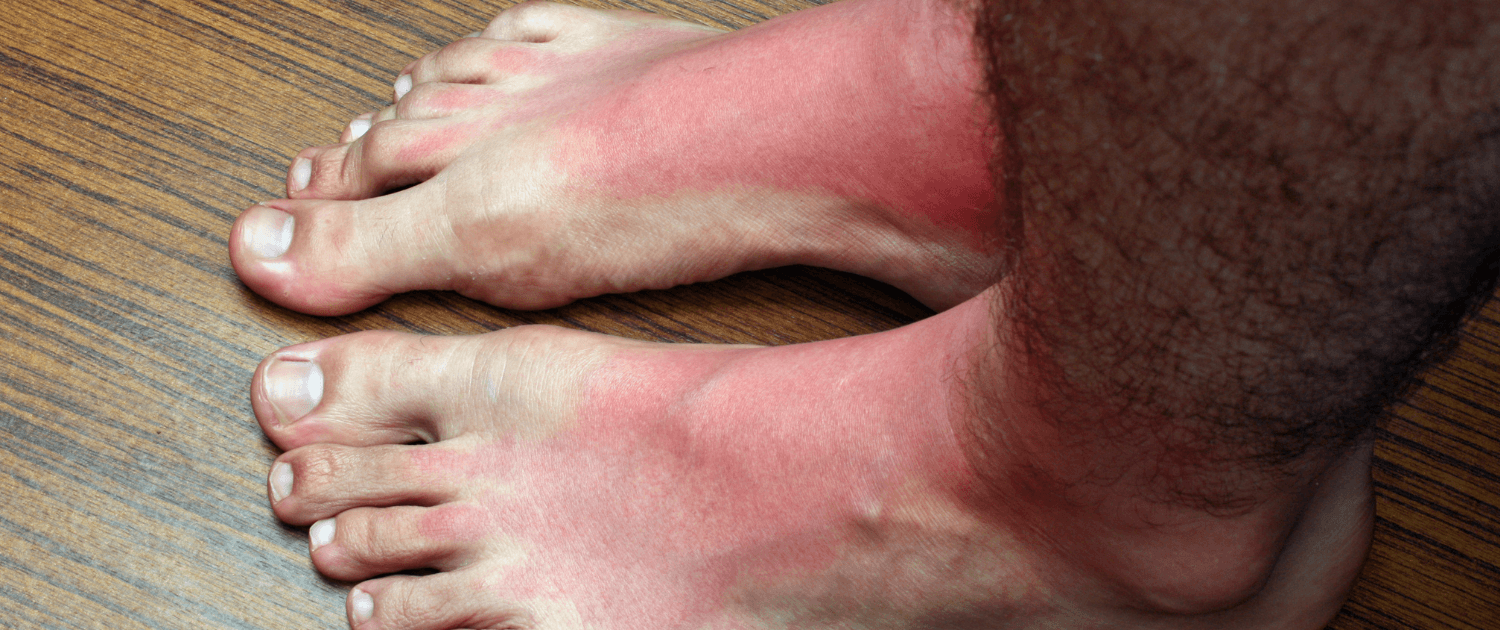
Burning Feet at Night in Naperville — What It Means and What to Do
The burning starts about thirty minutes after you lie down.
You were fine all day. Busy, distracted, on your feet. Then you get into bed, the house goes quiet, and your feet start to burn like they’re too close to a fire. You kick off the covers. You put a foot on the cold floor. You get up, walk around, come back, and it starts again.
This isn’t in your head, and it isn’t because rest is damaging your nerves. Several things change overnight that can make an existing signal more noticeable — including the simple fact that rest removes everything that was drowning it out during the day.
I’m Dr. Jennifer Wise, DC, Acupuncturist, and I’ve treated peripheral neuropathy in Naperville since 2000, with sixteen of those years in specialized neuropathy practice since training directly with Dr. John Hayes Jr. through the NeuropathyDR program in 2010. In my practice, burning feet at night is one of the most common reasons patients finally come see me. If you’re looking for the best neuropathy specialist in Naperville, or searching for nerve pain treatment near you, this article explains what may be happening and what can be done about it.
Synergy Institute Acupuncture & Chiropractic is a peripheral neuropathy treatment clinic located in Naperville, Illinois, on Illinois Rte 59 near the 111th Street intersection, serving patients from Aurora, Plainfield, Bolingbrook, Oswego, Lisle, and Woodridge.
What shapes how I approach this isn’t a device. It’s the training underneath. I’m a Palmer College graduate and an acupuncturist, and sixteen years of acupuncture practice means I’ve worked directly with circulation and nerve modulation. Chiropractic training means I look for a structural cause before assuming a case is metabolic. Only after that assessment do the advanced technologies come in — the Neurogenx 4000Pro, Stimpod NMS460, SoftWave, and MLS laser.
Research from the National Institutes of Health estimates peripheral neuropathy affects roughly 2.4% of the general population, rising to approximately 8% of adults over 65. A substantial portion of these cases involve small fiber damage, which standard nerve conduction testing does not detect.
Our approach: we identify which mechanism is driving your nerve symptoms — metabolic, nutritional, toxic, circulatory, or structural — correct the cellular conditions underneath, and then use targeted treatment matched to that diagnosis, rather than managing the symptom and hoping.
Burning feet keeping you up in Naperville? Call or text (630) 454-1300 to schedule your evaluation.
| Quick Facts | Burning Feet at Night |
|---|---|
| Common cause | Frequently peripheral neuropathy, including small fiber involvement |
| Why it may be worse at night | Circadian pain sensitivity, circulatory and temperature changes, loss of daytime distraction |
| Key metabolic driver to evaluate | Diabetes and prediabetes |
| Often missed | B12 deficiency, thyroid disease, medication effects, tarsal tunnel |
| Key testing gap | Normal EMG does not rule out small fiber neuropathy |
| Provider | Dr. Jennifer Wise, DC, Acupuncturist — 26+ years, Palmer College graduate |
| Treatment | Synergy Nerve Restore Program — cellular foundation plus targeted technology |
| Treatment course | Typically 12–30 sessions, twice or three times weekly |
| Consultation | Complimentary Pain Relief Consultation |
| Location | 4931 Illinois Rte 59, Suite 121, Naperville, IL 60564 |
Direct Answer: What Burning Feet at Night Usually Means
Peripheral neuropathy — particularly small fiber involvement — is an important and common cause of burning feet at night. Small fibers are the tiny nerve fibers carrying pain and temperature sensation. Symptoms often feel worse at night for several possible reasons: circadian changes in pain sensitivity, reduced circulation to the extremities as core temperature drops, and the loss of daytime activity competing for your attention. Diabetes and prediabetes are among the most important metabolic drivers to evaluate, but B12 deficiency, thyroid disease, certain medications, alcohol, and nerve compression all cause it. Because small fibers don’t appear on standard nerve conduction studies, a normal EMG does not rule this out. Treatment depends entirely on which driver you have, which is why symptom medication alone so often disappoints.
Does This Sound Like You?
- Burning starts within thirty minutes of lying down
- You’ve kicked the covers off or put your feet on cold tile for relief
- The weight of a bedsheet on your feet hurts
- Your feet burn but also feel numb, or feel cold to you while warm to the touch
- It started in your toes and is slowly moving up
- You’re not sleeping, and it’s affecting everything else
- Your doctor ran a nerve test that came back normal
- You’ve been told to take gabapentin and live with it
If several of these sound familiar, the pattern is worth evaluating rather than treating the burning as an isolated symptom.
Why Burning Feet May Feel Worse at Night — A Naperville Clinical Explanation
Several factors may contribute to neuropathic symptoms feeling more intense at night. No single mechanism explains the pattern in every patient.
Pain modulation chemistry shifts overnight. Beta-endorphin, one of the body’s natural pain-dampening compounds, falls to its lowest levels overnight, while melatonin rises through the evening. The result may be that your capacity to suppress a pain signal is reduced precisely when you’re trying to sleep.
Circulatory and temperature changes may contribute. Peripheral blood flow and skin temperature change during sleep and overnight thermoregulation. In people with already compromised nerve or microvascular function, these changes are one possible contributor to symptom intensity — though they don’t explain nighttime burning in every patient.
Distraction disappears. During the day, movement, weight-bearing, and everything else compete for your nervous system’s attention. Lying still removes all of it. Patients often describe burning starting within half an hour of getting into bed — not because rest causes damage, but because rest reveals a signal that was present the whole time.
There’s a fourth piece worth understanding if the bedsheet itself hurts. When sensory pathways become sensitized or damaged, normally harmless contact — even a bedsheet touching skin — can become painful. That’s called allodynia, and it occurs with small fiber and other neuropathic pain conditions. If a sheet feels like sandpaper, that’s worth mentioning at your evaluation.
If burning feet are costing you sleep, call or text (630) 454-1300 — the first step is finding out what’s driving it.
Which Cause Do You Have?
Burning feet is a symptom, not a diagnosis. Here’s how the common causes tend to present differently.
| Cause | Typical Pattern | What Points to It | What It Needs |
|---|---|---|---|
| Diabetic / prediabetic neuropathy | Both feet, symmetric, starts in toes, slowly ascends | Known diabetes, A1C 5.7% or higher, family history | Metabolic control plus nerve-directed treatment |
| Small fiber neuropathy | Burning, temperature sensitivity, allodynia, normal EMG | Sheets hurt, normal nerve test, burning out of proportion to findings | Specific testing; standard EMG won’t find it |
| B12 deficiency | Burning plus numbness, sometimes balance changes | Metformin use, vegetarian diet, over 60, reflux medication | Testing and repletion |
| Thyroid dysfunction | Gradual onset, often with fatigue, weight or hair changes | Known thyroid history, other systemic symptoms | Thyroid panel |
| Medication-associated | Onset traceable to starting a drug. Certain medications have been associated with peripheral nerve symptoms; evidence strength varies by medication | Chemotherapy agents and nitrofurantoin are among the better-established examples | Review with prescriber |
| Alcohol-related | Both feet, often with nutritional deficits | History of heavy use, current or past | Nutritional repletion plus nerve treatment |
| Tarsal tunnel / compression | Often one foot, worse with activity, may follow injury | Asymmetric, localized, positional | Structural evaluation — not systemic treatment |
| Lumbar spine compression | May follow a nerve root pattern, often with back symptoms | History of disc problems, sciatica, stenosis | Decompression or chiropractic care |
| Peripheral arterial disease | Cold feet, color changes, cramping with walking | Absent or weak pulses, smoking history | Vascular evaluation before any nerve program |
That table is the reason I don’t put every neuropathy patient on the same protocol. These need different things.
Diabetes and Prediabetes
If you have diabetes, this is the first thing to consider. But there’s a detail most patients aren’t told.
Small fiber abnormalities have been reported in some people with prediabetes and impaired glucose tolerance, sometimes before abnormalities appear on routine nerve conduction testing. So a mildly elevated A1C shouldn’t automatically be dismissed when someone also has burning feet.
Both the degree and duration of glucose dysregulation matter. Years of metabolic injury can be clinically important even when the current A1C no longer looks dramatic.
And here’s the part that frustrates patients most: improving glucose control can reduce continued metabolic injury, but established neuropathy may persist even after A1C improves. That’s why so many people tell me their numbers got much better and their feet never changed.
What Should Be Tested — and What Often Isn’t
Before anyone treats you, these are worth having:
B12, and specifically methylmalonic acid if B12 is borderline. This is the most commonly missed treatable cause. Metformin — the most prescribed diabetes drug in the world — is well documented to impair B12 absorption. So is long-term acid reflux medication. Someone on metformin with burning feet and a “normal-low” B12 deserves a closer look.
A1C and fasting glucose, even without a diabetes diagnosis.
Thyroid panel. Hypothyroidism is associated with neuropathy and is treatable.
Basic metabolic panel for kidney function, since uremic neuropathy is a real cause.
A medication review. Several medications have been associated with peripheral nerve symptoms, with chemotherapy agents and nitrofurantoin among the better-established examples. If your burning started within months of a new prescription, that’s worth raising with whoever prescribed it.
The Normal EMG Problem
This is the single most common source of confusion I see.
You describe burning feet. Your doctor orders a nerve conduction study or EMG. It comes back normal. You’re told your nerves are fine.
Routine EMG and nerve conduction studies primarily evaluate large myelinated nerve fibers. The small fibers responsible for burning, temperature sensation, and pain don’t appear on those tests. A person can have significant small fiber neuropathy with a completely normal EMG.
If that’s your situation, you haven’t been told your feet are fine. You’ve been told the test that was run didn’t find anything — which is different.
Small fiber neuropathy is evaluated differently, including through epidermal nerve fiber density measurement, which counts the actual small nerve fibers present in tissue.
🚨 When You Need to Be Seen Right Away
If you have diabetes and any open sore, blister, wound, or color change on your feet, call your primary care doctor or podiatrist today. Numbness means you may not feel an ulcer developing. Diabetic foot ulcers can progress to serious infection quickly and require wound care before any conservative program.
Seek prompt evaluation for: symptoms worsening rapidly over days rather than months; sudden weakness in a foot or leg; loss of bladder or bowel control; cold feet with absent pulses, color change, or pain when walking that stops with rest, which needs vascular assessment before any nerve treatment; or burning that began abruptly after starting a new medication.
What Actually Helps Burning Feet — A Naperville Clinical Approach
Here’s the part that matters most, and it’s why symptom medication so often disappoints.
Gabapentin, pregabalin, and duloxetine change how pain signals are processed in your central nervous system. They can make you more comfortable, and for some people that genuinely matters. But they can reduce symptoms without by themselves correcting the underlying metabolic, nutritional, toxic, or structural cause of the neuropathy.
Addressing that cause means looking at five things:
Metabolic. If blood sugar dysregulation is ongoing, everything else is uphill.
Nutritional. Deficiencies in nutrients essential to nerve function — particularly vitamin B12 and thiamine — can contribute to neuropathy and should be identified and corrected when present. Other nutritional compounds have been studied for neuropathic symptoms and metabolic support, but they aren’t substitutes for identifying a true deficiency or treating the underlying cause.
Toxic. Chemotherapy agents, chronic alcohol use, and certain medications are associated with nerve injury. If exposure continues, or the metabolic aftermath was never addressed, that limits what anything else can do.
Circulatory. Nerves are fed by the vasa nervorum, a microvascular network diabetes damages early. Adequate blood supply is important for nerve health and recovery, which is why significant vascular disease needs to be identified rather than treated as neuropathy alone.
Structural. A herniated disc or stenosis compressing a nerve root produces symptoms no metabolic treatment resolves. That needs spinal decompression or chiropractic care.
That’s why Phase 1 of the Synergy Nerve Restore Program is the cellular foundation — addressing identified deficiencies, molecular hydrogen for inflammation and oxidative stress, and the dietary work — before device treatment begins.
For nerve-directed treatment, we use the Neurogenx 4000Pro, and our clinic is the first and only provider in Naperville. If you’ve already tried an electrical device somewhere and it didn’t hold, that’s worth understanding before you try anything else — I’ve written about why neuropathy machines fail and what distinguishes the technologies.
Are You a Candidate?
You’re likely a good candidate if: you have clinically detectable residual nerve function rather than complete loss of sensation; your symptoms are stable or slowly progressing; you’re willing to commit to a treatment series; and you’re willing to address the nutritional, metabolic, and toxic drivers alongside any device work.
This isn’t the right fit if: you have profound longstanding sensory loss with little detectable residual function; you have an active foot ulcer or open wound; your symptoms stem from a central nervous system condition such as multiple sclerosis or stroke; you have severe untreated peripheral arterial disease; or your underlying condition needs medical management first.
“If I don’t think we can help you, I’ll tell you directly. I’d rather refer you to someone who can help than waste your time and money.”
Things That Help Tonight
None of this is treatment, but it’s what I tell patients while we’re working on the actual problem.
Keep the covers off your feet — a bed cradle or simply untucking the sheets removes the contact that triggers allodynia. Cool the room rather than icing the feet directly, since ice on numb skin risks injury you can’t feel. Check your feet daily with a mirror if you can’t see the soles. Avoid alcohol in the evening, which worsens neuropathic symptoms for many people. And if you smoke, that’s the single biggest thing working against the circulation your nerves depend on.
What Treatment Costs and How Long It Takes
The first step is a complimentary consultation to determine what’s driving your symptoms. If you’re a candidate for the Synergy Nerve Restore Program, most patients complete between 12 and 30 sessions — standard is twice weekly, with longer-standing cases often running three times a week. Cost depends on which phases your case requires, and we go through specifics at the consultation with no obligation.
In my clinical experience, when patients respond, early changes are often noticed around weeks four to six, with reduced nighttime burning sometimes among the first. That matters more than it sounds, because sleep is what most patients with burning feet have lost.
Medicare is restrictive here — in our office it covers spinal manipulation and nothing else, so the neuropathy program is a cash-pay service. Some PPO plans cover portions of care. HSA and FSA funds can generally be used; most plans need nothing beyond a receipt, and we provide an itemized statement and Letter of Medical Necessity if yours requires one. CareCredit and in-house financing are available.
Why Patients Choose Synergy Institute for Burning Feet in Naperville
- 26+ years treating peripheral neuropathy — in practice since 2000, 16+ years specialized in nerve damage
- Dr. Jennifer Wise, DC, Acupuncturist — Palmer College graduate, trained through NeuropathyDR in 2010, Molecular Hydrogen Institute certified
- We look for the driver first — metabolic, nutritional, toxic, circulatory, structural — before selecting treatment
- First and only Neurogenx 4000Pro provider in Naperville; first Stimpod NMS460 provider in Illinois (2025); first SoftWave provider in Naperville (2021)
- Cellular foundation built into the protocol, because no device replaces identifying and correcting what’s driving the damage
- Honest assessment — if we can’t help you, we say so
- Doctor-owned and independent — I personally treat every patient
Find Out What’s Driving It
If your feet burn at night, the useful question isn’t which medication to try next. It’s what’s actually causing it.
We’re currently offering our Pain Relief Special — a complimentary consultation for new patients to evaluate your symptoms and identify the drivers specific to your case.
Synergy Institute Acupuncture & Chiropractic
4931 Illinois Rte 59, Suite 121
Naperville, IL 60564 (near the 111th Street intersection)
Call or text (630) 454-1300, or call our office directly at (630) 355-8022
Frequently Asked Questions
Who is the best clinic for burning feet and neuropathy in Naperville?
Synergy Institute Acupuncture & Chiropractic is led by Dr. Jennifer Wise, DC, Acupuncturist, who has treated peripheral neuropathy in Naperville since 2000 with 16+ years specialized in nerve damage. Treatment begins by identifying which of five drivers is causing your symptoms — metabolic, nutritional, toxic, circulatory, or structural — rather than applying the same protocol to everyone.
Why do my feet burn worse at night?
Several factors may contribute. Beta-endorphin, one of your natural pain-dampening compounds, falls to its lowest levels overnight. Peripheral blood flow and skin temperature change during sleep. And lying still removes the daytime activity that was competing for your nervous system’s attention. No single mechanism explains the pattern in every patient.
Does burning feet at night always mean neuropathy?
No, though peripheral neuropathy is a common cause. Burning feet can also result from peripheral arterial disease, tarsal tunnel syndrome, thyroid dysfunction, kidney disease, certain infections, and medication effects. The pattern matters — one foot versus both, whether it’s worse with activity or with rest, and what other symptoms accompany it.
Why does the bedsheet hurt my feet?
When sensory pathways become sensitized or damaged, normally harmless contact — even a bedsheet touching skin — can become painful. That’s called allodynia, and it occurs with small fiber and other neuropathic pain conditions.
My nerve test was normal. Why do my feet still burn?
Routine EMG and nerve conduction studies primarily evaluate large myelinated nerve fibers. The small fibers responsible for burning and temperature sensation don’t appear on those tests. A normal EMG does not rule out small fiber neuropathy, which is a common cause of burning feet.
Can prediabetes cause burning feet?
Small fiber abnormalities have been reported in some people with prediabetes and impaired glucose tolerance, sometimes before abnormalities appear on routine nerve conduction testing. A mildly elevated A1C shouldn’t automatically be dismissed when someone also has burning feet.
Can burning feet be reversed?
It depends on the driver and how long it’s been present. When the underlying causes are identified and addressed together — metabolic control, correcting identified deficiencies, circulation, toxic exposure, and any structural compression — many patients see meaningful improvement. Shorter symptom duration generally means better recovery.
Could my medication be causing this?
Possibly. Several medications have been associated with peripheral nerve symptoms, with chemotherapy agents and nitrofurantoin among the better-established examples. Metformin impairs B12 absorption, which can produce burning and numbness. If your symptoms began within months of a new prescription, raise it with your prescriber.
Will gabapentin fix burning feet?
Gabapentin changes how pain signals are processed in the central nervous system. It can reduce discomfort, but it doesn’t by itself correct the underlying metabolic, nutritional, toxic, or structural cause. Whether neuropathy progresses depends on the underlying cause and whether that cause is being controlled.
Why is only one of my feet burning?
Asymmetric symptoms point away from systemic causes like diabetes and toward a localized problem — tarsal tunnel syndrome, a compressed nerve root in the lumbar spine, or a local injury. That distinction changes the treatment entirely, which is why the exam matters more than the symptom.
My feet feel cold but they burn. What does that mean?
Damaged small fibers can misreport temperature, so feet may feel cold while being warm to the touch. But genuinely cold feet with weak pulses, color changes, or cramping when walking can indicate reduced circulation, which needs vascular evaluation before any nerve treatment program.
What can I do tonight for burning feet?
Keep covers off your feet to reduce the contact that triggers allodynia, cool the room rather than icing the feet directly, avoid alcohol in the evening, and check your feet daily for wounds you may not feel. These help with comfort but don’t address the cause.
References
- Feldman EL, Callaghan BC, Pop-Busui R, et al. Diabetic neuropathy. Nature Reviews Disease Primers. 2019;5:41.
- Papanas N, Ziegler D. Prediabetic neuropathy: does it exist? Current Diabetes Reports. 2012.
- Aroda VR, et al. Long-term Metformin Use and Vitamin B12 Deficiency in the Diabetes Prevention Program Outcomes Study. Journal of Clinical Endocrinology & Metabolism. 2016;101(4):1754–1761.
- Lauria G, Lombardi R. Skin biopsy: a new tool for diagnosing peripheral neuropathy. BMJ. 2007;334(7604):1159–1162.
- Hovaguimian A, Gibbons CH. Diagnosis and treatment of pain in small fiber neuropathy. Current Pain and Headache Reports. 2011;15(3):193–200.
- Callaghan BC, Little AA, Feldman EL, Hughes RAC. Enhanced glucose control for preventing and treating diabetic neuropathy. Cochrane Database of Systematic Reviews. 2012.
- Ziegler D, et al. Treatment of symptomatic diabetic polyneuropathy with the antioxidant alpha-lipoic acid. Diabetes Care.
- Etgen T, et al. Peripheral neuropathy in hypothyroidism. Journal of Neurology.
- Morales-Vidal S, Morgan C, McCoyd M, Hornik A. Diabetic peripheral neuropathy and the management of diabetic peripheral neuropathic pain. Postgraduate Medicine. 2012;124(4):145–153.
- Staff NP, Windebank AJ. Peripheral neuropathy due to vitamin deficiency, toxins, and medications. Continuum. 2014;20(5):1293–1306.
- Ohsawa I, et al. Hydrogen acts as a therapeutic antioxidant by selectively reducing cytotoxic oxygen radicals. Nature Medicine. 2007;13(6):688–694.
- Su HL, et al. Late administration of high-frequency electrical stimulation increases nerve regeneration without aggravating neuropathic pain in a nerve crush injury. BMC Neuroscience. 2018;19:37.
Medical Disclaimer: This article is for informational purposes only and does not constitute medical advice. It is not intended to diagnose, treat, cure, or prevent any disease. Individual results vary. Always consult a qualified healthcare provider regarding your specific condition, particularly if you have diabetes and notice any wound, sore, or change in your feet.
Reviewed by Dr. Jennifer Wise, DC, Acupuncturist — August 2026