
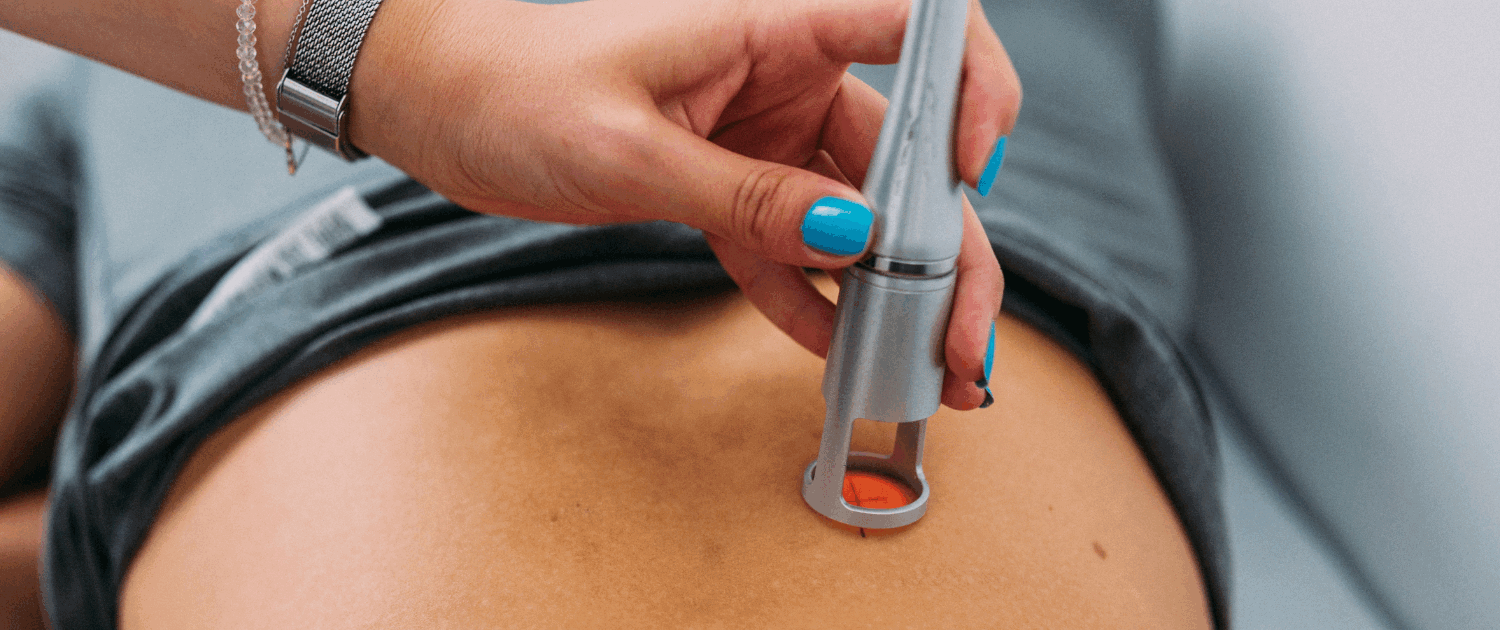
Class IV Laser Therapy for Advanced Pain Relief and Healing in Naperville IL
If you’ve been searching for laser therapy in Naperville, you’ve probably noticed something confusing: every clinic seems to offer “laser therapy,” but the results people describe are wildly different. Some patients rave about dramatic pain relief. Others say laser therapy did nothing for them.
Here’s what most people don’t realize — and what most clinics won’t explain: there are fundamentally different classes of therapeutic lasers, and the difference between them isn’t subtle. It’s like comparing a flashlight to a floodlight. I’m Dr. Jennifer Wise, and I’ve been using therapeutic lasers at our Naperville clinic since 2002. In that time, I’ve treated patients with three different generations of laser technology — from early cold lasers to K-Laser to the MLS system we use today. That experience has taught me something important: the laser matters. The class matters. And within Class IV lasers, the technology behind the device matters even more.
In this article, I’ll break down exactly what Class IV laser therapy is, how it works at the cellular level, why it outperforms cold lasers, and why even among Class IV lasers, there are significant differences most providers won’t mention.
| What You Should Know | The Details |
|---|---|
| What it is | FDA-cleared therapeutic laser using light energy to reduce pain and accelerate healing |
| How it works | Photobiomodulation — light energy stimulates cellular repair and regeneration |
| Treatment time | 8–15 minutes per area |
| Pain level | Painless — most patients feel mild warmth or nothing at all |
| Conditions treated | Arthritis, neuropathy, plantar fasciitis, soft tissue injuries, chronic pain, post-surgical healing |
| Number of sessions | Varies by condition — typically 6–12 sessions |
| Naperville provider | Synergy Institute — using therapeutic laser since 2002 |
What Is Class IV Laser Therapy?
Class IV laser therapy is a medical treatment that uses specific wavelengths of light — typically in the red and near-infrared spectrum — to stimulate healing at the cellular level. The technical term for this process is photobiomodulation, which simply means using light energy to change how your cells behave.¹
Therapeutic lasers are classified by power output. The FDA recognizes four classes:
- Class I and II: Extremely low power. Think laser pointers. No therapeutic value for pain conditions.
- Class III (cold lasers): Low-level lasers operating below 500 milliwatts. These were the first therapeutic lasers widely used in chiropractic and physical therapy settings. They work on surface-level tissue but can’t reach deep structures.
- Class IV: High-power therapeutic lasers operating above 500 milliwatts — and modern devices can deliver up to 60 watts. This power allows the light to penetrate 4–5 centimeters into tissue, reaching muscles, joints, nerves, and deep structures that cold lasers simply can’t access.²
Class IV laser therapy was cleared by the FDA in 2003 for pain reduction and improved circulation.³ Since then, thousands of clinical studies have documented its effectiveness for musculoskeletal conditions, nerve pain, inflammation, and tissue repair.
The distinction matters because when someone says they “tried laser therapy and it didn’t work,” I always ask: what kind of laser? A cold laser treatment for a deep hip joint problem is like trying to heat a house with a candle. The technology just isn’t powerful enough to reach where it needs to go.
How Class IV Laser Therapy Works
When Class IV laser light enters your tissue, it triggers a chain reaction at the cellular level. Here’s what’s actually happening:
Step 1: Light absorption. Photons from the laser penetrate your skin and are absorbed by chromophores — light-sensitive molecules inside your cells, particularly within the mitochondria (your cells’ power generators).⁴
Step 2: ATP production increases. The absorbed light energy stimulates your mitochondria to produce more adenosine triphosphate, or ATP — the energy molecule that powers virtually every cellular process in your body. Think of it like recharging a dead battery. Damaged cells are often in an energy-depleted state, and laser therapy gives them the fuel they need to repair themselves.⁵
Step 3: Cellular cascade. With increased ATP, a series of beneficial effects occur:
- Vasodilation — blood vessels open wider, increasing blood flow and oxygen delivery to damaged tissue
- Lymphatic activation — swelling and excess fluid are drained more efficiently
- Inflammatory mediators are modulated — the inflammatory process is regulated, not just suppressed
- Collagen synthesis increases — essential for tissue repair and wound healing
- Nerve function improves — damaged nerves receive the energy needed to regenerate and communicate properly⁶
Step 4: Pain reduction. Class IV laser therapy reduces pain through multiple pathways — it decreases nerve sensitivity, stimulates endorphin release (your body’s natural painkillers), and addresses the underlying inflammation that’s driving your pain signals.⁷
This isn’t masking pain. It’s creating the cellular conditions for actual healing to occur.
Class IV Laser vs Cold Laser: Why the Difference Matters
I started using cold lasers in 2002. They were exciting at the time — a non-invasive way to promote healing with zero side effects. But after treating hundreds of patients, the limitations became clear.
Here’s an honest comparison based on over two decades of clinical experience with both technologies:
| Feature | Cold Laser (Class III) | Class IV Laser |
|---|---|---|
| Power output | Under 500 milliwatts | 500 milliwatts to 60+ watts |
| Penetration depth | Surface level (1–2 cm) | Deep tissue (4–5 cm) |
| Treatment time per area | 20–30 minutes | 8–15 minutes |
| Conditions treated effectively | Superficial wounds, minor inflammation | Deep joints, disc conditions, neuropathy, chronic pain |
| Sensation during treatment | Nothing — hence “cold” | Mild, pleasant warmth |
| Clinical results | Slow, gradual improvement | Faster, more noticeable relief |
Cold lasers aren’t useless — they served their purpose for superficial conditions. But for the types of problems I see most often in my Naperville practice — chronic pain, arthritis, disc conditions, neuropathy — they simply don’t have the power to reach the tissue that needs treatment.
The math is straightforward. Light energy gets absorbed by skin and subcutaneous tissue as it travels deeper. Research estimates that 50–90% of laser energy is absorbed before it reaches the target.⁸ If you’re starting with 500 milliwatts, very little therapeutic energy actually arrives at a deep joint or a compressed nerve. Start with several watts, and you can deliver meaningful doses to structures 4–5 centimeters below the surface.
That’s the difference between a treatment that sounds good in theory and one that produces real clinical results.
Not All Class IV Lasers Are Equal
This is the part most clinics won’t tell you — and it’s where my experience with multiple laser systems gives me a perspective most providers simply don’t have.
When Class IV lasers first became available, K-Laser was one of the leading brands. I used K-Laser for years. It was a genuine step up from cold lasers: more power, deeper penetration, faster treatment times. Patients noticed a real difference.
But K-Laser — like most standard Class IV lasers — has a significant limitation: heat.
Standard Class IV lasers generate thermal energy as a byproduct of their power output. The clinician has to keep the laser beam moving constantly to avoid concentrating too much heat in one spot, which can cause tissue damage. This means you can’t hold the laser on a specific point — a trigger point, an acupuncture point, a precise area of nerve compression — for the sustained time needed to deliver an optimal therapeutic dose.
It’s the trade-off of power: you gain depth but lose precision.
Why I Switched to MLS
The MLS laser — which stands for Multiwave Locked System — solved this problem. It’s a Class IV laser, but it works on a fundamentally different principle than standard Class IV devices.
Here’s what makes it different:
Dual synchronized wavelengths. MLS uses two wavelengths simultaneously — 808nm and 905nm — locked together in a patented synchronization pattern.
- 808nm (continuous wave): Targets inflammation and swelling. It causes vasodilation, activates lymphatic drainage, and increases blood flow to damaged tissue.
- 905nm (pulsed wave): Targets pain directly. It stimulates endorphin production and blocks pain signal transmission along nerve fibers.⁹
When these two wavelengths work in sync, they produce a combined effect greater than either could achieve alone. You’re treating inflammation AND pain simultaneously, in every pulse.
Non-thermal delivery. The patented nanopulse technology makes MLS a non-thermal Class IV laser. I can hold it on a specific point — a trigger point, an area of nerve compression, an acupuncture point — without risking heat damage to tissue.¹⁰ This is a significant advantage for precision treatment.
Robotic delivery. Our Cutting Edge M6 system is fully robotic, delivering consistent, reproducible doses across the entire treatment area. No variability from hand movement, no human inconsistency. Every treatment is precise.
My Laser Evolution: What 20+ Years of Experience Taught Me
I don’t tell patients that MLS is the best laser because I read it in a brochure. I tell them because I’ve used all three generations:
Cold lasers (starting 2002): A great starting point. Good for minor, superficial conditions. But treatment sessions were long, results were slow, and for deep problems like disc herniations or joint arthritis, they just couldn’t deliver enough energy where it mattered.
K-Laser (Class IV): A significant upgrade. More power, faster results. But the heat limitation meant I couldn’t target specific points with sustained precision — and that matters when you’re trained in both chiropractic and acupuncture and you understand the importance of precise point treatment.
MLS (Class IV, dual-wavelength): This is what I use now and recommend to my patients. The dual-wavelength synchronization, non-thermal delivery, and robotic precision produce results that are, in my clinical experience, superior to anything I’ve used before. Treatment sessions take 8–15 minutes. Penetration reaches 4–5 centimeters deep. And the Cutting Edge M6 delivers over 100 times more healing energy than the cold lasers I started with.
The bottom line: not all Class IV lasers are created equal. If you’re considering laser therapy, ask what device the clinic uses and how it works. The technology behind the laser matters as much as the class designation.
Conditions Treated with Class IV Laser Therapy
Class IV laser therapy is effective for a broad range of musculoskeletal, nerve, and soft tissue conditions. Here’s what the research supports — and what I’ve seen work consistently in clinical practice:
Joint and Arthritis Conditions
- Osteoarthritis (knee, hip, shoulder, hands)
- Rheumatoid arthritis
- Knee pain and stiffness
- Shoulder pain and frozen shoulder
- TMJ disorders and jaw pain¹¹
Spine and Disc Conditions
- Low back pain (acute and chronic)
- Neck pain
- Herniated and bulging discs
- Sciatica
- Spinal stenosis (as part of a comprehensive protocol)
Nerve Conditions
- Peripheral neuropathy
- Diabetic neuropathy
- Carpal tunnel syndrome
- Nerve compression and radiculopathy
Soft Tissue Injuries
- Tendonitis and tendinopathy (tennis elbow, Achilles, rotator cuff)
- Plantar fasciitis
- Muscle strains and ligament sprains
- Post-surgical healing and scar tissue
- Sports injuries
Chronic Pain Conditions
- Fibromyalgia¹²
- Chronic regional pain
- Failed treatment pain (pain that hasn’t responded to other therapies)
The key to successful laser therapy isn’t just pointing a laser at a painful area. It’s understanding what’s causing your pain and applying the laser as part of a comprehensive treatment strategy that addresses the root cause.
Our Integrative Approach: Why Laser Alone Often Isn’t Enough
Here’s what I tell every patient: Class IV laser therapy is a powerful tool. But it’s still just one tool.
The reason most single-treatment clinics get limited results is that pain rarely has a single cause. A patient with chronic low back pain might have disc degeneration, joint inflammation, muscle tension, nerve irritation, AND nutritional deficiencies that slow healing — all contributing to the same problem.
At our Naperville clinic, we don’t offer laser therapy in isolation. We integrate it with:
- Chiropractic care — restoring proper alignment and joint function so the tissue we’re healing with laser stays in the right position
- Acupuncture — and here’s where my dual credentials as a chiropractor and acupuncturist create a unique advantage. I can apply MLS laser therapy directly to acupuncture points and trigger points with precision that most laser providers can’t match, because I understand the anatomy and meridian pathways involved
- SoftWave therapy — acoustic wave technology that activates your body’s own stem cells for tissue regeneration
- Spinal decompression — creating negative intradiscal pressure to allow disc healing, while laser reduces surrounding inflammation
- Stimpod neuromodulation — targeted nerve treatment for neuropathy and nerve-related pain conditions
- Nutritional assessment — because nutritional deficiencies can slow tissue healing and keep inflammation elevated
This isn’t a menu where you pick one item. It’s a treatment plan where I match the right combination of therapies to your specific condition. That’s the approach that gets results — not applying a single technology and hoping for the best.
Who Is a Good Candidate for Class IV Laser Therapy?
You may be a good candidate if:
- You have chronic joint pain that hasn’t responded fully to other treatments
- You’re dealing with arthritis pain and want to reduce your reliance on medications
- You have soft tissue injuries (tendonitis, plantar fasciitis, muscle strains) that are slow to heal
- You have neuropathy or nerve-related pain symptoms
- You’re recovering from surgery and want to accelerate healing
- You have chronic back or neck pain with an inflammatory component
- You want a non-invasive, drug-free treatment option
- You’ve been told you need injections or surgery but want to explore other options first
You may NOT be a good candidate if:
- You have active cancer in the treatment area (laser therapy should not be applied over malignant tissue)
- You are pregnant (laser should not be applied to the abdomen or low back)
- You have a condition that requires surgical intervention — and some do
- You have photosensitivity conditions or are taking photosensitizing medications
- You have an active infection in the treatment area
Let me be direct: I don’t recommend laser therapy for everyone. Some conditions require surgery. Some require medication management. Some need a completely different approach.
If I don’t think we can help you, I’ll tell you directly — and I’ll help you find someone who can. I’d rather refer you to the right provider than waste your time and money on treatment that won’t work for your situation.
What to Expect During Class IV Laser Therapy
Your first visit
We start with a thorough evaluation — not just of your symptoms, but of what’s causing them. This includes reviewing any imaging (MRI, X-ray) you’ve had, assessing your movement and function, and understanding your treatment history. Based on this evaluation, I’ll give you an honest assessment of whether laser therapy — alone or as part of an integrative plan — is likely to help your specific condition.
During treatment
Class IV laser therapy is completely painless. Most patients feel a mild, pleasant warmth at the treatment site. Some feel nothing at all. There are no needles, no incisions, and no discomfort. Many patients find the sessions relaxing enough to close their eyes and rest.
Treatment sessions with our MLS Cutting Edge M6 typically last 8–15 minutes per area. If we’re treating multiple areas in the same visit, it may take slightly longer. You’ll wear protective eyewear during treatment — the only safety precaution required.
After treatment
There’s zero downtime. You can return to normal activities immediately. Some patients notice improvement after the first session, but the effects of Class IV laser therapy are cumulative — each treatment builds on the previous one.
Treatment timeline
The number of sessions depends on your condition, its severity, and how long you’ve had it. For most conditions, I recommend a series of 6–12 sessions, typically 2–3 times per week initially, then tapering as you improve. Acute conditions may respond faster; chronic problems that have been building for months or years typically require more sessions.
Why Choose Our Naperville Clinic for Class IV Laser Therapy
Experience that matters. We’ve been providing therapeutic laser treatment in Naperville since 2002 — longer than most clinics in the area have been open. That’s over 20 years of refining protocols, treating thousands of patients, and learning what works.
Three generations of technology. I’ve personally used cold lasers, K-Laser, and now MLS. I didn’t switch because of marketing — I switched because each generation produced measurably better patient outcomes. The MLS Cutting Edge M6 we use today represents the most advanced therapeutic laser available.
Dual credentials, unique precision. As both a Doctor of Chiropractic and an Acupuncturist, I bring a level of anatomical understanding to laser therapy that single-credential providers simply can’t match. I know where to apply the laser — not just to the painful area, but to the specific trigger points, acupuncture points, and nerve pathways that will produce the best result.
Integrative approach. We have over 8 advanced treatment modalities under one roof. Your laser therapy is part of a comprehensive plan — not a standalone treatment hoping for the best.
Honest assessment. We don’t sell packages before we evaluate you. We don’t promise results we can’t deliver. And if laser therapy isn’t right for your condition, we’ll tell you that upfront.
Frequently Asked Questions About Class IV Laser Therapy
Does Class IV laser therapy hurt?
Not at all. Most patients feel a gentle, pleasant warmth during treatment — some feel nothing. There are no needles, no incisions, and no recovery time. Many of my patients actually look forward to their laser sessions because they find them relaxing. The MLS system we use is specifically designed for comfortable, non-thermal delivery.
How is Class IV laser different from the cold laser my other chiropractor used?
The difference is power and penetration. Cold lasers (Class III) operate below 500 milliwatts and primarily affect surface tissue. Class IV lasers deliver significantly more energy, allowing the light to penetrate 4–5 centimeters deep — reaching muscles, joints, nerves, and disc tissue that cold lasers can’t effectively treat. Treatment times are also much shorter: 8–15 minutes with Class IV versus 20–30 minutes with cold laser.²
How many sessions will I need?
This depends on your condition, its severity, and how long you’ve had it. Most patients benefit from a series of 6–12 sessions. Acute injuries may respond in fewer sessions, while chronic conditions that have been developing for months or years typically require the full course. I’ll give you a realistic treatment plan after your evaluation — no guessing.
Is Class IV laser therapy FDA-cleared?
Yes. Class IV laser therapy devices were cleared by the FDA in 2003 for pain reduction and improved microcirculation.³ The MLS system we use at our clinic carries full FDA clearance and has been the subject of extensive peer-reviewed research.
Can laser therapy help my neuropathy?
Class IV laser therapy can be effective for neuropathy, particularly when nerve damage is contributing to pain, numbness, or tingling. The laser energy improves nerve function by increasing cellular energy production and promoting nerve regeneration.⁶ At our clinic, we often combine laser therapy with Stimpod neuromodulation and nutritional support for a more comprehensive approach to nerve healing.
What’s the difference between MLS laser and other Class IV lasers like K-Laser?
The key difference is the dual-wavelength synchronized technology. Standard Class IV lasers (including K-Laser) use a single wavelength and generate significant heat, requiring the clinician to keep the device moving constantly. MLS synchronizes two wavelengths (808nm and 905nm) in a patented pattern, creating a non-thermal delivery that allows precise, sustained point treatment. In my experience having used both, MLS produces better clinical results with greater treatment precision.
Does insurance cover Class IV laser therapy?
Coverage varies by insurance plan. Some plans cover laser therapy under physical medicine or rehabilitation benefits; others consider it elective. Our office can help you understand your specific coverage. Many patients find that the cost of a laser therapy series is significantly less than surgical alternatives or long-term medication use.
Are there any side effects?
Side effects from Class IV laser therapy are rare and typically minor. Some patients experience mild warmth or temporary redness at the treatment site, which resolves within hours. The most important safety consideration is eye protection, which is why both you and the clinician wear protective eyewear during every session.
Can Class IV laser therapy replace surgery?
In some cases, yes. Many patients who were told surgery was their only option have found significant relief through laser therapy combined with other non-surgical treatments. However, I want to be honest: there are conditions where surgery is the best or only option. If your evaluation indicates that surgery would serve you better, I’ll tell you that directly.
How soon will I feel results?
Many patients notice some improvement after their first 2–3 sessions — often reduced pain and improved mobility. However, the full benefits of Class IV laser therapy are cumulative, meaning they build over the course of treatment. Most patients see significant improvement by sessions 6–8. The tissue changes happening at the cellular level continue working between sessions, so healing progresses even on days you don’t receive treatment.
Can I combine laser therapy with other treatments?
Absolutely — and in fact, that’s how we get the best results. Class IV laser therapy works especially well when combined with chiropractic adjustments, acupuncture, SoftWave therapy, or spinal decompression. The laser reduces inflammation and accelerates healing, while these complementary therapies address the structural and neurological components of your condition. That integrative approach is what produces lasting results.
Who should NOT get Class IV laser therapy?
Laser therapy is contraindicated for patients with active cancer in the treatment area, pregnant women (in the abdominal/low back region), individuals with photosensitivity disorders, and those with active infections at the treatment site. If you have a pacemaker, we’ll evaluate your situation individually. During your consultation, I’ll review your complete health history to make sure laser therapy is safe and appropriate for you.
Ready to Find Out If Class IV Laser Therapy Can Help You?
Chronic pain doesn’t have to be your normal. If you’ve tried treatments that haven’t worked — or if you’ve been told surgery is your only option — Class IV laser therapy may be the missing piece.
At our Naperville clinic, Dr. Jennifer Wise and our team have been providing therapeutic laser treatment since 2002. We’ve seen the technology evolve through three generations, and we know what works. If I don’t think we can help you, I’ll tell you directly — and help you find someone who can.
Call (630) 355-8022 or text (630) 454-1300 to schedule your consultation.
What to expect at your first visit:
- Complete evaluation of your condition
- Review of your MRI or imaging
- Honest assessment of your treatment options
- Same-day treatment if appropriate
Synergy Institute Acupuncture & Chiropractic 4931 Illinois Route 59, Suite 121 Naperville, IL 60564
Serving Naperville, Plainfield, Bolingbrook, Aurora, Oswego, and surrounding communities.
References
- Anders JJ, Lanzafame RJ, Arany PR. Low-level light/laser therapy versus photobiomodulation therapy. Photomedicine and Laser Surgery. 2015;33(4):183-184. https://pubmed.ncbi.nlm.nih.gov/25844681/
- Cotler HB, Chow RT, Hamblin MR, Carroll J. The use of low level laser therapy (LLLT) for musculoskeletal pain. MOJ Orthopedics & Rheumatology. 2015;2(5):00068. https://pmc.ncbi.nlm.nih.gov/articles/PMC4743666/
- U.S. Food and Drug Administration. 510(k) Premarket Notification Database — Class IV Laser Therapy Devices. https://www.fda.gov/medical-devices
- Hamblin MR. Mechanisms and applications of the anti-inflammatory effects of photobiomodulation. AIMS Biophysics. 2017;4(3):337-361. https://pmc.ncbi.nlm.nih.gov/articles/PMC5523874/
- Ferraresi C, Huang YY, Hamblin MR. Photobiomodulation in human muscle tissue: an advantage in sports performance? Journal of Biophotonics. 2016;9(11-12):1273-1299. https://pubmed.ncbi.nlm.nih.gov/27874264/
- Rochkind S. Phototherapy in peripheral nerve injury: Effects on muscle preservation and nerve regeneration. International Review of Neurobiology. 2013;109:109-139. https://pubmed.ncbi.nlm.nih.gov/24093609/
- Bjordal JM, Johnson MI, Iversen V, Aimbire F, Lopes-Martins RA. Photoradiation in acute pain: a systematic review of possible mechanisms of action and clinical effects in randomized placebo-controlled trials. Photomedicine and Laser Surgery. 2006;24(2):158-168. https://pubmed.ncbi.nlm.nih.gov/16706694/
- Enwemeka CS. Intricacies of dose in laser phototherapy for tissue repair and pain relief. Photomedicine and Laser Surgery. 2009;27(3):387-393. https://pubmed.ncbi.nlm.nih.gov/19473073/
- Zati A, Desando G, Cavallo C, et al. Treatment of human cartilage defects by means of Nd:YAG laser therapy. Journal of Biological Regulators and Homeostatic Agents. 2012;26(4):701-711.
- ASA Laser. MLS Multiwave Locked System: Technology and Clinical Applications. ASA Laser S.p.A. Documentation. https://www.asalaser.com/en/mls-laser-therapy
- Herpich CM, Leal-Junior EC, Amaral AP, et al. Effects of phototherapy on muscle activity and pain in individuals with temporomandibular disorder: a study protocol for a randomized controlled trial. Trials. 2014;15:491. https://pubmed.ncbi.nlm.nih.gov/25511185/
- Panton L, Simonavice E, Williams K, et al. Effects of Class IV laser therapy on fibromyalgia impact and function in women with fibromyalgia. Journal of Alternative and Complementary Medicine. 2013;19(5):445-452. https://pubmed.ncbi.nlm.nih.gov/23176373/
Medical Disclaimer
This content is for informational and educational purposes only and does not constitute medical advice, diagnosis, or treatment. Always consult with a qualified healthcare provider before making any medical decisions. Individual results may vary.
If you are experiencing a medical emergency, call 911 immediately.
Last reviewed by Dr. Jennifer Wise, DC — February 2026