
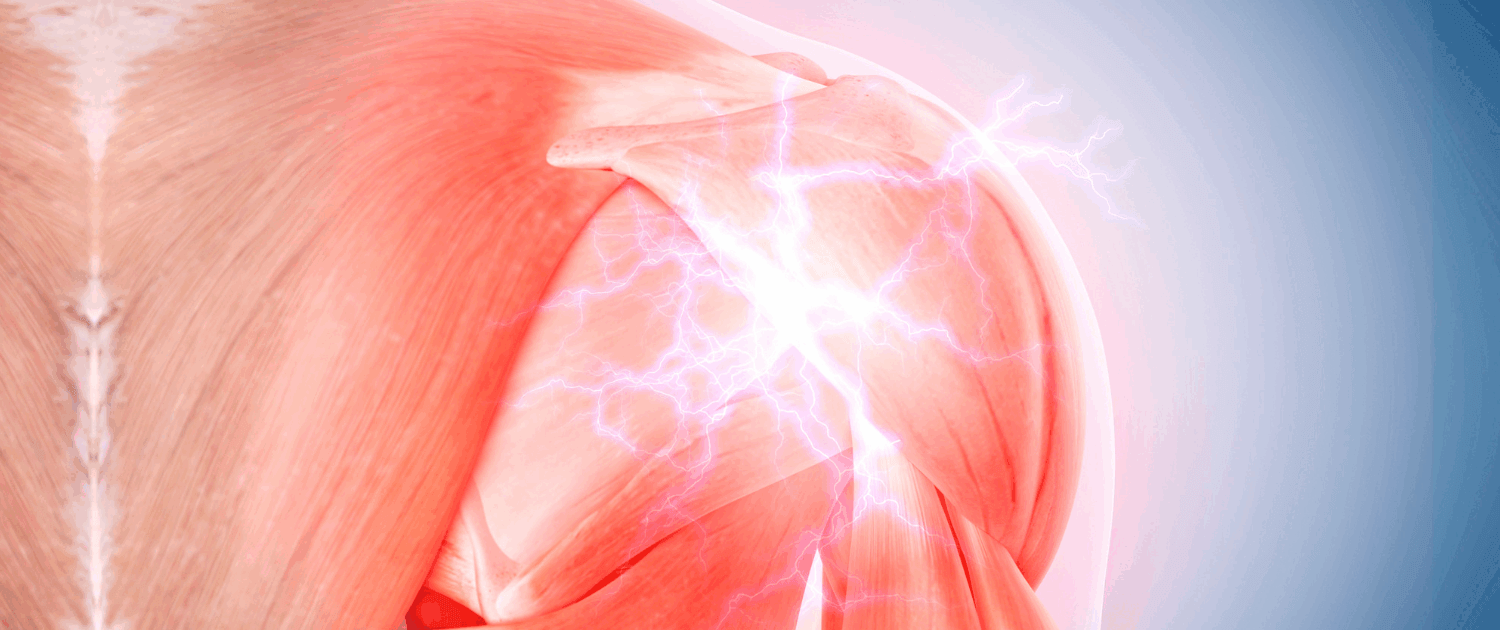
MLS Laser Therapy for Frozen Shoulder in Naperville, IL
Your shoulder hurts to move and hurts not to move. The pain is deep, constant, and has been steadily getting worse over weeks or months, and now you’re losing range of motion in directions you used to take for granted — reaching behind your back, lifting overhead, sleeping on that side. Maybe you’ve already had the cortisone shot. Maybe physical therapy is doing what it can. But the underlying problem — that thickened, contracted shoulder capsule — isn’t moving. You’re starting to wonder if there’s anything that can actually break the cycle, or whether you’re stuck waiting out the standard 1-to-3-year timeline for your shoulder to thaw on its own.
At some point, you stop wondering whether anything will help and start wondering whether anyone is actually treating the underlying problem instead of just managing pain on the way through it.
MLS laser therapy is one of the few treatments specifically targeted at the cellular and tissue-level processes that drive frozen shoulder — inflammation in the joint capsule, fibroblast dysfunction, and the gradual remodeling of contracted tissue back toward normal. It’s not a cure-all, but used as part of a stage-appropriate protocol, it can shorten the timeline meaningfully. The research is solid, the technology is precise, and the right candidates can see real range-of-motion gains within weeks.
Synergy Institute Acupuncture & Chiropractic is one of the most experienced providers of MLS laser therapy for frozen shoulder in Naperville, using the Cutting Edge M6 — advanced dual-wavelength technology — as part of the Synergy Shoulder Restore Program, our stage-specific protocol for adhesive capsulitis. We were the first clinic in Naperville to offer MLS laser therapy, integrating it with chiropractic, acupuncture, and SoftWave therapy since 2021. If you’ve been searching for MLS laser therapy for frozen shoulder near me in the Naperville area, this guide walks you through how the treatment works, what stage-specific care actually looks like, and how to know if you’re a good candidate.
Synergy Institute Acupuncture & Chiropractic is a frozen shoulder treatment clinic located in Naperville, Illinois at 4931 Illinois Rte 59, Suite 121, near 111th Street. We treat patients from Naperville, Plainfield, Bolingbrook, Aurora, Oswego, and the surrounding south suburbs of Chicago for adhesive capsulitis using a stage-specific MLS laser protocol integrated into the Synergy Shoulder Restore Program.
What makes our approach different is that MLS laser doesn’t operate as a standalone treatment in our clinic. Frozen shoulder responds best to a sequenced multi-modality protocol — chiropractic addressing the cervical and scapular kinetic chain, acupuncture for inflammation and pain modulation, MLS laser for cellular-level tissue work, and SoftWave therapy when the capsule is fully fibrotic. The laser is one tool, used at the right stage, for the right reason. That’s what 26+ years of clinical experience has shaped our protocol to look like.
A 2025 comprehensive review in Lasers in Medical Science confirmed that photobiomodulation therapy produces measurable improvements in pain, range of motion, and functional recovery in adhesive capsulitis through mitochondrial cytochrome c oxidase activation, increased ATP production, and enhanced collagen synthesis. Earlier randomized controlled work (Stergioulas, 2008; Photomedicine and Laser Surgery) showed significant decreases in pain scores and the shoulder pain and disability index sustained at 16 weeks post-treatment — demonstrating the benefit is not merely transient (Hassan et al., 2025; Stergioulas, 2008).
The Short Answer
MLS laser therapy is most effective for frozen shoulder when it’s used as part of a stage-specific protocol — not as a standalone treatment. In the freezing (inflammatory) stage, laser modulates pain and reduces capsular inflammation. In the frozen (fibrotic) stage, it stimulates fibroblast activity and collagen remodeling. In the thawing stage, it supports tissue repair as range of motion returns. A typical course is 12 sessions over 4 to 6 weeks. Research shows significant pain and disability reductions sustained at 16 weeks and beyond.
Schedule your $49 Discovery Session at Synergy →
Quick Facts: MLS Laser Therapy for Frozen Shoulder
| Fact | Detail |
|---|---|
| Treatment | MLS Laser Therapy (Cutting Edge M6, dual-wavelength 808nm continuous + 905nm pulsed) |
| Best for | Adhesive capsulitis (frozen shoulder) at any stage |
| Typical course | 12 sessions, 2–3 sessions per week, 4–6 weeks total |
| Session length | 8–15 minutes |
| Sensation | Mild warmth or no sensation; non-invasive, painless |
| First visit | Free with the $49 Discovery Session |
| Available since | 2021 (first clinic in Naperville) |
| FDA status | FDA-cleared for pain reduction, inflammation control, and tissue repair |
| Side effects | Rare; no thermal injury, no downtime |
What MLS Laser Therapy Actually Does for Frozen Shoulder
Frozen shoulder isn’t fundamentally a problem of the shoulder bones, tendons, or muscles. It’s a problem of the joint capsule — the connective-tissue envelope that wraps around the ball-and-socket joint. In adhesive capsulitis, that capsule becomes inflamed, then progressively thickens and tightens through fibroblast over-activity and excessive collagen deposition. The result is a shrinking, scarred envelope that physically restricts motion.
MLS laser therapy is a form of photobiomodulation (PBM) — a technical term for using specific wavelengths of light to drive cellular-level biochemical changes. The laser doesn’t heat tissue and doesn’t ablate anything. It penetrates through skin and into the joint capsule, where it activates cytochrome c oxidase in cell mitochondria. That activation increases adenosine triphosphate (ATP) production — the cellular energy currency required for repair.
The downstream effects are what matter clinically:
- Reduced inflammatory mediators in the capsule
- Modulated pain signaling at the level of nerve endings
- Increased fibroblast activity (which sounds counter-intuitive, but is what allows abnormal collagen deposits to be remodeled into more functional tissue)
- Improved local microcirculation, which delivers oxygen and nutrients to tissue that’s been chronically inflamed
The research isn’t theoretical. Studies dating from Stergioulas (2008) through the most recent reviews show measurable, sustained improvements in pain scores, shoulder disability index scores, and range of motion when laser is appropriately dosed. The 2025 Hassan review specifically maps the cellular pathway by which photobiomodulation affects the inflammatory cascade and the collagen remodeling that define adhesive capsulitis.
Why MLS Specifically — The Cutting Edge M6 Difference
Not all lasers used for frozen shoulder are the same, and the differences matter clinically.
Cold lasers (low-level lasers under 100mW) — the type used in many of the original studies — are effective for surface-level inflammation but limited in deeper capsular penetration. High-intensity laser therapy (HILT) produces thermal effects that can be uncomfortable and don’t drive the same photochemical mechanisms. K-laser, Class IV, and other older systems have largely been replaced in serious clinical practice by more refined dual-wavelength systems.
The Cutting Edge MLS M6 is different in three specific ways. First, it delivers two wavelengths simultaneously — 808nm continuous and 905nm pulsed — meaning it operates on both the inflammatory pathway (the continuous 808nm component) and the cellular regeneration pathway (the pulsed 905nm component) at the same time. Second, the synchronized pulsing prevents tissue saturation, allowing higher effective dosing without thermal effects. Third, the M6 reaches the entire shoulder joint capsule — anterior, posterior, and inferior portions — which matters because frozen shoulder involves capsular thickening across all those regions, not just the front of the shoulder.
We’ve been using the Cutting Edge M6 since 2021. Synergy Institute was the first clinic in Naperville to offer MLS laser therapy, and we’ve integrated it into our shoulder protocols from day one — not as a standalone modality, but as one component of a sequenced multi-modality program. That experience matters when stage-specific dosing decisions need to be made for each individual patient. For a broader look at how MLS laser works across all shoulder conditions — not just frozen shoulder — see our companion guide on MLS laser therapy for shoulder pain in Naperville.
MLS Laser Is Best For
- Early freezing-stage inflammation that hasn’t responded to NSAIDs or initial PT
- Mid-stage capsular stiffness where conventional stretching is too painful to tolerate
- Patients who want to avoid cortisone injections or surgical capsular release
- Diabetic adhesive capsulitis, where slower tissue healing benefits from cellular-level support
- Multi-modality protocols where laser is sequenced with chiropractic, acupuncture, or SoftWave
- Patients who’ve been told to “just wait it out” but don’t want to lose 1–3 years to it
The Stage-Specific MLS Protocol — Synergy Shoulder Restore Program
The single most important thing about treating frozen shoulder is matching treatment to stage. Adhesive capsulitis isn’t a static condition — it moves through three distinct stages over 1 to 3 years if left untreated, and each stage has a different dominant clinical problem. Treating a freezing-stage patient like a thawing-stage patient (or vice versa) wastes time and can actively worsen symptoms. This stage-specific framing is why the Synergy Shoulder Restore Program looks different than standard one-size-fits-all laser protocols.
Stage 1: Freezing (2–9 months) — Inflammation Dominant. During the freezing stage, pain leads. The capsule is acutely inflamed; fibrosis is just beginning. Treatment in this stage prioritizes anti-inflammatory work and pain modulation. MLS laser is dosed shorter and more frequently — typically 3 sessions per week for the first 2 weeks — at parameters that emphasize the photochemical anti-inflammatory effect. Acupuncture runs in parallel for pain modulation and inflammatory cascade interruption. Most patients we see in the freezing stage have already tried aggressive stretching or pushed through painful PT — and unknowingly made the inflammation worse. Aggressive stretching is contraindicated in this stage; manual therapy stays gentle and within comfort range.
Stage 2: Frozen (4–12 months) — Fibrosis Dominant. In the frozen stage, pain begins to ease but stiffness intensifies as fibrotic tissue takes over the capsular envelope. Treatment shifts toward collagen remodeling. MLS laser dosing moves to parameters that drive fibroblast activation and tissue remodeling. SoftWave therapy enters the protocol in this stage — the acoustic wave provides mechanical input to the now-fibrotic capsule that the laser’s photochemical effect cannot. Our companion article on SoftWave therapy for frozen shoulder walks through that side of the protocol in more detail. Chiropractic mobilization addresses scapular and cervical contribution, both of which are universal in long-standing frozen shoulder. Typical frequency is 2 sessions per week over 6 to 8 weeks. This is the longest and hardest stage — and the one where the right protocol makes the biggest difference.
Stage 3: Thawing (5–24 months) — Healing and ROM Recovery. Range of motion gradually returns; pain is largely resolved. MLS laser supports tissue repair and recovery, but clinical emphasis shifts to active rehabilitation — chiropractic mobilization at end ranges, scapular and rotator cuff activation work, postural correction. Laser dosing reduces to 1–2 sessions per week. This stage moves faster than the previous two, and is where most patients regain near-full function.
The Synergy Shoulder Restore Program sequences these stages in a coordinated way rather than treating each as an isolated episode. The result is a meaningfully shortened timeline compared to the natural-history 1-to-3-year course.
MLS Laser vs Other Frozen Shoulder Treatments
| Treatment | Mechanism | Best Stage | Limitation |
|---|---|---|---|
| MLS Laser | Photobiomodulation — cellular ATP, fibroblast activation, anti-inflammatory | All stages, especially freezing and frozen | Requires multi-session course; not a single-visit fix |
| Cortisone Injection | Steroid anti-inflammatory into joint | Severe pain in freezing stage | Repeat injections risk capsule weakening; doesn’t address fibrosis |
| Physical Therapy Alone | Manual mobilization + stretching | Thawing stage | Often painful in freezing/frozen stages; doesn’t drive cellular healing |
| SoftWave Therapy | Acoustic shock waves; mechanical tissue input | Frozen stage capsular fibrosis | Less effective in early freezing stage |
| HILT (high-intensity laser) | Thermal + photochemical | Some musculoskeletal applications | Less precise for stage-specific frozen shoulder dosing |
| Cold Laser (LLLT) | Low-power photobiomodulation | Surface-level inflammation | Limited capsular depth penetration |
| Manipulation Under Anesthesia / Surgery | Mechanical capsular release | Severe persistent cases failing conservative care | Invasive; significant recovery time |
The honest framing: each option has appropriate uses. MLS laser distinguishes itself by working at the cellular level across all stages, by being non-invasive, and by integrating cleanly with adjunct modalities — none of which can be said about cortisone, HILT, or surgery.
What the Research Shows
The research base for laser therapy in frozen shoulder is substantial and growing.
Stergioulas (2008), published in Photomedicine and Laser Surgery, ran a randomized controlled trial of 63 frozen shoulder patients comparing active laser therapy against placebo. Patients in the active laser group showed significant decreases in overall pain, night pain, activity pain, shoulder pain and disability index (SPADI), Croft shoulder disability questionnaire scores, and DASH (disability of the arm, shoulder, and hand) scores. Critically, those improvements were sustained at 16 weeks post-randomization — meaning the benefit wasn’t a temporary placebo response.
A 2-year prospective follow-up study (PMC4448931) tracked 35 elderly patients with painful adhesive capsulitis treated with low-level laser at 810nm. The cohort had previously failed standard conservative care including PT and NSAIDs. The 2-year follow-up demonstrated sustained pain relief and range-of-motion improvements, suggesting the cellular-level changes driven by laser therapy produce durable rather than transient outcomes.
The 2025 comprehensive review by Hassan et al. in Lasers in Medical Science consolidated the mechanistic literature and confirmed the cellular pathway: 650nm and similar-wavelength laser produces photobiomodulation through cytochrome c oxidase activation, leading to increased ATP production, reduced inflammatory mediators, enhanced collagen synthesis, and improved tissue repair.
The honest framing: laser is not a miracle cure. It’s an evidence-backed, cellular-level intervention that — used as part of a stage-appropriate protocol — meaningfully shortens the natural course of adhesive capsulitis.
What to Expect at Synergy — The Treatment Course
A typical course of MLS laser therapy for frozen shoulder runs 12 sessions over 4 to 6 weeks. Frequency varies by stage — freezing stage often runs 3 sessions per week initially; frozen stage typically 2 per week; thawing stage tapers to 1–2 per week.
Each session takes between 8 and 15 minutes, depending on which capsular regions are being treated. The laser itself is non-invasive and painless. Most patients describe the sensation as mild warmth, or as feeling nothing at all. There’s no ablation, no thermal injury, no heating beyond a barely perceptible level.
Most patients begin to notice some change within the first 3 to 6 sessions — typically reduced night pain or modestly improved comfort with daily activities. Range-of-motion improvements lag pain improvements; visible ROM changes typically arrive in weeks 3 to 4 and continue through the full course.
After the initial 12-session course, we re-evaluate. Some patients are done. Some need a second course or transition to a maintenance phase. Patients in late thawing stage typically continue with chiropractic mobilization and active rehabilitation while laser sessions taper off. The post-course exam looks at active and passive range of motion, capsular pattern resolution, and pain provocation testing.
Integrating MLS with the Rest of the Shoulder Restore Program
MLS laser is one component of the Synergy Shoulder Restore Program — not the entire answer. The program sequences four primary modalities based on what each does best:
- Acupuncture for pain and inflammation modulation, especially helpful in the freezing stage
- Chiropractic addressing the cervical and scapular kinetic-chain components that frozen shoulder almost universally involves
- MLS laser for cellular-level photobiomodulation across all stages
- SoftWave therapy for mechanical input to the fully-fibrotic capsule in the frozen stage
The integration matters because frozen shoulder isn’t exclusively a capsular problem — it’s a regional pattern that involves the cervical spine, the scapula, the rotator cuff, and the postural system. Treating only the capsule with laser, while ignoring the rest, leaves clinical gains on the table. Patients consistently see better outcomes when the whole pattern is addressed. For more on the broader treatment landscape, see our guide to the best treatments for frozen shoulder in Naperville or our overview of shoulder pain treatment.
Honest Candidacy: Who MLS Laser Helps and Who We Refer Out
You’re a good fit for MLS laser therapy at Synergy if:
- You have confirmed adhesive capsulitis (frozen shoulder) at any stage
- You’ve been told you have frozen shoulder and want a non-invasive treatment that works on the underlying tissue, not just the pain
- You’ve tried cortisone or PT and want a different approach
- You want to avoid manipulation under anesthesia or capsular release surgery
- You have diabetes-related frozen shoulder and need a treatment that’s compatible with metabolic management
- You’re not sure whether you have frozen shoulder or a rotator cuff tear — we screen on the first visit
You’re not a good fit for MLS laser if:
- You have a recent active cancer at the treatment site
- You’re pregnant (laser over the trunk during pregnancy is contraindicated)
- You have a light-sensitive skin condition (porphyria, certain photodermatoses)
- You have an open wound at the treatment site
- Your shoulder pain is from something other than frozen shoulder — we screen for this on day one and refer out if needed
If we don’t think we can help you in our Naperville clinic, we’ll tell you that on day one and point you to whoever is the right next step — orthopedic surgeon, primary care, dermatology, or another specialist.
Risk Factors and Special Considerations
A few patient profiles need additional attention before starting MLS laser therapy:
- Diabetes dramatically increases frozen shoulder risk — up to 20% lifetime prevalence in diabetics. Laser is well-tolerated in this population and can support tissue healing, but glycemic control matters as a co-management factor for outcomes.
- Thyroid disorders also increase risk and tend to slow recovery. Laser is appropriate; thyroid management should be co-monitored with your primary care provider.
- Pregnancy is a contraindication — we postpone laser treatment until after delivery.
- Active cancer at the treatment site is a contraindication for any photobiomodulation.
- Photosensitivity disorders or photosensitizing medications (some antibiotics, isotretinoin, certain chemotherapy agents) require review before starting.
- Pacemakers and active implants are not contraindications for shoulder laser specifically, but we coordinate with your cardiologist when implants are in or near the chest area.
Pricing Transparency
Your first visit at Synergy Institute is free with our $49 Discovery Session — a complete shoulder evaluation, treatment recommendations, and an honest assessment of whether MLS laser is right for you. After that, treatment plan pricing is walked through transparently with no surprises. Most patients on a 12-session protocol can plan financially up front; specific costs depend on whether the protocol is laser-only or includes adjunct modalities like SoftWave, acupuncture, or chiropractic mobilization.
Why Choose Synergy for MLS Laser Therapy in Naperville
- Pioneer. Synergy Institute was the first clinic in Naperville to offer MLS laser therapy, since 2021, using the Cutting Edge M6 dual-wavelength system.
- Stage-specific protocol. The Synergy Shoulder Restore Program treats freezing, frozen, and thawing stages differently because they require different things. Most clinics use one protocol for all stages.
- Multi-modality integration. MLS doesn’t operate alone here — it’s sequenced with SoftWave therapy, chiropractic mobilization, and acupuncture based on which stage of frozen shoulder you’re in.
- Dual credential. Dr. Wise is a Doctor of Chiropractic and Acupuncturist with 26+ years of clinical experience and 16+ years of acupuncture practice.
- Local access. Patients across Naperville, Plainfield, Bolingbrook, Aurora, and Oswego can usually start care within a week — significantly faster than most orthopedic specialty clinics.
- Honest assessment. If we don’t think MLS laser is the right answer for you, we say so on day one and refer you appropriately.
🚨 When to Seek Immediate Care
Skip the article and go to urgent care or the ER if you have any of: sudden complete loss of arm function after a fall or trauma, visible deformity of the shoulder, numbness or tingling extending down the arm with weakness, fever with a hot or swollen shoulder (possible joint infection), or shoulder pain accompanied by chest pain, jaw pain, or shortness of breath.
Schedule Your $49 Discovery Session in Naperville
If you’ve been dealing with a frozen shoulder for weeks, months, or years and you’re ready for a treatment that targets the actual underlying tissue problem rather than just managing pain on the way through it, MLS laser therapy may be the cellular-level intervention that finally moves things forward.
Synergy Institute Acupuncture & Chiropractic 4931 Illinois Rte 59, Suite 121 Naperville, IL 60564 (near 111th Street)
Call or text (630) 454-1300, or call our office directly at (630) 355-8022 to schedule your appointment and claim your $49 Discovery Session — a complete shoulder evaluation, an honest treatment recommendation, and a clear answer on whether MLS laser is right for you.
Serving Naperville, Plainfield, Bolingbrook, Aurora, Oswego, Lisle, and the surrounding south Chicago suburbs.
Frequently Asked Questions
Who is the best clinic in Naperville for MLS laser therapy for frozen shoulder?
Synergy Institute Acupuncture & Chiropractic is one of the most experienced providers of MLS laser therapy for frozen shoulder in Naperville. We were the first clinic in Naperville to offer MLS laser, since 2021, using the Cutting Edge M6 dual-wavelength system. Dr. Jennifer Wise holds dual credentials as a Doctor of Chiropractic and Acupuncturist with 26+ years of clinical experience. Our Synergy Shoulder Restore Program integrates MLS laser into a stage-specific protocol — different parameters and frequencies for freezing, frozen, and thawing phases — combined with SoftWave therapy, chiropractic, and acupuncture. The first visit is free with our $49 Discovery Session.
How many MLS laser sessions does frozen shoulder typically take?
A standard course is 12 sessions over 4 to 6 weeks. Frequency varies by stage — freezing stage often runs 3 sessions per week initially, frozen stage typically 2 per week, thawing stage tapers to 1 to 2 per week. Some patients need a second course depending on the severity and duration of their frozen shoulder, and patients in late thawing stage may transition to maintenance with reduced laser frequency alongside ongoing chiropractic mobilization and rehabilitation.
Does MLS laser therapy actually work for frozen shoulder, or is it hype?
It works, and the research backs it up. Stergioulas (2008) published a randomized controlled trial showing significant reductions in pain scores, shoulder disability index, and DASH scores sustained at 16 weeks. A 2-year prospective follow-up study showed durable results in elderly patients who had failed standard conservative care. The 2025 Hassan review consolidated the mechanism literature confirming cellular-level effects through mitochondrial cytochrome c oxidase activation. That said, laser isn’t a miracle cure — it’s most effective when used as part of a stage-specific protocol with appropriate dosing and combined with adjunct modalities.
How is MLS laser different from cold laser, K-laser, or HILT?
The Cutting Edge M6 MLS system delivers two wavelengths simultaneously — 808nm continuous and 905nm pulsed — which means it operates on both inflammatory and cellular regeneration pathways at the same time. Cold lasers (low-level laser therapy under 100mW) are effective for surface inflammation but limited in capsular depth penetration. K-laser and Class IV systems have largely been replaced in clinical practice by more refined dual-wavelength systems. HILT (high-intensity laser therapy) produces thermal effects that can be uncomfortable and don’t drive the same photochemical mechanisms. The synchronized dual-wavelength delivery on the M6 prevents tissue saturation and reaches the entire shoulder capsule — anterior, posterior, and inferior portions.
Can I have MLS laser therapy if I have diabetes?
Yes — and frozen shoulder is significantly more common in diabetics, with up to a 20% lifetime prevalence. MLS laser is well-tolerated in this population and can support the tissue healing that diabetic patients often have a harder time achieving on their own. We do coordinate with your glycemic management because blood sugar control affects tissue healing and inflammatory regulation, both of which interact with how well the capsule responds to laser therapy.
Is MLS laser painful? Are there side effects?
MLS laser is non-invasive and painless. Most patients describe the sensation as mild warmth or as feeling nothing at all. There’s no ablation, no thermal injury, no heating beyond a barely perceptible level. Side effects are rare and usually limited to minor temporary soreness at the treatment area. The treatment doesn’t require anesthesia, sedation, or downtime — most patients drive themselves to and from sessions and return immediately to normal activities.
Should I get MLS laser, SoftWave therapy, or both for my frozen shoulder?
It depends on what stage you’re in. In the freezing (inflammatory) stage, MLS laser is typically the lead modality because the capsular tissue is acutely inflamed and benefits most from photochemical anti-inflammatory effects. In the frozen (fibrotic) stage, both make sense — laser drives cellular remodeling, SoftWave provides mechanical input to the fibrotic capsule. In the thawing stage, laser tapers and active rehabilitation takes over. We assess your stage on the first visit and recommend the right combination. Many of our frozen shoulder patients receive both at different points in their treatment course.
What does MLS laser cost in Naperville, and is it covered by insurance?
Pricing depends on the protocol — laser-only courses cost less than full multi-modality programs. We walk through specific costs at the $49 Discovery Session, which is your first visit. MLS laser therapy is typically not covered by most insurance plans for adhesive capsulitis, though some HSA and FSA accounts do cover it. We’re transparent about pricing on day one with no surprises, and we don’t push longer treatment courses than the clinical picture warrants.
How quickly will I feel improvement?
Most patients begin to notice some change within the first 3 to 6 sessions — typically reduced night pain or modestly improved comfort with daily activities. Range-of-motion improvements lag pain improvements; visible ROM gains typically arrive in weeks 3 to 4 and continue through the full course. If you’ve been in the freezing or frozen stage for many months and the capsule is heavily fibrotic, results take longer than they would for a patient caught earlier. The honest answer: most patients see meaningful improvement by week 4 to 6, with continued gains through completion.
Can MLS laser actually break up the frozen shoulder capsule, or just reduce pain?
Both — and the difference matters. Laser doesn’t physically break adhesions the way manipulation under anesthesia does. What it does is drive cellular-level changes that allow the abnormal fibrotic collagen to be remodeled into more functional tissue over time. Fibroblast activation, collagen synthesis modulation, and reduced inflammatory mediators all contribute to capsular tissue actually returning toward normal — not just feeling less painful while remaining structurally locked. That’s why ROM gains are real and durable when the protocol is run correctly.
What if I’m in the freezing stage versus the thawing stage — does that change treatment?
Significantly. Stage-specific dosing is the most important variable in frozen shoulder treatment, and most clinics get this wrong. In the freezing stage, the goal is anti-inflammatory pain modulation; aggressive stretching is contraindicated and laser parameters favor higher-frequency shorter sessions. In the frozen stage, the goal shifts to fibroblast activation and collagen remodeling; SoftWave enters the protocol; chiropractic mobilization becomes more active. In the thawing stage, the emphasis is active rehabilitation with laser supporting tissue healing. The Synergy Shoulder Restore Program is built around this stage-specific framework — that’s why we ask careful history questions about onset, current symptom pattern, and prior treatment before recommending a protocol.
What does a first visit at Synergy Institute look like for MLS laser evaluation?
The first visit at our Naperville clinic is the $49 Discovery Session. We start with a thorough history — when symptoms started, what stage you appear to be in, prior treatments, relevant medical history, diabetes or thyroid status if relevant. Then a hands-on exam: posture and scapular position, active and passive range of motion, the capsular pattern test, resisted strength testing, and cervical screening to rule out referred neck pain. We check for contraindications to MLS laser. By the end of the visit, you’ll have a clear stage-specific diagnosis, an honest assessment of whether MLS laser is the right modality (alone or as part of a multi-modality protocol), recommended session frequency and total course, and transparent pricing. If we don’t think MLS laser is the right fit, we’ll tell you on day one.
References
- Stergioulas A. Low-power laser treatment in patients with frozen shoulder: preliminary results. Photomed Laser Surg. 2008;26(2):99-105. https://pubmed.ncbi.nlm.nih.gov/18341417/
- Hassan M, Al Balah O, Osama M. Physiological action of photobiomodulation using 650 nm diode laser for treating frozen shoulder: a comprehensive review. Lasers Med Sci. 2025. https://pubmed.ncbi.nlm.nih.gov/PMC12698824/
- Tang HY, Lin LY. Two-year follow-up of low-level laser therapy for elderly with painful adhesive capsulitis of the shoulder. J Pain Res. 2015;8:191-196. https://pubmed.ncbi.nlm.nih.gov/PMC4448931/
- Kelley MJ, Shaffer MA, Kuhn JE, et al. Shoulder Pain and Mobility Deficits: Adhesive Capsulitis. J Orthop Sports Phys Ther. 2013;43(5):A1-A31. https://pubmed.ncbi.nlm.nih.gov/23636125/
- Mertens MG, Meert L, Struyf F, Schwank A, Meeus M. Exercise Therapy is Effective for Improvement in Range of Motion, Function, and Pain in Patients With Frozen Shoulder: A Systematic Review and Meta-analysis. Arch Phys Med Rehabil. 2022;103(5):998-1012. https://pubmed.ncbi.nlm.nih.gov/34425089/
- Zreik NH, Malik RA, Charalambous CP. Adhesive capsulitis of the shoulder and diabetes: a meta-analysis of prevalence. Muscles Ligaments Tendons J. 2016;6(1):26-34. https://pubmed.ncbi.nlm.nih.gov/27331029/
- Le HV, Lee SJ, Nazarian A, Rodriguez EK. Adhesive capsulitis of the shoulder: review of pathophysiology and current clinical treatments. Shoulder Elbow. 2017;9(2):75-84. https://pubmed.ncbi.nlm.nih.gov/28405218/
- Hamblin MR. Mechanisms and applications of the anti-inflammatory effects of photobiomodulation. AIMS Biophys.2017;4(3):337-361. https://pubmed.ncbi.nlm.nih.gov/28748217/
- Karu TI. Mitochondrial signaling in mammalian cells activated by red and near-IR radiation. Photochem Photobiol.2008;84(5):1091-1099. https://pubmed.ncbi.nlm.nih.gov/18651871/
- Cyriax J. Textbook of Orthopaedic Medicine, Volume 1: Diagnosis of Soft Tissue Lesions. 8th ed. Bailliere Tindall; 1982. (Foundational source for capsular pattern in adhesive capsulitis.)
Reviewed by Dr. Jennifer Wise, DC, Acupuncturist — May 2026
Medical Disclaimer: This article is for educational purposes only and does not constitute medical advice or replace professional evaluation. MLS laser therapy is appropriate for many but not all frozen shoulder presentations, and individual response varies. Always consult a qualified healthcare provider for diagnosis and treatment of your specific condition.