
MLS Laser Therapy for Knee Pain in Naperville IL
You’ve been managing this knee for a while. Maybe it started with stiffness after long walks, or a dull ache that never fully cleared after an old injury. You’ve done the physical therapy, taken the anti-inflammatories, maybe had a cortisone injection that helped for a few weeks before the pain crept back. And now someone is starting to mention surgery — or you’re starting to wonder if that’s where this is headed.
At some point, you stop expecting it to get better on its own — and start wondering if there’s anyone who can actually explain why it isn’t.
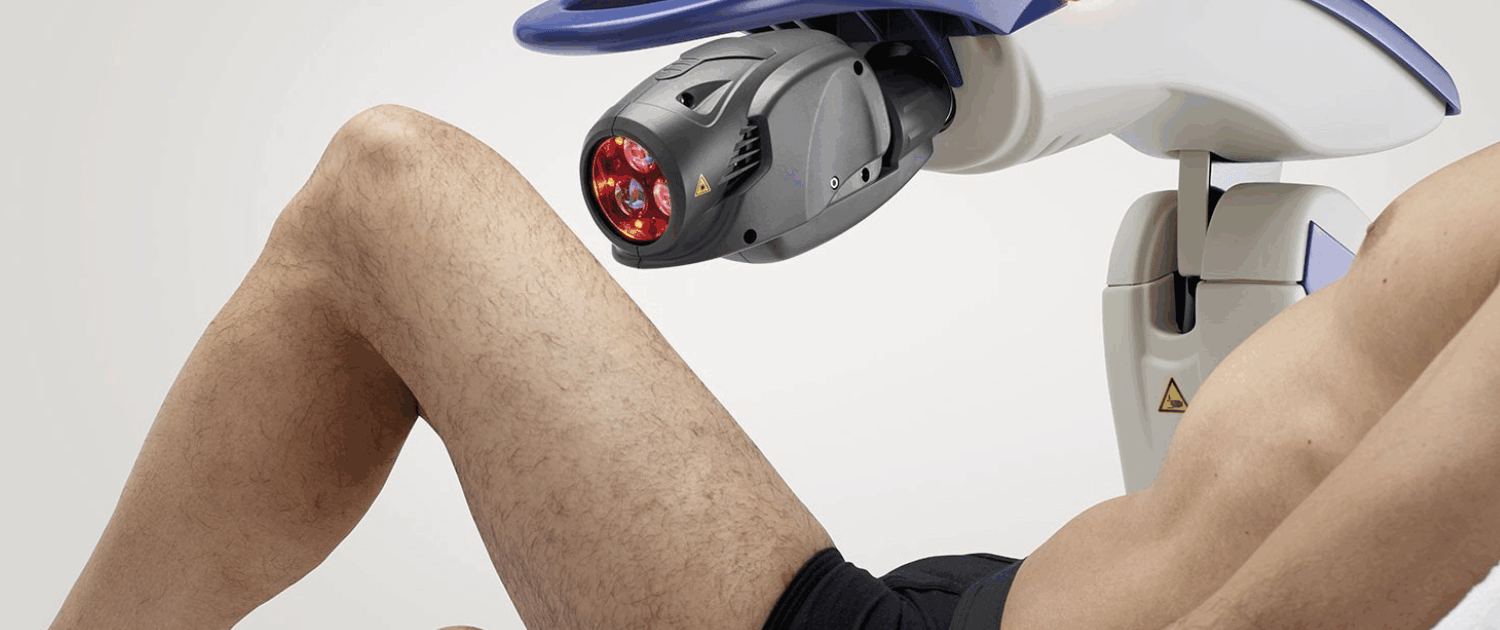
MLS laser therapy works differently than anything in that standard progression. It isn’t masking pain or suppressing inflammation pharmacologically — it’s driving cellular repair directly in the damaged tissue. I’ve been using therapeutic laser in my Naperville clinic since 2002, and when I upgraded to the Cutting Edge M6 MLS laser in 2021, I saw a meaningful shift in outcomes — particularly for knee conditions that had been resistant to everything else.
Synergy Institute Acupuncture & Chiropractic is one of the most experienced MLS laser providers for knee pain in Naperville, using the Cutting Edge M6 — a dual-wavelength Class IV system — as part of the Synergy Knee Restore Program, a structured three-phase approach that addresses the full picture of what’s driving your knee condition. If you’ve been searching for MLS laser therapy for knee pain near me in the Naperville area, this article covers how it works, who it helps, and what to expect.
MLS laser therapy for knee pain — what you should know: MLS laser uses two synchronized wavelengths — 808nm for anti-inflammatory action and 905nm for tissue repair and pain modulation — delivered simultaneously to penetrate deep into the knee joint and surrounding structures. At Synergy Institute Acupuncture & Chiropractic, MLS laser is a core modality in Phase 1 of the Synergy Knee Restore Program, working alongside SoftWave therapy and HT Cellular Reset to create a regenerative environment no single technology achieves alone.
“MLS laser therapy has demonstrated significant reductions in pain and improvements in function for knee osteoarthritis patients — and has been incorporated into American Academy of Orthopaedic Surgeons (AAOS) guidelines for the management of knee OA pain.” — Charleston Sports Medicine, citing AAOS guidelines, 2024
Our approach to MLS laser for knee pain: We identify which structures are generating your pain — cartilage, synovium, tendons, bursae, or a combination — evaluate the kinetic chain from hip to ankle, and apply MLS laser as part of a sequenced protocol designed to produce lasting results.
Conveniently located off Illinois Rte 59 near 111th Street in Naperville, serving patients from Plainfield, Bolingbrook, Aurora, Oswego, and surrounding communities.
Looking for MLS laser therapy for knee pain in Naperville? Call or text (630) 454-1300 to schedule your evaluation.
Quick Facts: MLS Laser Therapy for Knee Pain
| Fact | Details |
|---|---|
| Device | Cutting Edge M6 — dual-wavelength Class IV MLS laser |
| Wavelengths | 808nm (continuous, anti-inflammatory) + 905nm (pulsed, tissue repair) |
| FDA status | FDA-cleared |
| Session length | Typically 8–12 minutes |
| Sessions | Most knee protocols: 6–10 sessions |
| Timeline | Many patients feel improvement within 3–5 sessions; full tissue repair 4–8 weeks |
| Laser experience at Synergy | Therapeutic laser since 2002; Cutting Edge M6 since 2021 |
| Program | Synergy Knee Restore Program — Phase 1 core modality |
How MLS Laser Therapy Works for Knee Pain
MLS stands for Multiwave Locked System — a laser technology that delivers two synchronized wavelengths of infrared light simultaneously. Most laser devices deliver one wavelength at a time. The knee has two distinct problems that need addressing: active inflammation in the synovial lining and soft tissue, and underlying tissue damage — degenerated cartilage, stressed tendons, irritated bursae — that needs repair. A single-wavelength device addresses one or the other. MLS addresses both at the same time.
808nm — continuous wave: Penetrates deep into tissue and drives the anti-inflammatory response. It reduces the inflammatory mediators generating your pain and swelling — doing the work cortisone is supposed to do, without cortisone’s documented tissue-weakening effects.
905nm — pulsed wave: Targets pain modulation and tissue repair. It stimulates mitochondrial activity — increasing ATP output and accelerating the cellular repair processes that damaged knee tissue needs to recover. It also modulates nerve conduction, which is why many patients feel meaningful pain relief even in early sessions, before full tissue repair has occurred.
I started using cold laser in this clinic in 2002. The Cutting Edge M6 isn’t a more powerful version of what came before — it operates through a fundamentally different mechanism, reaching tissue depths and achieving biological effects that earlier devices couldn’t produce.
Knee Conditions MLS Laser Treats in Naperville
Knee Osteoarthritis / Bone-on-Bone: Knee arthritis is the most common condition I treat with MLS laser. Cartilage breakdown creates synovial inflammation and progressive pain with movement. MLS reduces that inflammation, stimulates whatever cartilage repair is still biologically possible, and significantly reduces pain and stiffness. For mild-to-moderate OA, it’s often the difference between managing the condition and progressing toward replacement. MLS laser for knee OA is now included in AAOS clinical guidelines — a meaningful validation for patients who’ve been told their only options are injections or surgery.
Patellar Tendinitis / Jumper’s Knee: The 905nm wavelength drives cellular repair in the patellar tendon while the 808nm wavelength addresses the inflammatory component. One of the conditions where I’ve consistently seen faster resolution with MLS than with any single anti-inflammatory approach.
Knee Bursitis: Pes anserine bursitis, prepatellar bursitis, and infrapatellar bursitis all respond well to MLS laser’s anti-inflammatory wavelength. Bursitis is often a symptom of underlying biomechanical stress — I always evaluate what’s driving the irritation, not just treat the bursa directly.
Meniscus-Related Pain: For degenerative meniscus tears — extremely common in adults over 40 — MLS laser reduces the inflammatory environment around the tear and supports tissue healing. Research shows conservative care for degenerative tears often produces outcomes comparable to surgery. For acute traumatic tears with structural instability, I’ll tell you honestly if surgical consultation is warranted.
Post-Surgical Knee Pain: One of the strongest applications for MLS laser. It reduces post-operative swelling, accelerates tissue healing, minimizes scar tissue formation, and gets patients back to function faster. I’ve also treated patients with persistent pain months or years after surgery — where the structural problem was addressed but the biological environment never fully recovered. If you’ve had a failed knee replacement and are still in pain, we’d like to take a look.
IT Band Syndrome / Runner’s Knee: Lateral knee pain from IT band friction responds well to MLS laser’s dual-wavelength combination. In runners and cyclists, this pairs with kinetic chain correction — if the hip and gait mechanics driving the tension aren’t addressed, the condition recurs.
If any of these sound like your situation, call or text (630) 454-1300 — we’ll evaluate the full picture at your first appointment.
MLS Laser vs Other Knee Pain Treatments
Treatment Comparison — Knee Pain in Naperville IL
| Treatment | How It Works | Best Stage | Addresses Root Cause? |
|---|---|---|---|
| MLS Laser | Dual-wavelength cellular repair + anti-inflammatory | Early to moderate; post-surgical | Yes — tissue repair + inflammation |
| SoftWave Therapy | Acoustic waves — stem cell recruitment, angiogenesis | Early to moderate | Yes — regenerative |
| Shockwave Therapy | Focused acoustic energy — tendon and tissue stimulation | Chronic tendinopathy | Yes — tissue repair |
| Acupuncture | Neural modulation, circulation, inflammation regulation | Any stage | Partial |
| Cortisone Injection | Suppresses inflammation temporarily | Short-term flare | No — symptom masking |
| NSAIDs | Blocks inflammatory mediators | Short-term only | No — symptom masking |
| Knee Decompression | Reduces intra-articular pressure, improves mechanics | Moderate to severe | Yes — structural |
| Surgery | Structural repair or replacement | Structural failure, severe OA | Structural only |
Where MLS Laser Fits in the Synergy Knee Restore Program
At Synergy Institute, knee pain is treated as a multi-layered condition requiring a sequenced approach. We call it the Synergy Knee Restore Program — a three-phase framework that addresses tissue health, joint mechanics, and movement patterns in the right order.
MLS laser is a cornerstone of Phase 1 — Tissue Healing. Depending on what the evaluation shows, Phase 1 combines MLS laser therapy with SoftWave therapy and HT Cellular Reset — three technologies working at different biological depths simultaneously. MLS laser delivers anti-inflammatory and tissue-repair wavelengths. SoftWave stimulates angiogenesis and stem cell recruitment. HT Cellular Reset supports cellular membrane function. Together, they create a healing environment that no single technology produces alone.
Phase 2 addresses joint mechanics — knee decompression, chiropractic alignment, and structural correction. Phase 3 uses ARPwave neurotherapy and Matrix Scanner gait analysis to re-educate the movement patterns that keep re-injuring the joint.
The full program breakdown is in our knee pain treatments guide for Naperville. The short version: MLS laser gives your knee the biological foundation to actually heal — so the structural and neuromuscular work in Phases 2 and 3 produces lasting results instead of temporary ones.
Who Is — and Isn’t — a Good Candidate
Good candidates for MLS laser knee therapy:
- Mild-to-moderate knee osteoarthritis, including bone-on-bone cases with remaining cartilage
- Patellar tendinitis or tendinosis that hasn’t resolved with rest and PT
- Knee bursitis — pes anserine, prepatellar, infrapatellar
- Meniscus-related pain, particularly degenerative tears in adults over 40
- Post-surgical knee pain — arthroscopy, partial meniscectomy, ACL reconstruction, knee replacement
- Chronic knee pain that hasn’t responded to cortisone, anti-inflammatories, or PT alone
MLS laser is not the right primary treatment for:
- Active cancer in or near the treatment area
- Acute fractures or dislocations requiring structural repair
- Severe end-stage OA with complete cartilage loss — replacement may be the more appropriate path, and I’ll tell you that directly
- Complete ligament rupture with instability requiring structural repair first
- Pregnancy
If your situation falls into one of these categories, I’ll tell you — and point you toward the provider best suited to your needs.
What to Expect
Sessions: MLS laser treatment for the knee is painless. Most patients feel a gentle warmth during the 8–12 minute session. No downtime — you drive yourself to and from and return to normal activity the same day.
Timeline: Most knee protocols involve 6–10 sessions, 2–3 times per week initially. Many patients notice meaningful improvement within 3–5 sessions. Full tissue repair develops over 4–8 weeks.
Pricing: MLS laser therapy is not currently covered by most insurance plans. Chiropractic evaluation may be covered depending on your plan. We offer transparent pricing and can discuss HSA/FSA use and in-house payment plans at your consultation. Call or text (630) 454-1300 for current pricing.
Why Naperville Patients Choose Synergy Institute for MLS Laser Knee Treatment
- 26+ years clinical experience treating knee pain in Naperville — since 2000
- Therapeutic laser since 2002 — longer than most western suburb providers have offered it
- Cutting Edge M6 MLS laser since 2021 — dual-wavelength Class IV, the most advanced system available
- First SoftWave provider in Naperville — since August 2021, combining MLS with regenerative acoustic wave therapy
- Synergy Knee Restore Program — structured 3-phase approach, not a single-treatment protocol
- Dual credential advantage — Dr. Wise evaluates your knee as both a Doctor of Chiropractic and an Acupuncturist, identifying referred pain from the hip or spine that single-discipline providers miss
- Honest evaluation — if MLS laser isn’t the right fit, we’ll tell you and point you toward care that is
Frequently Asked Questions — MLS Laser for Knee Pain in Naperville
Who is the best MLS laser clinic for knee pain in Naperville?
Synergy Institute Acupuncture & Chiropractic is one of the most experienced MLS laser providers for knee pain in Naperville. Dr. Jennifer Wise has been using therapeutic laser since 2002 and upgraded to the Cutting Edge M6 — a dual-wavelength Class IV system — in 2021. MLS laser at Synergy is part of the Synergy Knee Restore Program, a structured three-phase approach rather than a standalone treatment. For knee conditions that haven’t responded to standard care, that integrated approach is often the difference.
Is MLS laser effective for knee arthritis?
Yes — particularly for mild-to-moderate osteoarthritis. MLS laser reduces synovial inflammation, stimulates available cartilage repair, and significantly reduces pain and stiffness. It’s been incorporated into AAOS guidelines for knee OA management. For bone-on-bone arthritis with remaining cartilage, MLS laser can provide meaningful functional improvement and may delay or eliminate the need for surgery. For severe end-stage arthritis with complete cartilage loss, replacement may be the most appropriate path — and I’ll tell you honestly which category your case falls into.
How many MLS laser sessions does knee pain require?
Most knee protocols involve 6–10 sessions, 2–3 times per week initially. Many patients notice improvement within 3–5 sessions. Full tissue repair develops over 4–8 weeks. Chronic or severe conditions may require more sessions across all three phases of the Synergy Knee Restore Program. I’ll give you a realistic estimate based on your examination findings.
Can MLS laser help bone-on-bone knee pain?
Yes — with realistic expectations. MLS laser significantly reduces the synovial inflammation generating much of the pain in arthritic knees and stimulates cellular repair in remaining tissue. What it can’t do is regenerate cartilage that is fully gone. Most bone-on-bone patients I evaluate still have meaningful cartilage present despite the label — and those patients often respond well. I’ll review your imaging and give you an honest picture of what’s achievable.
Is MLS laser treatment painful?
No. Most patients feel a gentle warmth over the knee during treatment. No needles, no injections, no downtime. Sessions run 8–12 minutes, and you resume normal activity the same day.
How does MLS laser compare to cortisone injections?
Cortisone provides real short-term relief by suppressing inflammation — but doesn’t repair damaged tissue, and with repeated use has documented collagen-weakening effects. MLS laser drives actual cellular activity — ATP production, mitochondrial function, tissue repair — in the structures that are injured. Relief takes a few more sessions to develop, but what builds underneath is actual healing, not symptom suppression.
Can MLS laser help after knee replacement?
Yes — post-surgical knee pain is one of MLS laser’s strongest applications. It reduces swelling, accelerates tissue healing, minimizes scar tissue, and speeds return to function. I’ve also treated patients with persistent pain long after replacement, where the surgery addressed the structural problem but the biological environment never recovered. If you’ve had a failed knee replacement and are still in pain, we’d like to evaluate you.
What is the Synergy Knee Restore Program?
It’s a structured three-phase approach to knee pain developed at Synergy Institute. Phase 1 uses MLS laser, SoftWave therapy, and HT Cellular Reset for tissue healing. Phase 2 addresses joint mechanics through knee decompression and chiropractic correction. Phase 3 uses ARPwave neurotherapy and Matrix Scanner gait analysis to re-educate movement patterns. The full breakdown is in our knee pain treatments guide.
Is MLS laser covered by insurance?
MLS laser therapy is not currently covered by most insurance plans. Chiropractic evaluation may be covered depending on your plan. We offer transparent pricing and can discuss HSA/FSA use and in-house payment plans. Call or text (630) 454-1300 for current pricing.
How is MLS laser at Synergy different from other Naperville providers?
Three things. First, we use the Cutting Edge M6 — a true dual-wavelength Class IV MLS laser, not a single-wavelength or Class 3B device. Second, we’ve been using therapeutic laser since 2002 — the experience base matters for applying this technology effectively. Third, MLS laser at Synergy is Phase 1 of the Synergy Knee Restore Program — a structured three-phase approach that includes regenerative technology, joint mechanics correction, and neuromuscular re-education. That integration is why our results hold when standalone laser therapy hasn’t.
Schedule Your MLS Laser Knee Evaluation in Naperville
If knee pain has been limiting your activity — and cortisone, PT, and anti-inflammatories haven’t produced lasting results — MLS laser therapy may be the missing piece. At Synergy Institute Acupuncture & Chiropractic, we’ll evaluate the full picture and give you an honest assessment of whether MLS laser and the Synergy Knee Restore Program are right for your situation.
Call or text (630) 454-1300, or call our office directly at (630) 355-8022.
Synergy Institute Acupuncture & Chiropractic 4931 Illinois Rte 59, Suite 121 Naperville, IL 60564
Serving Naperville, Plainfield, Bolingbrook, Aurora, Oswego, Romeoville, and surrounding communities.
References
- Stausholm MB, Naterstad IF, Joensen J, et al. Efficacy of low-level laser therapy on pain and disability in knee osteoarthritis: systematic review and meta-analysis. BMJ Open. 2019;9(10):e031142. https://pubmed.ncbi.nlm.nih.gov/31649005/
- Alfredo PP, Bjordal JM, Dreyer SH, et al. Efficacy of low level laser therapy associated with exercises in knee osteoarthritis: a randomized double-blind study. Clin Rehabil. 2012;26(6):523–533. https://pubmed.ncbi.nlm.nih.gov/22169831/
- Rayegani SM, Raeissadat SA, Heidari S, Moradi-Joo M. Safety and effectiveness of low-level laser therapy in patients with knee osteoarthritis: a systematic review and meta-analysis. J Lasers Med Sci. 2017;8(Suppl 1):S12–S19. https://pmc.ncbi.nlm.nih.gov/articles/PMC5817208/
- Hegedus B, Viharos L, Gervain M, Galfi M. The effect of low-level laser in knee osteoarthritis: a double-blind, randomized, placebo-controlled trial. Photomed Laser Surg. 2009;27(4):577–584. https://pubmed.ncbi.nlm.nih.gov/19530911/
- Bjordal JM, Johnson MI, Lopes-Martins RA, et al. Short-term efficacy of physical interventions in osteoarthritic knee pain: a systematic review and meta-analysis. BMC Musculoskelet Disord. 2007;8:51. https://pubmed.ncbi.nlm.nih.gov/17588266/
- American Academy of Orthopaedic Surgeons. Management of Osteoarthritis of the Knee (Non-Arthroplasty) — Clinical Practice Guideline. AAOS, 2021. https://www.aaos.org/quality/quality-programs/lower-extremity-programs/osteoarthritis-of-the-knee/
- Leal Junior EC, Lopes-Martins RA, Frigo L, et al. Effects of low-level laser therapy in the development of exercise-induced skeletal muscle fatigue and changes in biochemical markers related to postexercise recovery. J Orthop Sports Phys Ther. 2010;40(8):524–532. https://pubmed.ncbi.nlm.nih.gov/20436242/
- Brosseau L, Welch V, Wells G, et al. Low level laser therapy for the treatment of osteoarthritis. Cochrane Database Syst Rev. 2004;(3):CD002046. https://pubmed.ncbi.nlm.nih.gov/15266461/
Medical Disclaimer: The information in this article is intended for educational purposes only and does not constitute medical advice. Knee pain can have multiple causes, some of which require urgent medical attention. Always consult a qualified healthcare provider for diagnosis and treatment recommendations specific to your condition. If you are experiencing severe knee pain, sudden swelling, inability to bear weight, or the knee giving way, call 911 or go to your nearest emergency room immediately.
Reviewed by Dr. Jennifer Wise, DC, Acupuncturist — April 2026