
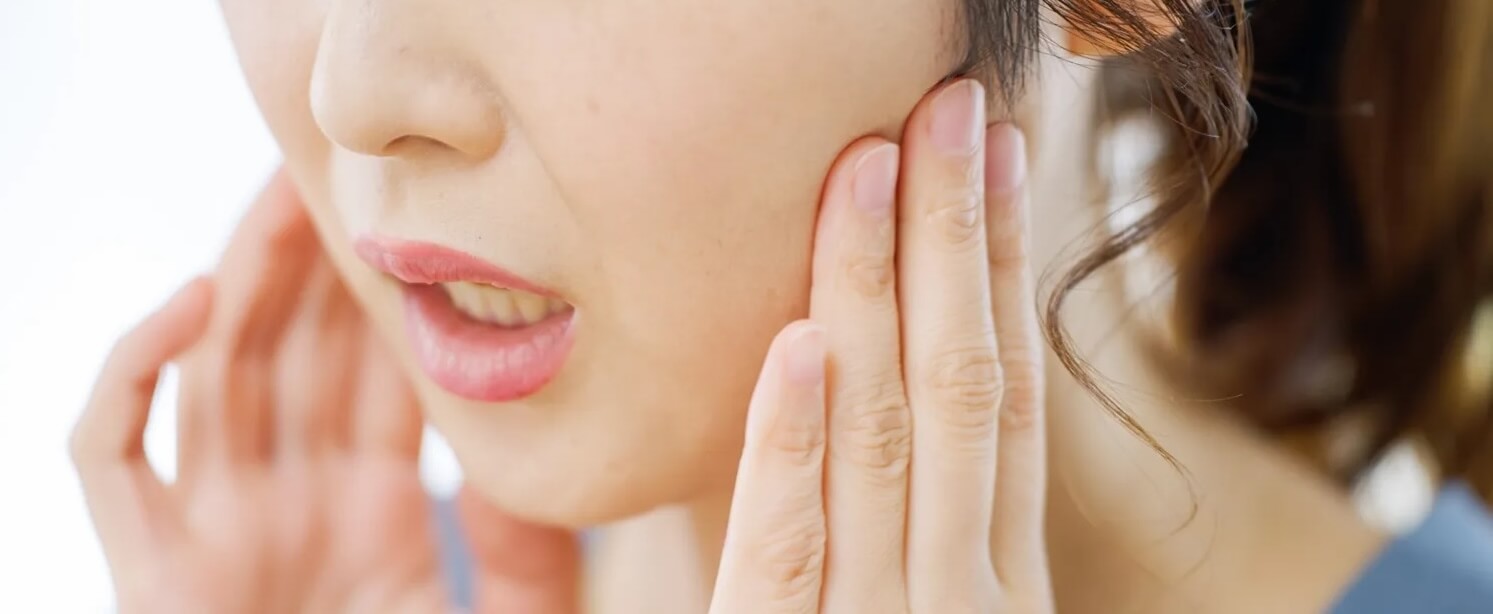
Breakthrough TMJ & Jaw Pain Treatment Available at Naperville Clinic
You’re sitting at your desk when it hits again — that deep, grinding ache in your jaw that radiates up to your temple and down into your neck. You try to open your mouth to yawn, and there it is: the click. The catch. The sharp reminder that something in your jaw isn’t working right.
Maybe you’ve already been to a dentist who handed you a night guard. Maybe you’ve been told to “reduce stress” or “stop clenching” — as if you’re doing it on purpose. Maybe you’ve taken so much ibuprofen that your stomach is starting to protest.
Here’s what I want you to know after 25 years of treating TMJ and jaw pain at our Naperville clinic: the reason most TMJ treatments fall short is that they only address one piece of the problem. Your jaw doesn’t function in isolation — it’s connected to your neck, your muscles, your nervous system. And the right technology can make a dramatic difference in how quickly you heal.
At Synergy Institute, we use MLS laser therapy — a Class IV therapeutic laser — as a primary treatment for TMJ and jaw pain. I’ve been treating TMJ since 2000, added laser therapy in 2002, and after more than two decades and three generations of laser technology, I can tell you: the results we’re getting now with the MLS laser are the best we’ve ever seen.
| What You Should Know | The Details |
|---|---|
| Who it affects | Over 10 million Americans; women 2x more likely than men¹ |
| Most common cause | Muscle tension, jaw misalignment, cervical spine dysfunction, bruxism |
| Key symptoms | Jaw pain, clicking/popping, limited mouth opening, headaches, ear pain |
| Non-surgical success rate | Up to 90% of TMJ cases respond to conservative treatment² |
| Typical MLS laser treatment timeline | 6–12 sessions over 3–6 weeks |
What Is TMJ/TMD?
TMJ stands for temporomandibular joint — the hinge joint on each side of your face, just in front of your ears, that connects your lower jaw (mandible) to your skull. When people say they “have TMJ,” they’re usually referring to TMD — temporomandibular disorder — which is the condition that occurs when something goes wrong with this joint or the muscles that control it.
Your TMJ is one of the most complex joints in your body. It doesn’t just open and close like a door hinge — it slides, rotates, and moves side to side. Every time you talk, chew, yawn, or swallow, both TMJs have to work together in perfect coordination with the muscles, ligaments, and a small disc of cartilage that cushions the joint.
When that coordination breaks down, the result can range from a mild annoyance — an occasional click when you open wide — to severe, debilitating pain that affects your ability to eat, sleep, and function normally. TMJ disorders affect an estimated 5–12% of the adult population, with women being diagnosed roughly twice as often as men.¹
What I see in my practice is that TMJ rarely exists in a vacuum. Most patients who come to me with jaw pain also have some combination of neck tension, headaches, and postural issues. That’s not a coincidence — it’s a clue about what’s really driving the problem.
What Causes TMJ Disorders?
TMJ disorders are almost never caused by a single factor. In most of my patients, I find a combination of issues working together:
Muscle-Related Causes
The muscles that control your jaw — particularly the masseter, temporalis, and pterygoid muscles — can become overworked, tight, and inflamed from chronic clenching or grinding (a condition called bruxism). Many people clench without even realizing it, especially during sleep or periods of stress.
Structural Causes
The disc inside the TMJ can slip out of position (disc displacement), causing clicking, popping, or locking. Arthritis — both osteoarthritis and rheumatoid arthritis — can break down the cartilage in the joint over time. Trauma to the jaw from an injury, car accident, or dental procedure can also damage the joint directly.
Cervical Spine Dysfunction
Here’s what most clinics won’t tell you — and what most dentists don’t evaluate: problems in your cervical spine (neck) can directly contribute to TMJ dysfunction. The nerves, muscles, and fascia that serve your jaw are intimately connected to your upper cervical spine. When vertebrae in your neck are misaligned or nerves are compressed, it can change how your jaw muscles fire, how you hold tension in your face, and how your TMJ functions.
This is one of the biggest reasons people don’t get better with a night guard alone. If the problem is partly coming from your neck, no amount of dental work will fix it.
Other Contributing Factors
Stress and anxiety (which increase clenching), poor posture (especially forward head posture from screen use), hormonal factors (which may explain why women are more affected), and certain connective tissue disorders can all play a role.
Why This Matters for Treatment
Understanding why your TMJ hurts determines how we treat it. A night guard — the most commonly prescribed TMJ treatment — addresses one potential factor (bruxism) while ignoring everything else. At Synergy Institute, we evaluate the whole picture before recommending a treatment plan.
TMJ Symptoms
TMJ disorders can produce a surprisingly wide range of symptoms — and many of them don’t seem jaw-related at all, which is why the condition often goes undiagnosed or misdiagnosed.
Jaw and Face Symptoms:
- Pain or tenderness in the jaw joint (especially in front of the ear)
- Aching facial pain
- Clicking, popping, or grating sounds when opening or closing the mouth
- Jaw locking in the open or closed position
- Difficulty or pain when chewing
- A sudden change in how your upper and lower teeth fit together
Head and Ear Symptoms:
- Headaches (often mistaken for tension headaches or migraines)
- Ear pain or fullness (often mistaken for an ear infection)
- Ringing in the ears (tinnitus)
- Dizziness
Neck and Shoulder Symptoms:
- Neck pain and stiffness
- Shoulder tension
- Upper back tightness
I hear this from patients every week: “I went to my doctor for ear pain and they said nothing was wrong with my ears.” Or: “I’ve been treated for migraines for years, but the headaches never fully go away.” When I evaluate these patients and find TMJ dysfunction — often combined with cervical spine issues — the puzzle pieces finally come together.
Treatment Options for TMJ
| Treatment | How It Works | Best For | Invasiveness |
|---|---|---|---|
| MLS Laser Therapy | Dual-wavelength light energy reduces inflammation, promotes tissue healing at cellular level | Muscle pain, joint inflammation, accelerating healing | Non-invasive |
| Night Guard/Splint | Plastic mouthpiece prevents teeth contact, reduces clenching pressure | Bruxism-related TMJ, bite alignment | Non-invasive |
| Chiropractic Care | Restores cervical spine alignment, relieves nerve compression affecting jaw | Cervical-related TMJ, joint dysfunction | Non-invasive |
| Acupuncture | Reduces muscle tension, modulates pain signaling, decreases inflammation | Myofascial TMJ pain, stress-related clenching | Non-invasive |
| Physical Therapy | Strengthens and stretches jaw muscles, improves range of motion | Muscle weakness, limited mobility | Non-invasive |
| Medications | Anti-inflammatories, muscle relaxants, or pain relievers | Temporary symptom relief | Non-invasive |
| Corticosteroid Injections | Delivers anti-inflammatory medication directly to the joint | Moderate to severe joint inflammation | Minimally invasive |
| Surgery (Arthroscopy/Open) | Repairs or replaces damaged joint structures | Severe structural damage, failed conservative care | Invasive |
At Synergy Institute, we don’t rely on a single approach. But for reducing inflammation, relieving pain, and accelerating tissue healing in the TMJ, MLS laser therapy has become our go-to treatment — and the research backs it up.
How MLS Class IV Laser Therapy Works for TMJ
MLS stands for Multiwave Locked System. It’s a Class IV therapeutic laser manufactured by ASA Laser in Italy and cleared by the FDA. What makes MLS different from other lasers — including the cold lasers and earlier Class IV lasers we’ve used — is its patented dual-wavelength technology.
The Two Wavelengths
The MLS laser synchronizes two wavelengths that work together:
- 808nm (continuous wave): Targets inflammation and swelling. Penetrates deep into the TMJ and surrounding tissues, stimulating lymphatic drainage and increasing blood flow.
- 905nm (pulsed wave): Targets pain directly by stimulating endorphin production and blocking pain signal transmission along nerve fibers.
When these two wavelengths are synchronized — locked together in a precise pattern — they create an effect greater than either could achieve alone. This is the key advantage over older lasers that use only a single wavelength.
What Happens at the Cellular Level
The process is called photobiomodulation — using light to change how cells function. MLS laser energy energizes the mitochondria inside each cell, increasing ATP production (the energy your cells need to repair themselves), stimulates nitric oxide release to improve circulation, reduces inflammatory mediators like histamine and cytokines, and promotes collagen production essential for repairing damaged ligaments and cartilage.³
Why Class IV Matters for TMJ
The TMJ is surrounded by dense muscle tissue — the masseter is one of the strongest muscles in your body. Class 2 cold lasers can’t deliver enough energy to penetrate through these muscles at a therapeutic dose. Class IV lasers like the MLS deliver over 100 times more energy and penetrate 4–5 cm into tissue — deep enough to reach the TMJ through the overlying muscle.³
A systematic review in Complementary Therapies in Clinical Practice found laser therapy effectively reduces pain in both muscular and joint-related TMD with improved jaw range of motion.⁴ And a 2017 randomized controlled trial directly comparing MLS against single-wavelength LLLT found MLS produced significantly greater pain reduction — not just compared to placebo, but compared to traditional cold laser therapy.⁶
Over 25 Years of TMJ Treatment Experience
I’ve been treating TMJ disorders since 2000. When I added cold laser therapy in 2002 — investing in three Erchonia Class 2 lasers when most clinics had never heard of photobiomodulation — it changed what I could do for my TMJ patients. In 2009, we upgraded to Class IV technology with the K-Laser — a significant jump in power and penetration depth. And in 2021, we upgraded again to the MLS laser system, which added the patented dual-wavelength synchronization that neither our Erchonia nor K-Laser could deliver. We still use our Erchonia cold lasers for certain applications — they’re excellent tools — but for TMJ, the MLS is our primary choice because the deeper penetration and synchronized wavelengths produce consistently better results.
The Cervical Spine–TMJ Connection: What Your Dentist Isn’t Checking
This is something I’m passionate about because it’s one of the most overlooked aspects of TMJ treatment — and one of the biggest reasons people don’t get better.
Your cervical spine (neck) and your TMJ are deeply interconnected through shared muscles, nerves, and fascia. The suboccipital muscles at the base of your skull directly influence jaw positioning. The trigeminal nerve — which controls sensation in your face and jaw — has connections to the upper cervical nerves. The fascia that wraps your neck muscles extends into your jaw muscles.
Cervical misalignment can cause or worsen TMJ symptoms. When vertebrae in your upper neck are out of alignment, it can change the resting position of your jaw, increase tension in the muscles of mastication, and irritate the nerves that serve the TMJ region. I regularly see patients whose TMJ pain started after a car accident, a fall, or years of poor posture — all of which affect the cervical spine.
Forward head posture is a TMJ trigger. For every inch your head shifts forward from screen use, the muscles at the back of your neck and the front of your jaw work harder to hold everything in position. This creates chronic tension in exactly the muscles that contribute to TMJ pain.
Treating only the jaw misses half the problem. If your TMJ dysfunction has a cervical component — and in my experience, it very often does — a night guard and jaw exercises alone won’t fully resolve it.
This is one of the key reasons we get results with TMJ patients who haven’t improved elsewhere. Most TMJ treatment in Naperville comes from dental offices — and dentists, by training, focus on the teeth and jaw. They’re not evaluating your cervical spine. At Synergy Institute, we assess both — and we often find that addressing cervical dysfunction is the missing piece.
Synergy’s Integrative TMJ Treatment Approach
What sets us apart from every other TMJ treatment provider in the Naperville area: we have a complete toolkit, and we match the combination to your specific situation.
MLS Laser Therapy — Reducing Inflammation and Pain
The MLS laser is typically where we start. It reduces inflammation quickly, decreases pain, and begins the tissue healing process. We apply it directly to the TMJ, the muscles of mastication, and — when appropriate — the cervical spine.
Chiropractic Care — Restoring Alignment
If cervical spine dysfunction is contributing to your TMJ, gentle chiropractic adjustments to the upper cervical spine restore proper alignment and reduce nerve irritation.
Acupuncture — Releasing Muscle Tension
Remarkably effective for TMJ-related muscle tension — releasing trigger points in the jaw and neck muscles, modulating pain signaling, and reducing the stress response that drives clenching.
Stimpod Neuromodulation — Calming Overactive Nerves
For patients with nerve-driven pain (shooting, burning, tingling), the Stimpod uses pulsed radiofrequency to calm irritated nerves without medication.
SoftWave Therapy — Tissue Regeneration
For significant tissue damage or chronic inflammation that hasn’t responded to other treatments, SoftWave uses acoustic waves to activate the body’s own regenerative processes.
No two TMJ patients get the same protocol. Unlike single-treatment clinics that offer a night guard and nothing else, we can address every layer of the problem.
Who Is a Good Candidate for MLS Laser Therapy for TMJ?
You May Be a Good Candidate If:
- You have jaw pain, clicking, or limited jaw opening
- You’ve been diagnosed with TMJ/TMD by a dentist or physician
- Night guards or splints haven’t fully resolved your symptoms
- You have muscle tension or inflammation in the jaw and/or neck
- You want a non-invasive, drug-free approach to pain relief
- You’ve been managing with over-the-counter pain medications and want a better solution
- You have TMJ symptoms combined with neck pain or headaches
- You’re looking for a treatment that addresses the cause, not just the symptoms
You May NOT Be a Good Candidate If:
- You have an active infection in the jaw or face area
- You are pregnant (laser therapy is typically avoided as a precaution)
- You have a pacemaker or other implanted electrical device (relative contraindication)
- Your TMJ symptoms are caused by a fracture or dislocation requiring surgical repair
- You have certain photosensitivity conditions or are taking photosensitizing medications
- Your condition requires immediate surgical intervention (severe joint degeneration, locked jaw that won’t respond to conservative care)
Here’s what I tell my patients: if I don’t think MLS laser therapy — or any of our treatments — will help your specific TMJ condition, I’ll tell you directly. I’d rather refer you to an oral surgeon or TMJ specialist who can help than waste your time and money on treatments that aren’t appropriate for your situation.
What to Expect at Your First Visit
Your first visit starts with a thorough evaluation — not a sales pitch. I’ll assess your jaw function (range of motion, clicking, pain points), evaluate your cervical spine, review your dental and medical history, and examine your posture and muscle tension patterns. If you have imaging (X-rays, MRI), bring it along.
Based on what I find, I’ll explain what I think is driving your TMJ symptoms and recommend a tailored treatment plan — which might include MLS laser therapy alone or in combination with chiropractic care, acupuncture, or other modalities.
The laser treatment itself is simple. You’ll sit or recline while I apply the MLS laser handpiece to the TMJ area, jaw muscles, and cervical spine as needed. Most patients describe a warm, soothing sensation. Sessions take 10–15 minutes with zero downtime. Most treatment plans involve 6–12 sessions, 2–3 times per week. Many patients notice improvement within the first 2–3 sessions, with full results building cumulatively over the complete treatment plan.
Why Choose Synergy Institute for TMJ Treatment
Over 25 Years Treating TMJ
I’ve been treating TMJ disorders since 2000 and added laser therapy in 2002. From our first Erchonia cold lasers through the K-Laser era and now with MLS technology, we’ve been refining our TMJ protocols for over two decades. That depth of experience matters when it comes to knowing which settings, which treatment areas, and which combinations produce the best results.
The Cervical Spine Perspective
We evaluate what dental offices don’t: your cervical spine. As a chiropractor with advanced acupuncture training, I bring a musculoskeletal and neurological perspective to TMJ that’s fundamentally different from the dental-only approach most Naperville TMJ patients receive.
A Complete Toolkit
MLS laser, chiropractic, acupuncture, Stimpod, SoftWave — we have the tools to address every component of your TMJ problem. You won’t be told “try this night guard and come back in six weeks.”
Honest Assessment
If I don’t think we can help you, I’ll tell you directly — and help you find someone who can.
Frequently Asked Questions About MLS Laser Therapy for TMJ
Does laser therapy actually work for TMJ?
Yes. Multiple systematic reviews support laser therapy’s effectiveness for TMJ disorders, showing reduced pain, decreased inflammation, and improved jaw range of motion.⁴ ⁵ In my experience treating TMJ since 2000, the results with the MLS system are the best yet.
What’s the difference between cold laser and Class IV MLS laser for TMJ?
Cold lasers (Class 2) operate under 1 milliwatt. The MLS laser (Class IV) delivers dramatically more energy — penetrating 4–5 cm into tissue, deep enough to reach the TMJ through the dense masseter muscle.³ The other key difference is MLS’s dual-wavelength synchronization (808nm + 905nm), which addresses inflammation and pain simultaneously. A randomized controlled trial confirmed MLS produced significantly greater pain reduction than single-wavelength LLLT.⁶
How many sessions will I need?
Most TMJ patients require 6–12 sessions, scheduled 2–3 times per week. Acute cases often respond in 6–8 sessions; chronic cases typically need 10–12, sometimes with periodic maintenance. The effects are cumulative.
Is MLS laser treatment painful?
Not at all. Most patients describe a warm, pleasant sensation. No needles, no incisions, no medication. Sessions take 10–15 minutes with zero downtime.
Can MLS laser therapy replace my night guard?
It depends. If your primary issue is inflammation and muscle tension, MLS may reduce or eliminate the need for a guard. If you’re a significant grinder, a night guard may still be useful for dental protection. We’ll evaluate and make an honest recommendation.
Does insurance cover this?
Coverage varies by plan. Some insurance covers laser therapy as part of a TMJ treatment plan. We verify your benefits and explain costs before treatment begins. We also offer new patient specials.
Why do you treat the neck for a jaw problem?
The cervical spine and TMJ share muscles, nerves, and connective tissue. Cervical misalignment can directly affect jaw muscle tension and TMJ function. In my experience, a significant percentage of TMJ patients have a cervical component that prevents full resolution if left untreated — and dental offices typically don’t evaluate it.
Can TMJ be fully cured?
Many patients achieve complete or near-complete resolution with appropriate treatment. Others manage long-term with periodic care. Most TMJ patients achieve significant, lasting improvement when the right combination of treatments addresses all contributing factors.
Ready to Get Real Relief from TMJ & Jaw Pain?
TMJ pain doesn’t have to control your life. With over 25 years of TMJ treatment experience and an integrative approach that addresses what’s actually causing your pain — not just the symptoms — real, lasting relief is possible.
At Synergy Institute in Naperville, Dr. Jennifer Wise and our team have helped thousands of patients find relief through our multi-modal approach. If I don’t think we can help you, I’ll tell you directly — and help you find someone who can.
Call or text (630) 454-1300 to schedule your consultation.
What to expect at your first visit:
- Complete evaluation of your TMJ and cervical spine
- Assessment of jaw function, muscle tension, and posture
- Honest assessment of your treatment options
- Same-day MLS laser treatment if appropriate
Synergy Institute Acupuncture & Chiropractic 4931 Illinois Route 59, Suite 121 Naperville, IL 60564
Serving Naperville, Plainfield, Bolingbrook, Aurora, Oswego, and surrounding communities.
References
- National Institute of Dental and Craniofacial Research. TMJ (Temporomandibular Joint and Muscle Disorders). National Institutes of Health. https://www.nidcr.nih.gov/health-info/tmj. Accessed February 2026.
- Wright EF, North SL. Management and treatment of temporomandibular disorders: a clinical perspective. Journal of Manual & Manipulative Therapy. 2009;17(4):247-254.
- ASA Laser. MLS Laser Therapy Technology: Clinical and Scientific Overview. https://www.asalaser.com/. Accessed February 2026.
- Xu GZ, Jia J, Jin L, Li JH, Wang ZY, Cao DY. Low-level laser therapy for temporomandibular disorders: a systematic review with meta-analysis. Complementary Therapies in Clinical Practice. 2023;52:101765.
- Maia MLM, Bonjardim LR, Quintans JSS, Ribeiro MAG, Maia LGM, Conti PCR. Effect of low-level laser therapy on pain levels in patients with temporomandibular disorders: a systematic review. Journal of Applied Oral Science. 2012;20(6):594-602.
- Alayat MS, Elsoudany AM, Ali ME. Efficacy of multiwave locked system laser on pain and function in patients with chronic neck pain: a randomized placebo-controlled trial. Photomedicine and Laser Surgery. 2017;35(8):450-455. https://pubmed.ncbi.nlm.nih.gov/28783464/
- Kujawa J, Pasternak K, Zavodnik I, Irzmański R, Wróbel D, Bryszewska M. The effect of near-infrared MLS laser radiation on cell membrane structure and radical generation. Lasers in Medical Science. 2014;29:1663-1668.
- Cotler HB, Chow RT, Hamblin MR, Carroll J. The use of low level laser therapy (LLLT) for musculoskeletal pain. MOJ Orthopedics & Rheumatology. 2015;2(5):00068.
- Mayo Clinic. TMJ Disorders — Symptoms and Causes. https://www.mayoclinic.org/diseases-conditions/tmj/symptoms-causes/syc-20350941. Accessed February 2026.
- Cleveland Clinic. Temporomandibular Joint (TMJ) Disorders: Symptoms & Treatment. https://my.clevelandclinic.org/health/diseases/15066-temporomandibular-disorders-tmd-overview. Accessed February 2026.
- Hansraj KK. Assessment of stresses in the cervical spine caused by posture and position of the head. Surgical Technology International. 2014;25:277-279.
- De Laat A, Meuleman H, Stevens A, Svensson P. The correlation between cervical spine disorders and temporomandibular disorders: a narrative review. Journal of Oral Rehabilitation. 2020;47(8):1005-1015.
- Shukla D, Muthusekhar MR. Efficacy of low-level laser therapy in temporomandibular disorders: a systematic review. National Journal of Maxillofacial Surgery. 2016;7(1):62-66.
- American Academy of Orofacial Pain. Guidelines for Assessment, Diagnosis, and Management. Quintessence Publishing. 2023.
- Zotti F, Tala M, Torielli P, et al. A systematic review via text mining approaches of human and veterinary applications of photobiomodulation: focus on multiwave locked system laser therapy. Lasers in Medical Science. 2025;40:138.
Medical Disclaimer
This content is for informational and educational purposes only and does not constitute medical advice, diagnosis, or treatment. Always consult with a qualified healthcare provider before making any medical decisions. Individual results may vary.
If you are experiencing a medical emergency, call 911 immediately.
Last reviewed by Dr. Jennifer Wise, DC — February 2026