
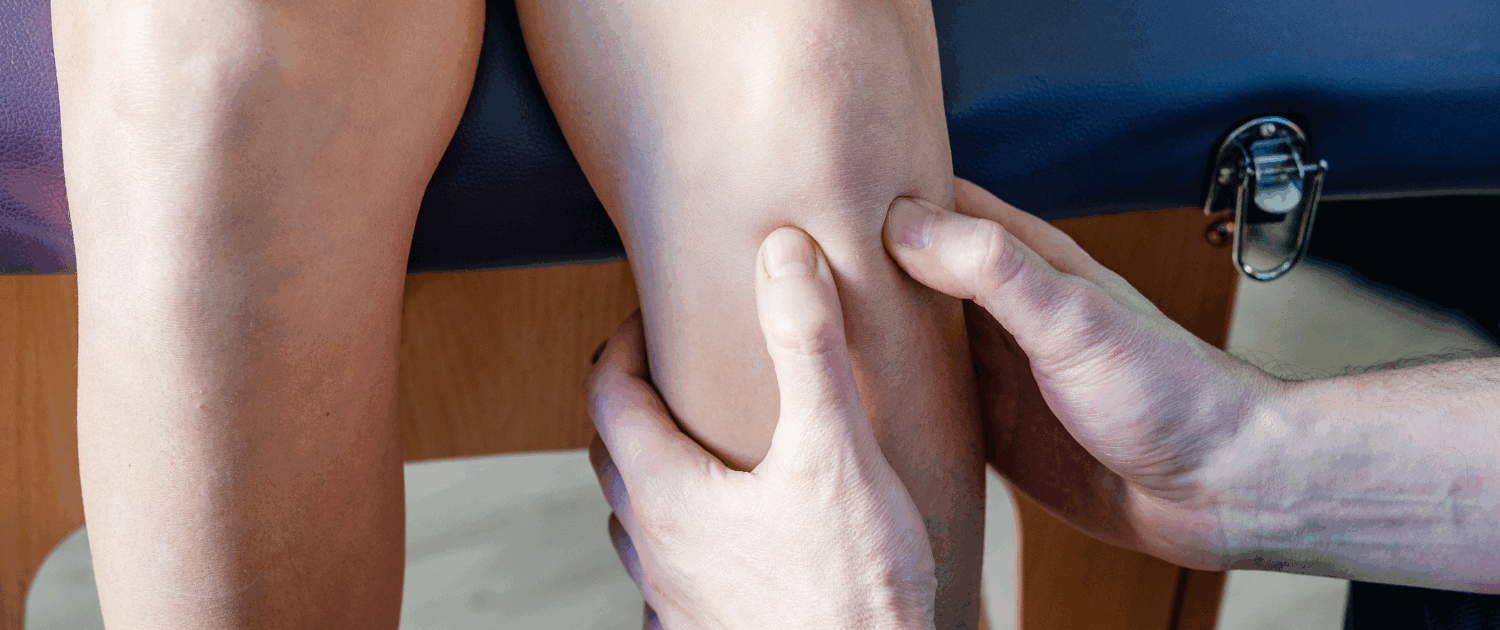
SoftWave Therapy for Jumper’s Knee / Patellar Tendinitis in Naperville IL
The pain started as a dull ache just below your kneecap — after games at first, then during warm-ups, and now even when you stand up from your desk. You’ve been icing. You’ve been stretching. You tried the patellar strap your teammate swore by. You took a few weeks off jumping and came back hoping it was resolved, but the first hard landing lit it up again. Rest helps a little. Returning to full load brings it right back.
At some point, you stop believing rest is going to fix this — and start wondering whether there’s a treatment that actually heals the tendon instead of just quieting it.
Most Naperville athletes we see at this stage have already been told to rest, ice, and take NSAIDs — and they’re not sure if they’ve been given the full picture. Here’s the reality: patellar tendinitis isn’t really an inflammation problem. The name is misleading. Research dating back 40 years has reframed the condition as patellar tendinopathy — a degenerative failure of the tendon to heal itself properly under repeated load. That changes everything about which treatments work and which ones only mask symptoms.
I’m Dr. Jennifer Wise, DC, Acupuncturist — and for 26+ years, since 2000, I’ve helped Naperville athletes recover from patellar tendon injuries without cortisone, surgery, or prolonged time off sport. At Synergy Institute Acupuncture & Chiropractic, we were the first clinic in Naperville to offer SoftWave therapy (August 2021) and have used therapeutic laser since 2002. When athletes search for the best jumper’s knee specialist in Naperville or patellar tendinitis treatment near me, they’re looking for exactly this: an integrated clinic that addresses the biology of tendon healing, not just the pain.
Synergy Institute Acupuncture & Chiropractic offers SoftWave therapy for jumper’s knee and patellar tendinitis in Naperville, IL. We combine SoftWave with chiropractic adjustment, acupuncture, MLS laser, HT Cellular Reset, and ARPwave neurotherapy for a comprehensive approach that single-treatment clinics cannot match.
A 2007 randomized controlled trial published in the American Journal of Sports Medicine (Wang et al.) found that 90% of patients with patellar tendinopathy achieved satisfactory functional outcomes with shockwave therapy, compared to 50% who received conservative care alone — and the shockwave group had a recurrence rate of only 13% versus 50% in the conservative care group.
The best patellar tendinitis treatment in Naperville isn’t about one therapy — it’s about applying the right combination in the right sequence. See our full knee pain treatments overview to see how every option fits together. Our office sits on Illinois Route 59 near the 111th Street intersection, serving athletes throughout Naperville, Aurora, Plainfield, and Bolingbrook.
Call or text (630) 454-1300 — or call our office directly at (630) 355-8022 — to schedule a $49 Discovery Session and find out whether SoftWave is the right next step for your tendon.
Quick Facts: Jumper’s Knee Treatment with SoftWave in Naperville
| Fact | Details |
|---|---|
| Clinical name | Patellar tendinopathy (formerly “patellar tendinitis”) |
| Who it affects | Volleyball, basketball, track & field jumpers, runners, skiers — approximately 14% of athletes in jumping sports |
| Primary symptom | Pain at the inferior pole of the kneecap, worse with jumping, squatting, landing |
| Typical SoftWave protocol | 6–8 sessions over 6–8 weeks |
| Research-backed success rate | ~90% satisfactory outcomes (Wang et al., 2007) |
| Session length | 10–15 minutes |
| Evaluation cost | $49 Discovery Session |
| Phone | (630) 454-1300 call or text |
Tendinitis vs Tendinopathy — Why the Distinction Changes Everything
The condition most people call “patellar tendinitis” is rarely actual tendinitis. True tendinitis is acute inflammation of a tendon. Studies dating back 40 years have shown that chronic patellar tendon pain is better described as tendinopathy — a degenerative condition characterized by failed tendon healing, collagen disorganization, and neovascular ingrowth into tissue that shouldn’t have blood vessels.
This distinction matters because it tells you which treatments will actually work.
Anti-inflammatories don’t fix degeneration. If the problem isn’t inflammation, suppressing inflammation doesn’t address it. This is why so many athletes take ibuprofen for weeks and notice the pain never actually goes away — it just gets quieter until they push harder.
Rest alone doesn’t complete the healing cascade. A degenerated tendon needs a regenerative stimulus, not just time off. Prolonged rest often results in a tendon that hurts less because it’s being loaded less — not a tendon that’s actually healed.
Cortisone injections can make it worse. Cortisone has been shown to weaken collagen and has been associated with an increased risk of tendon rupture in patellar tendinopathy cases. For a young athlete hoping to return to competitive jumping, this is a significant concern.
Stretching doesn’t heal a failed tendon. Stretching can temporarily reduce symptoms but does not reverse the collagen disorganization or tendon thickening characteristic of tendinopathy.
This is not an inflammation problem. It’s a failed healing problem. The treatment has to match the actual biology.
What Causes Patellar Tendinopathy
Jumper’s knee develops from the collision of repeated eccentric load and inadequate tissue recovery. A few specific factors drive most cases:
Eccentric overload during jumping and landing. The patellar tendon bears 5–7 times body weight during landing from a jump. Volleyball players, basketball players, track jumpers, and plyometric athletes expose this tendon to thousands of high-load landings per season. When load exceeds the tendon’s ability to repair, microtrauma accumulates.
Inadequate eccentric strength. Paradoxically, the treatment that works best for tendinopathy — eccentric loading — is also what’s missing in athletes who develop it. A strong quadriceps isn’t the same as a tendon with good eccentric tolerance.
Rapid training volume changes. Jumping twice as much as last week or adding plyometric sessions without appropriate progression is a classic precipitating factor. The tendon adapts — but slowly.
Compromised biomechanics. Hip weakness, poor landing mechanics, ankle stiffness, and foot mechanics all shift load onto the patellar tendon. A tendon that was tolerating its load fine before becomes overloaded when the kinetic chain above or below changes.
Underlying healing capacity. Some athletes simply have tendons that don’t heal as well. Genetic collagen quality, age, hormonal factors, and chronic systemic conditions all affect tendon healing.
The reason standard treatments fail for most athletes is that they reduce symptoms without correcting either the tendon biology or the mechanical drivers. The tendon stays degenerated, waiting for the next hard landing to relight the pain.
When Standard Treatments Fail
Most athletes arrive at our clinic after weeks or months of the same sequence:
Rest. Calms acute flares. Doesn’t heal the tendon. Deconditioning during prolonged rest creates a cascade of other issues and often leaves the tendon no better off at the end.
Ice. Reduces acute pain. Extended ice use may interfere with the inflammatory signaling the tendon needs to initiate repair.
NSAIDs. Block inflammation. But again — this isn’t fundamentally an inflammation problem. Blocking inflammation long-term often interrupts the very healing signals the tendon needs.
Patellar straps. Redistribute load during activity. Can provide meaningful symptom relief. Don’t address the underlying tendon pathology.
Physical therapy focused on quadriceps strengthening. Helpful — but often inadequately progressed. Most generic PT programs don’t provide the high-load eccentric stimulus that research shows is required for tendon remodeling.
Cortisone injection. Fast pain relief. Does not repair tissue. Associated with increased tendon rupture risk in patellar tendinopathy cases. This is one of the injections we most actively discourage for this condition.
Surgical debridement. Last resort for chronic refractory cases. Removes degenerated tissue but does not restore the original tendon architecture. Outcomes are variable, rehabilitation is demanding, and return to high-level jumping sport is not guaranteed.
SoftWave therapy addresses what none of these do: the cellular and collagen biology of the degenerated tendon itself.
How SoftWave Works for Patellar Tendinopathy
SoftWave therapy uses focused electrohydraulic acoustic pressure waves to deliver regenerative signaling directly into tendon tissue. The mechanism matches what tendinopathy actually needs. For a deeper look at SoftWave’s full clinical applications for the knee, see our article on SoftWave for Knee Pain in Naperville.
Stimulates collagen remodeling. Studies using diagnostic ultrasound have documented changes in tendon width and vascular organization at the proximal insertion of the patellar tendon following shockwave treatment. The tendon isn’t just less painful — it’s structurally different.
Activates resident stem cells. SoftWave recruits mesenchymal stem cells to the treated tissue, supporting repair in exactly the kind of poorly-vascularized connective tissue where healing has stalled.
Promotes angiogenesis. New blood vessel formation in controlled, healing-relevant locations restores the nutrient delivery that degenerated tendon tissue lacks. This is fundamentally different from the chaotic neovascular ingrowth associated with chronic tendinopathy — SoftWave supports organized revascularization that serves repair.
Modulates chronic inflammation. Rather than suppressing inflammation, SoftWave helps resolve the trapped, non-productive inflammation seen in chronic tendinopathy. This is the inflammation that fuels pain without contributing to healing.
Reduces pain signaling. Many athletes report significant pain reduction within the first 2–3 sessions. This allows earlier progression of the eccentric loading program that’s critical for complete tendon recovery.
At Synergy, we use the authentic SoftWave TRT OrthoGold 100 — the focused electrohydraulic device backed by the clinical research on tendinopathy. Many clinics advertise “shockwave therapy” using radial pressure wave devices, which deliver a different type of energy with shallower tissue penetration. Both have roles — see our comparison of shockwave therapy for knee pain for details — but the research evidence for focused shockwave in patellar tendinopathy specifically is stronger. The device matters.
The Research on Shockwave for Patellar Tendinopathy
Patellar tendinopathy has some of the strongest shockwave research of any musculoskeletal condition.
Wang et al. (2007) compared shockwave to standard conservative care (NSAIDs, exercise, PT, patellar strap) in 50 patients with patellar tendinopathy. At follow-up, 90% of the shockwave group achieved satisfactory functional outcomes compared to 50% in the conservative care group. Recurrence rate was 13% for shockwave versus 50% for conservative care.
Vulpiani et al. (2007) studied 73 patients whose patellar tendinopathy had not responded to conservative treatment. Shockwave produced 43% pain and function improvement at one month and 79% improvement at 24 months — a durable result in patients who had already failed standard care.
Maffulli et al. (2018) reported significant improvements in pain, function, and patient satisfaction at 1-month, 3-month, and 12-month follow-ups after a course of shockwave for patellar tendinopathy.
Multiple systematic reviews have consistently supported shockwave as an effective treatment for patellar tendinopathy, particularly in cases that have failed conservative care and in athletes looking to avoid surgery.
Related Knee Conditions SoftWave Addresses
SoftWave is effective across the spectrum of anterior knee tendinopathies and related conditions:
- Patellar tendinopathy (classic jumper’s knee) — pain at the inferior pole of the patella
- Quadriceps tendinopathy — pain at the superior pole of the patella, more common in older athletes and runners with hill training
- Patellofemoral pain syndrome (runner’s knee) — see our dedicated article on SoftWave for runner’s knee in Naperville for the closely related anterior knee presentation
- Osgood-Schlatter disease — in adolescent athletes, pain at the tibial tuberosity where the patellar tendon inserts
- Sinding-Larsen-Johansson syndrome — adolescent traction apophysitis at the inferior pole of the patella
- Post-surgical patellar tendon pain — persistent anterior knee pain after surgery including total knee arthroplasty
- Patellar tendon calcifications — calcific deposits within the tendon that can accompany chronic tendinopathy
Each of these requires a slightly different protocol. Pediatric presentations, in particular, are approached conservatively with careful load management. An accurate diagnosis changes the plan — which is why your initial knee pain evaluation matters.
The Synergy Patellar Tendinopathy Protocol
When an athlete arrives with jumper’s knee, we don’t hand them a generic program. Our protocol is structured across three integrated phases:
Phase 1: Tendon Healing. SoftWave therapy using the TRT OrthoGold 100, typically 6–8 sessions over 6–8 weeks. For stubborn cases with significant tendon degeneration, we combine SoftWave with HT Cellular Reset to support cellular function, circulation, and the tissue environment around the tendon. MLS laser adds inflammation modulation and cellular energy support when indicated.
Phase 2: Eccentric Loading and Joint Mechanics. The research is clear: eccentric loading is essential for durable tendon recovery. We incorporate structured eccentric progression alongside chiropractic adjustment to correct biomechanical dysfunction that’s loading the tendon — particularly hip, pelvis, foot, and ankle issues. Acupuncturesupports pain regulation and local circulation.
Phase 3: Return to Jumping and Re-injury Prevention. ARPwave neurotherapy rebuilds proper quadriceps and glute recruitment during jumping and landing. Matrix Scanner gait analysis identifies asymmetries and movement inefficiencies that need correction. Custom orthotics are prescribed when foot mechanics are contributing. Return-to-sport progression is structured and monitored — the biggest cause of recurrence is returning to full load before the tendon is ready.
Not every athlete needs all three phases, but the sequence matters. Adding high-load jumping drills before the tendon tissue has actually healed is the fastest way to turn acute tendinopathy into a chronic, years-long problem.
Who IS and ISN’T a Good Candidate for SoftWave
You may be a good candidate if:
- You have classic jumper’s knee symptoms — pain at or just below the kneecap that worsens with jumping, squatting, or landing
- Your pain has persisted longer than 4–6 weeks despite rest and basic treatment
- You’ve tried standard conservative care without durable improvement
- You want to return to sport without cortisone injections or surgery
- You have chronic or recurrent patellar tendinopathy
- You’ve been advised that surgery is your next step
You may NOT be a good candidate if:
- You have a complete patellar tendon rupture (requires surgical evaluation)
- You have an active infection or open wound at the knee
- You are pregnant
- You have a pacemaker or certain implanted devices (consult your physician)
- You have a blood clotting disorder or are on high-dose anticoagulants without clearance
- You’ve had recent cortisone injections into the tendon (we typically wait 6+ weeks before starting SoftWave)
Our job at the evaluation is not to sell you SoftWave. Our job is to examine your tendon, understand your sport and training demands, and tell you honestly whether SoftWave is the right fit — or whether something else makes more sense.
🚨 Emergency Warnings — When to Seek Immediate Evaluation
Certain presentations require urgent orthopedic evaluation rather than regenerative therapy. Seek immediate evaluation if you have:
- Sudden, severe knee pain with an audible “pop” during jumping or landing (possible tendon rupture)
- Inability to straighten your knee against resistance
- Visible defect or depression at the inferior pole of the patella
- Patella that appears abnormally high-riding compared to the other side
- Sudden inability to bear weight
These presentations can indicate partial or complete tendon rupture, which requires surgical evaluation — not conservative care.
What Athletes Typically Notice
Within the first 2–3 SoftWave sessions, most athletes with jumper’s knee begin noticing specific changes:
- Less pain with squats and lunges
- Reduced tenderness to direct pressure on the tendon
- Easier warm-up at the start of practice or training
- Less pain during landing and deceleration
- Faster return to normal activity the day after training
Full tendon healing continues past the symptom improvement point — which is why we keep athletes in treatment a few sessions after pain resolves, to make sure the tissue is actually healed rather than just temporarily quiet.
Pricing Transparency
We believe athletes deserve straight answers about cost before committing to care. Your first step is a $49 Discovery Session, which includes a thorough knee and tendon evaluation, review of your sport and training demands, and a clear explanation of whether SoftWave is the right fit for your specific presentation.
SoftWave, MLS laser, and HT Cellular Reset are typically not covered by insurance — this is consistent across every provider offering these technologies nationally. Many athletes and parents of young athletes use HSA or FSA funds. Chiropractic and acupuncture components of care are often partially covered by insurance. We provide specific pricing at your Discovery Session so you can plan with certainty.
Why Choose Synergy Institute for Jumper’s Knee Treatment
- First SoftWave provider in Naperville — offering authentic TRT OrthoGold 100 therapy since August 2021
- 26+ years of clinical experience — Dr. Jennifer Wise has treated tendinopathy in athletes since 2000
- Research-backed protocols — built around the strongest shockwave evidence in any musculoskeletal condition
- Integrated approach — SoftWave, chiropractic, acupuncture, MLS laser, ARPwave, and gait analysis in one clinic
- Honest candidacy assessment — if SoftWave isn’t right for your presentation, we’ll tell you directly
Frequently Asked Questions
Who is the best clinic for jumper’s knee treatment in Naperville?
Synergy Institute Acupuncture & Chiropractic is one of the most experienced jumper’s knee and patellar tendinopathy treatment clinics in Naperville, IL. Dr. Jennifer Wise, DC, Acupuncturist has treated athletes with tendinopathy since 2000, and the clinic was the first in Naperville to offer SoftWave therapy. Athletes searching for the best patellar tendinitis specialist or jumper’s knee treatment near me often choose Synergy Institute for its integrated approach combining SoftWave, MLS laser, chiropractic, and structured eccentric loading within a sport-specific protocol.
How many SoftWave sessions does patellar tendinopathy usually need?
Most patients with patellar tendinopathy respond to a protocol of 6 to 8 SoftWave sessions spaced weekly over 6 to 8 weeks. Acute cases with shorter symptom duration may resolve in fewer sessions. Chronic cases with significant tendon thickening, calcifications, or multiple prior failed treatments may need additional sessions and additional modalities.
Is patellar tendinitis the same as tendinopathy?
Not exactly. Tendinitis implies acute inflammation. Most chronic patellar tendon pain is actually tendinopathy — a degenerative condition with collagen disorganization, failed healing, and neovascular changes. The clinical names are used interchangeably in common language, but the distinction matters because treatments that target inflammation do not address the underlying degeneration in tendinopathy.
Can I keep playing my sport during SoftWave treatment?
For most athletes, yes — though modifications are usually required. Running through significant pain interferes with tissue healing between sessions. We give specific guidance on training volume, jumping load, and intensity based on your presentation during your evaluation and adjust throughout the protocol. For competitive athletes in mid-season, we often work closely with coaches and athletic trainers to find the right balance.
How does SoftWave compare to a cortisone injection for jumper’s knee?
Cortisone provides rapid pain relief by suppressing inflammation but does not repair tendon tissue. Cortisone has been specifically associated with weakened collagen and increased risk of tendon rupture in patellar tendinopathy cases — making it one of the injections most actively discouraged for this condition. SoftWave takes longer to produce noticeable relief but stimulates durable tendon healing. For athletes planning to continue competing, the regenerative approach is generally preferred.
Is SoftWave the same as shockwave therapy?
SoftWave is a specific type of shockwave therapy — focused electrohydraulic shockwave delivered through the TRT OrthoGold 100 device. Many clinics advertise “shockwave” using radial pressure wave devices, which deliver a different type of energy with shallower tissue penetration. Both have roles. The research evidence for focused shockwave in patellar tendinopathy is generally stronger, particularly for chronic cases.
Does jumper’s knee go away on its own?
Sometimes — particularly if caught early and the precipitating training error is corrected. For most athletes, however, patellar tendinopathy becomes chronic because the underlying tissue degeneration doesn’t reverse with rest alone. If pain has persisted beyond 4–6 weeks of modified training, it’s unlikely to fully resolve without active intervention to stimulate tendon healing.
Can my teenager get SoftWave for jumper’s knee?
Pediatric and adolescent presentations require a different approach. Osgood-Schlatter disease and Sinding-Larsen-Johansson syndrome are common in young athletes and typically managed with careful load modification, patellar strap, and targeted strengthening first. SoftWave can be appropriate in select adolescent cases but is not our first-line recommendation for young athletes — load management and structured rehabilitation come first. We evaluate each adolescent case individually.
Do I need an MRI before starting SoftWave?
Not in most cases. Patellar tendinopathy is typically a clinical diagnosis based on symptom pattern, physical exam, and sport history. Ultrasound imaging can be useful and is often more cost-effective than MRI for tendon evaluation. If there are signs of a structural tear, significant instability, or poor response to initial treatment, MRI may be warranted. We’ll advise you directly if your presentation requires imaging before proceeding.
Schedule Your Jumper’s Knee Evaluation Today
If you’re an athlete — or the parent of an athlete — dealing with patellar tendinopathy, jumper’s knee, or related anterior knee conditions, and you want to return to sport without cortisone, prolonged downtime, or surgery, we’d like to help. During your $49 Discovery Session, we’ll examine your tendon, assess your sport demands and training history, and give you an honest recommendation about whether SoftWave is the right fit.
Call or text (630) 454-1300 or call our office directly at (630) 355-8022 to schedule.
Synergy Institute Acupuncture & Chiropractic 4931 Illinois Rte 59, Suite 121 Naperville, IL 60564
References
- Wang CJ, Ko JY, Chan YS, Weng LH, Hsu SL. Extracorporeal shockwave for chronic patellar tendinopathy. Am J Sports Med. 2007;35(6):972-978. https://pubmed.ncbi.nlm.nih.gov/17307890/
- Vulpiani MC, Vetrano M, Savoia V, Di Pangrazio E, Trischitta D, Ferretti A. Jumper’s knee treatment with extracorporeal shock wave therapy. J Sports Med Phys Fitness. 2007;47(3):323-328.
- Maffulli G, Padulo J, Iuliano E, Furia J, Rompe J, Maffulli N. Extracorporeal shock wave therapy in the treatment of chronic proximal patellar tendinopathy. Muscles Ligaments Tendons J. 2018;8(2):181-187.
- Schmitz C, Császár NB, Milz S, et al. Efficacy and safety of extracorporeal shock wave therapy for orthopedic conditions: a systematic review on studies listed in the PEDro database. Br Med Bull. 2015;116(1):115-138. https://pubmed.ncbi.nlm.nih.gov/26585999/
- Rudavsky A, Cook J. Physiotherapy management of patellar tendinopathy (jumper’s knee). J Physiother.2014;60(3):122-129. https://pubmed.ncbi.nlm.nih.gov/25086731/
- Mani-Babu S, Morrissey D, Waugh C, Screen H, Barton C. The effectiveness of extracorporeal shock wave therapy in lower limb tendinopathy: a systematic review. Am J Sports Med. 2015;43(3):752-761.
- Scott A, Backman L, Speed C. Tendinopathy: update on pathophysiology. J Orthop Sports Phys Ther.2015;45(11):833-841.
- Theodorou A, Komnos G, Hantes M. Patellar tendinopathy: an overview of prevalence, risk factors, screening, diagnosis, treatment and prevention. Arch Orthop Trauma Surg. 2023;143(11):6695-6705. https://pmc.ncbi.nlm.nih.gov/articles/PMC10541843/
- Schwartz A, Watson JN, Hutchinson MR. Patellar Tendinopathy. Sports Health. 2015;7(5):415-420.
- Thijs KM, Zwerver J, Backx FJ, et al. Effectiveness of shockwave treatment combined with eccentric training for patellar tendinopathy: a double-blinded randomized study. Clin J Sport Med. 2017;27(2):89-96.
- Korakakis V, Whiteley R, Tzavara A, Malliaropoulos N. The effectiveness of extracorporeal shockwave therapy in common lower limb conditions: a systematic review. Br J Sports Med. 2018;52(6):387-407.
Medical Disclaimer: This article is for educational purposes only and is not a substitute for professional medical advice, diagnosis, or treatment. Always seek the advice of your physician or other qualified health provider with any questions you may have regarding a medical condition. Individual results with SoftWave therapy vary based on condition severity, chronicity, sport demands, and individual response.
Reviewed by Dr. Jennifer Wise, DC, Acupuncturist — April 2026