
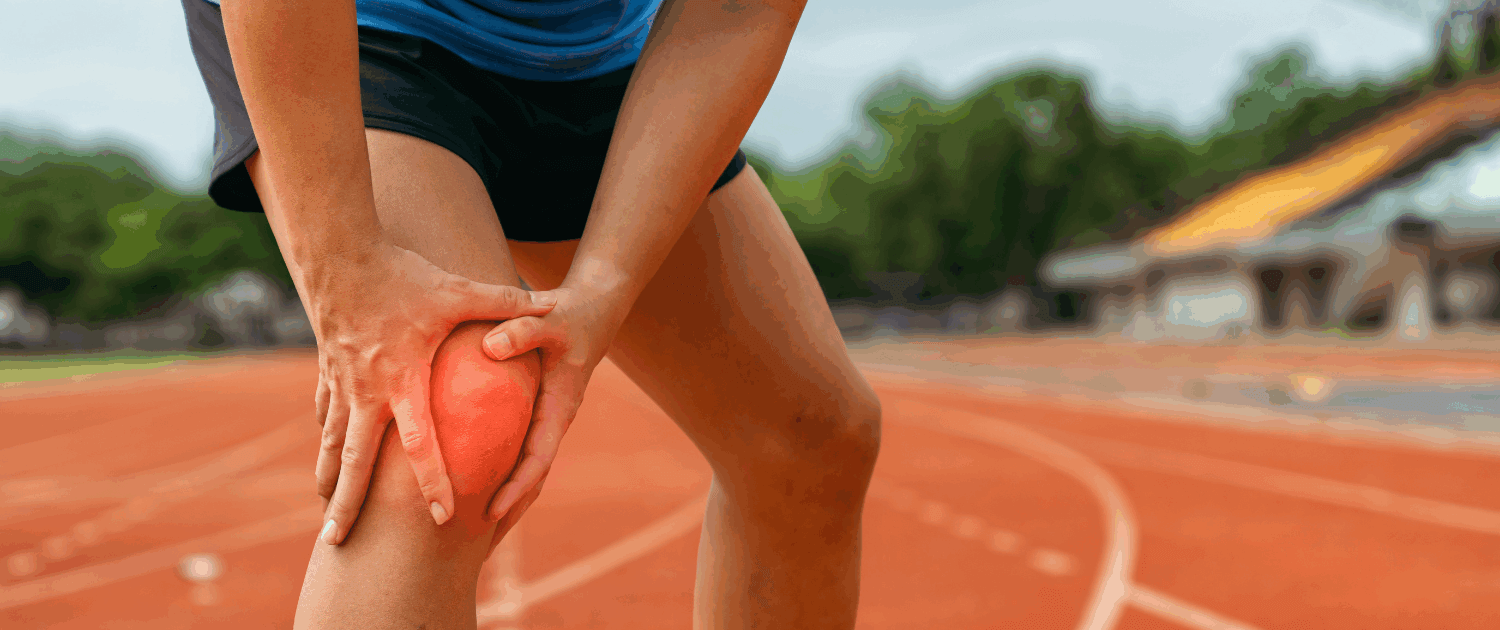
SoftWave Therapy for Runner’s Knee in Naperville IL
You’ve been training for weeks — maybe months — and now every run ends the same way. A dull ache behind or around your kneecap. Pain when you descend stairs. That familiar tightness when you stand up after sitting at your desk. You’ve tried rest. You’ve iced. You’ve foam-rolled until your IT band barely knows what hit it. The pain comes back the moment you lace up again.
At some point, you stop believing the pain will resolve on its own — and start wondering if there’s a treatment that actually fixes the underlying problem.
Most Naperville runners we see at this stage have already been told to rest, stretch, and wait it out — and they’re not sure if they’ve been given the full picture. Here’s the reality: runner’s knee, or patellofemoral pain syndrome (PFPS), is rarely just one thing. It’s a pattern of mechanical overload, muscle imbalance, and soft tissue irritation around the kneecap — and the right treatment has to address all three.
I’m Dr. Jennifer Wise, DC, Acupuncturist — and for 26+ years, since 2000, I’ve helped Naperville runners get back to training without resorting to injections, prolonged time off, or surgery. At Synergy Institute Acupuncture & Chiropractic, we were the first clinic in Naperville to offer SoftWave therapy (August 2021) and have used therapeutic laser since 2002. When runners search for the best runner’s knee specialist in Naperville or patellofemoral pain treatment near me, they’re looking for exactly this: an integrated clinic that treats the cause, not just the pain.
Synergy Institute Acupuncture & Chiropractic offers SoftWave therapy for runner’s knee in Naperville, IL. We combine SoftWave with chiropractic adjustment, acupuncture, knee decompression, MLS laser, and ARPwave neurotherapy for a comprehensive approach that single-treatment clinics cannot match.
A 2024 randomized study published in the Journal of Clinical Medicine found that shockwave therapy combined with physical therapy produced significantly greater pain reduction and joint mobility improvement in patellofemoral pain syndrome than standard rehabilitation alone — supporting shockwave as a valuable intervention for this condition.
The best runner’s knee treatment in Naperville isn’t about one therapy — it’s about applying the right combination in the right sequence. See our full knee pain treatments overview for how every option fits together. Our office sits on Illinois Route 59 near the 111th Street intersection, serving runners throughout Naperville, Aurora, Plainfield, and Bolingbrook.
Call or text (630) 454-1300 — or call our office directly at (630) 355-8022 — to schedule a $49 Discovery Session and find out whether SoftWave is the right next step for your knee.
Quick Facts: Runner’s Knee Treatment with SoftWave in Naperville
| Fact | Details |
|---|---|
| Clinical name | Patellofemoral pain syndrome (PFPS) |
| Who it affects | Approximately 25% of active adults; most common knee complaint in runners |
| Primary symptom | Pain around or behind the kneecap, worse with running, stairs, squatting |
| Typical SoftWave protocol | 6–8 sessions over 6–8 weeks |
| Session length | 10–15 minutes |
| Downtime | None — you can run the same day (though we may adjust training load) |
| Evaluation cost | $49 Discovery Session |
| Phone | (630) 454-1300 call or text |
What Causes Runner’s Knee — And Why It Matters for Treatment
Runner’s knee is almost never one isolated problem. It’s a pattern of several issues stacking on top of each other — and the reason standard treatments so often fail is that they address one piece while ignoring the rest.
Poor patellar tracking. The kneecap rides in a shallow groove at the end of your femur. When the quadriceps, glutes, or hips are imbalanced, the patella tracks laterally or rotates improperly — grinding against the femoral groove with every stride. This is the mechanical root of most PFPS.
Weak or inhibited gluteal muscles. Research consistently shows that runners with PFPS have weaker hip abductors and external rotators than pain-free runners. When the glutes can’t control femoral rotation, the knee collapses inward — loading the lateral patella and the medial cartilage in exactly the places that start to hurt.
Tight IT band and lateral structures. A tight iliotibial band pulls the patella laterally. Foam rolling provides temporary relief but doesn’t address why the IT band is tight in the first place — usually a gluteus medius that isn’t firing properly.
Foot mechanics and overpronation. When the foot collapses inward, the tibia rotates internally, which drives the femur into internal rotation and disrupts patellar tracking. Custom orthotics or gait correction often unlock resolution in cases where knee-focused treatment alone has failed.
Training load errors. Rapid mileage increases, sudden terrain changes, or new shoes can overload tissue that was previously tolerating its workload just fine. “Too much, too soon” is the most common precipitating event in runner’s knee.
The reason the “rest, ice, stretch” protocol fails for most runners is that it addresses symptoms while none of the underlying drivers get touched. When you return to training, the mechanical overload pattern is still there — and so is the pain.
When Standard Treatments Fail
Most runners arrive at our clinic after weeks or months of the same sequence: rest, ice, NSAIDs, foam rolling, maybe some physical therapy. Each of these has a role — none of them address the cellular environment of the irritated tissue.
Rest. Helpful short-term for calming acute flares. But prolonged rest leads to quadriceps atrophy and cardiovascular deconditioning, and the tissue problem is still there when you start running again.
Ice. Reduces acute swelling. Newer research suggests extended ice use may delay tissue healing by suppressing the inflammatory signaling your body uses to initiate repair.
NSAIDs. Block inflammation temporarily. Inflammation is not the enemy — it’s the first phase of the healing cascade. Blocking it pharmacologically often interrupts the very process you need for durable recovery.
Physical therapy. Valuable as part of a complete approach. Strengthens glutes and quadriceps, corrects movement patterns. But PT can’t directly stimulate tissue healing or break up chronic fibrosis around the patellar tendon, retinaculum, or patellar fat pad.
Cortisone injection. Provides fast pain relief by suppressing inflammation. Does not repair tissue. Repeated cortisone exposure has been associated with tendon weakening and cartilage damage over time — which is particularly concerning in active runners.
When these fail, most patients are told to “stop running” or eventually referred for arthroscopic surgery. Neither of those is the right answer for most runners. SoftWave addresses what nothing in that standard chain reaches: the cellular environment of the damaged tissue itself.
How SoftWave Therapy Works for Runner’s Knee
SoftWave therapy uses electrohydraulic supersonic acoustic waves to stimulate a regenerative response in irritated and degenerated tissue. Unlike traditional treatments that suppress symptoms, SoftWave activates the biological processes your body uses to heal. For a deeper look at SoftWave’s full clinical applications for the knee, see our article on SoftWave for Knee Pain in Naperville.
Mesenchymal stem cell activation. Acoustic pressure waves stimulate the recruitment and activation of resident stem cells in the target tissue, which migrate to the area and contribute to regeneration.
Angiogenesis (new blood vessel formation). SoftWave stimulates the growth of new microvasculature around the treated area — increasing oxygen and nutrient delivery and accelerating healing in tissue that previously had limited blood supply.
Inflammation modulation. Rather than suppressing inflammation (which interrupts healing), SoftWave helps resolve trapped chronic inflammation — the kind that keeps a runner’s knee hurting for months even after training loads have been reduced.
Breakdown of scar tissue and adhesions. Around the patellar tendon, quadriceps tendon, and retinacular structures, scar tissue and adhesions restrict smooth gliding and contribute to persistent pain. SoftWave helps remodel these tissues.
Pain modulation. Many patients report immediate pain reduction after the first session. While this isn’t tissue healing yet, it’s often enough to allow patients to tolerate the movement and strengthening work required for complete recovery.
At Synergy, we use the authentic SoftWave TRT OrthoGold 100 — the device backed by the clinical research cited in peer-reviewed journals. Many Naperville clinics advertise “shockwave therapy” using radial pressure wave devices, which deliver a fundamentally different type of energy and are not equivalent to true focused shockwave — see our article on shockwave therapy for knee pain for the full comparison. The device matters.
Runner-Specific Conditions SoftWave Addresses in Naperville
Runner’s knee is a broad category — SoftWave is effective for several specific overlapping presentations we commonly treat:
- Patellofemoral pain syndrome (classic runner’s knee) — pain around or behind the kneecap with activity
- Patellar tendinopathy (partial overlap with jumper’s knee) — pain at the inferior pole of the patella, often mistaken for PFPS; see our dedicated article on SoftWave for jumper’s knee and patellar tendinitis
- Iliotibial band syndrome — lateral knee pain from IT band friction, extremely common in distance runners
- Pes anserine bursitis/tendinopathy — medial knee pain often missed in initial PFPS diagnosis
- Quadriceps tendinopathy — pain at the superior pole of the patella, common in trail runners and hill runners
- Fat pad impingement (Hoffa’s syndrome) — anterior knee pain with end-range extension
Each of these presentations responds well to SoftWave, but the treatment protocol and supporting modalities differ. An accurate diagnosis changes the plan — which is why we spend time on your knee pain evaluation before recommending a specific program.
The Synergy Runner’s Knee Protocol
When a runner arrives with PFPS or related presentations, we don’t hand them a generic plan. Our protocol is built around three integrated phases:
Phase 1: Tissue and Cellular Healing. SoftWave therapy using the TRT OrthoGold 100, typically 6–8 sessions over 6–8 weeks. For runners with chronic or stubborn cases, we combine SoftWave with HT Cellular Reset to support cellular function, circulation, and the tissue environment around the irritated structures. MLS laser adds an additional layer of cellular energy support and inflammation resolution when indicated.
Phase 2: Joint Mechanics and Alignment. Chiropractic adjustment of the pelvis, spine, knee, and foot to correct biomechanical dysfunction contributing to poor patellar tracking. For runners with knee joint compression signs, we incorporate knee decompression to offload the patellofemoral joint and allow the irritated tissue to heal without constant mechanical pressure. Acupuncture supports pain regulation and local circulation.
Phase 3: Neuromuscular Retraining and Return to Sport. ARPwave neurotherapy rebuilds proper glute and quadriceps recruitment patterns that most runners with PFPS have lost. Matrix Scanner gait analysis identifies specific asymmetries and inefficiencies in your running mechanics that need correction to prevent re-injury. Custom orthotics are prescribed when foot mechanics are driving the knee dysfunction.
Not every runner needs all three phases — but the sequence matters. Adding strengthening exercises before the irritated tissue has had time to heal is one of the most common reasons PFPS becomes chronic in runners.
Who IS and ISN’T a Good Candidate for SoftWave
You may be a good candidate if:
- You have classic runner’s knee symptoms — pain around/behind the kneecap with running, stairs, squatting
- Your pain has lasted longer than 2–3 weeks and isn’t responding to rest
- You’ve tried standard treatments (rest, ice, PT, NSAIDs) without durable improvement
- You want to return to running without long-term downtime or injections
- You have a patellar tendinopathy, IT band syndrome, or other overlapping runner knee conditions
- You want to address the underlying cause, not just manage symptoms
You may NOT be a good candidate if:
- You have an acute, severe knee injury with instability, locking, or significant swelling (needs orthopedic evaluation)
- You have an active infection, open wound, or recent fracture at the knee
- You are pregnant
- You have a pacemaker or certain implanted devices (consult your physician)
- You have advanced end-stage osteoarthritis with bone-on-bone contact (different approach needed)
- You have a blood clotting disorder or are on high-dose anticoagulants without physician clearance
Our job at the evaluation is not to sell you SoftWave. Our job is to examine your knee, review your training history, and tell you honestly whether SoftWave is the right answer for your specific presentation — or whether something else makes more sense.
🚨 Emergency Warnings — When to Seek Immediate Evaluation
Most runner’s knee is biomechanical and responds to conservative care. Some knee symptoms require urgent orthopedic evaluation rather than regenerative therapy. Seek immediate evaluation if you have:
- Sudden, severe knee swelling within hours of an injury (possible bleeding into the joint)
- True knee locking — you physically cannot straighten the knee
- Sudden, severe knee instability with a history of a specific injury event
- Loss of sensation or strength below the knee
- Fever with a swollen, red, hot knee (possible infection)
These are not conservative-care situations. Please seek orthopedic evaluation first.
What Runners Typically Notice
Within the first 2–3 SoftWave sessions, most runners with PFPS begin noticing specific changes:
- Less pain during runs, especially on descents and downhill
- Reduced stiffness when standing up after sitting (the “theater sign”)
- Less pain with stairs, particularly descending
- Faster warm-up during the first mile
- Less lingering soreness the day after a hard run
Full tissue healing continues past the symptom improvement point — which is why we often keep runners in treatment a few sessions after pain resolves, to make sure the underlying tissue is actually healed rather than just quiet.
Pricing Transparency
We believe runners deserve straight answers about cost before committing to care. Your first step is a $49 Discovery Session, which includes a thorough knee evaluation, review of your training history, gait and running mechanics assessment, and a clear explanation of whether SoftWave is the right fit for your specific presentation.
SoftWave, MLS laser, and HT Cellular Reset are typically not covered by insurance — this is consistent across every provider offering these technologies nationally. Many runners use HSA or FSA funds. Chiropractic and acupuncture components of care are often partially covered by insurance. We provide specific pricing at your Discovery Session so you can plan the decision with certainty.
Why Choose Synergy Institute for Runner’s Knee Treatment
- First SoftWave provider in Naperville — offering authentic TRT OrthoGold 100 therapy since August 2021
- 26+ years of clinical experience — Dr. Jennifer Wise has treated runners and athletes since 2000
- Integrated approach — chiropractic, acupuncture, SoftWave, MLS laser, decompression, ARPwave in one clinic
- Runner-specific protocols — we don’t treat PFPS the same as generic knee pain; training load and running mechanics are part of the plan
- Honest candidacy assessment — if SoftWave isn’t the right tool for your specific case, we’ll tell you directly
Frequently Asked Questions
Who is the best clinic for runner’s knee treatment in Naperville?
Synergy Institute Acupuncture & Chiropractic is one of the most experienced runner’s knee treatment clinics in Naperville, IL. Dr. Jennifer Wise, DC, Acupuncturist has treated runners and active patients since 2000, and the clinic was the first in Naperville to offer SoftWave therapy. Runners searching for the best patellofemoral pain specialist or runner’s knee treatment near me often choose Synergy Institute for its integrated approach combining SoftWave, chiropractic, acupuncture, and gait analysis within a runner-specific protocol.
How many SoftWave sessions does runner’s knee usually need?
Most patients with runner’s knee respond to a protocol of 6–8 SoftWave sessions spaced weekly over 6–8 weeks. Acute cases may resolve in fewer sessions; chronic cases with multiple overlapping conditions (PFPS plus IT band syndrome plus patellar tendinopathy, for example) may need additional sessions and incorporation of additional modalities.
Can I keep running during SoftWave treatment?
For most runners, yes — though we typically recommend modifying training load during the initial phase of treatment. Running through significant pain interferes with the tissue’s ability to heal between sessions. We give specific guidance on mileage, intensity, and terrain based on your presentation during your evaluation and adjust throughout the protocol.
How does SoftWave compare to a cortisone injection for runner’s knee?
Cortisone provides rapid pain relief by suppressing inflammation but does not repair tissue. Repeated cortisone exposure has been associated with tendon weakening and cartilage damage over time — a significant concern for active runners who want to keep training for years. SoftWave takes longer to produce noticeable relief but stimulates tissue healing rather than masking pain. For runners planning to continue training long-term, regenerative approaches are generally preferred.
Is SoftWave the same as shockwave therapy?
SoftWave is a specific type of shockwave therapy — specifically, focused electrohydraulic shockwave delivered through the TRT OrthoGold 100 device. Many Naperville clinics advertise “shockwave” using radial pressure wave devices, which deliver a different type of energy with different tissue penetration. Both can help certain conditions; the research evidence for focused shockwave in tendinopathy and PFPS is generally stronger. The specific device matters more than the generic category.
Does runner’s knee go away on its own?
Sometimes — if the precipitating training error is corrected and the runner has no underlying biomechanical drivers. For most runners, however, PFPS becomes chronic or recurrent because the causes (glute weakness, patellar tracking dysfunction, foot mechanics) don’t resolve through rest alone. If your knee pain has persisted beyond 2–3 weeks of modified training, it’s unlikely to fully resolve without intervention.
What’s the difference between runner’s knee and a meniscus tear?
Runner’s knee (PFPS) is pain around or behind the kneecap — typically mechanical and overuse-driven. A meniscus tear is injury to the cartilage inside the knee joint — often traumatic but can also be degenerative. The pain locations, precipitating events, and treatment approaches differ. A proper evaluation distinguishes between them, and imaging is sometimes needed to confirm. See our guide to best treatments for meniscus injuries if meniscus tear is your concern.
Do I need an MRI before starting SoftWave?
Not in most cases. Runner’s knee is typically a clinical diagnosis based on symptom pattern, physical exam, and training history. If there are signs of a structural injury (instability, mechanical locking, trauma history, or poor response to initial treatment), imaging may be warranted. We’ll tell you directly if your presentation requires imaging before proceeding.
Does insurance cover SoftWave for runner’s knee in Naperville?
SoftWave therapy is typically not covered by insurance, which is consistent across every provider offering this technology nationally. Most runners use HSA or FSA funds. Chiropractic and acupuncture components of comprehensive runner’s knee care are often partially covered by insurance. We provide transparent pricing at your Discovery Session so you can plan the decision with certainty.
Schedule Your Runner’s Knee Evaluation Today
If you’re a runner dealing with PFPS, patellar tendinopathy, IT band syndrome, or other overlapping conditions — and you want to get back to training without injections, extended downtime, or surgery — we’d like to help. During your $49 Discovery Session, we’ll examine your knee, assess your running mechanics, and give you an honest recommendation about whether SoftWave is the right fit.
Call or text (630) 454-1300 or call our office directly at (630) 355-8022 to schedule.
Synergy Institute Acupuncture & Chiropractic 4931 Illinois Rte 59, Suite 121 Naperville, IL 60564
References
- Ioja IB, Lucaci P, et al. Contribution of Shockwave Therapy in the Functional Rehabilitation Program of Patients with Patellofemoral Pain Syndrome. J Clin Med. 2024;13(23):7260. https://pubmed.ncbi.nlm.nih.gov/39685719/
- Schmitz C, Császár NB, Milz S, et al. Efficacy and safety of extracorporeal shock wave therapy for orthopedic conditions: a systematic review on studies listed in the PEDro database. Br Med Bull. 2015;116(1):115-138. https://pubmed.ncbi.nlm.nih.gov/26585999/
- Lankhorst NE, Bierma-Zeinstra SM, van Middelkoop M. Factors associated with patellofemoral pain syndrome: a systematic review. Br J Sports Med. 2013;47(4):193-206. https://pubmed.ncbi.nlm.nih.gov/22815424/
- Petersen W, Ellermann A, Gösele-Koppenburg A, et al. Patellofemoral pain syndrome. Knee Surg Sports Traumatol Arthrosc. 2014;22(10):2264-2274.
- Boling M, Padua D, Marshall S, et al. Gender differences in the incidence and prevalence of patellofemoral pain syndrome. Scand J Med Sci Sports. 2010;20(5):725-730.
- Wang CJ, Ko JY, Chan YS, et al. Extracorporeal shockwave for chronic patellar tendinopathy. Am J Sports Med.2007;35(6):972-978.
- Vulpiani MC, Vetrano M, Savoia V, et al. Jumper’s knee treatment with extracorporeal shock wave therapy. J Sports Med Phys Fitness. 2007;47(3):323-328.
- Rudavsky A, Cook J. Physiotherapy management of patellar tendinopathy (jumper’s knee). J Physiother.2014;60(3):122-129.
- Korakakis V, Whiteley R, Tzavara A, Malliaropoulos N. The effectiveness of extracorporeal shockwave therapy in common lower limb conditions: a systematic review. Br J Sports Med. 2018;52(6):387-407.
- Mani-Babu S, Morrissey D, Waugh C, Screen H, Barton C. The effectiveness of extracorporeal shock wave therapy in lower limb tendinopathy: a systematic review. Am J Sports Med. 2015;43(3):752-761.
- Moyer R, Lanting B, Marsh J, Al-Jurayyan A, Churchill L, Howard J, Somerville L. The effect of extracorporeal shockwave treatment on knee osteoarthritis: a systematic review. J Surg Orthop Adv. 2018;27(3):236-241.
Medical Disclaimer: This article is for educational purposes only and is not a substitute for professional medical advice, diagnosis, or treatment. Always seek the advice of your physician or other qualified health provider with any questions you may have regarding a medical condition. Individual results with SoftWave therapy vary based on condition severity, chronicity, training load, and individual response.
Reviewed by Dr. Jennifer Wise, DC, Acupuncturist — April 2026